




Thread Network Security and Encryption Explained
Thread Security is Baked in, Not Bolted on
Thread was designed in a world that had already seen the risks of insecure smart devices — from easily sniffed Wi-Fi traffic to one-way 433 MHz garage remotes. That’s why its security model isn’t just a feature; it’s a foundation. Every device in a Thread network has to prove it belongs there, and every message is encrypted, authenticated, and protected.
At the mesh level, Thread uses AES-128 encryption by default. Devices can’t join the network unless they have the right credentials. Once onboarded, the system encrypts and verifies all communication to prevent outsiders from snooping or tampering. If someone compromises the network key, Thread rotates the keys to re-authenticate devices and maintain security.
Layered on top of Thread is Matter, a connectivity standard which adds its own security model at the application level. Devices must be Matter-certified and prove they come from trusted and certified vendors. Each ecosystem creates a separate “fabric” with its own encryption keys, isolating access between Homey and, say, Apple Home or Google Home.
The result? A smart home where device communication is private, verified, and no longer dependent on weak defaults or cloud-based security assumptions.
What Thread Protects – and How?
Thread’s security principles are built around three things: confidentiality, integrity, and authentication. That means:
- No one nearby can see what your devices are saying unless they’re part of the network.
- No one can forge or alter a message without being detected.
- No one can join the network or act as a valid device unless they were securely commissioned.
Thread enforces security through encryption and message authentication at the link and network layers using industry-standard cryptography. Matter builds on top of those layers with certificates and cryptographic checks during commissioning. This process ensures that devices authenticate and authorize all the way up to the application level.
In everyday terms, someone sitting in a car outside your house with a fancy antenna can capture radio traffic, but they cannot interpret it, replay it, or spoof your motion sensors or lights. The data is encrypted, authenticated, and verified end to end.
More Secure than Legacy Protocols
Before protocols like Thread, many smart home devices offered little or inconsistent security. 433 MHz devices, for example, often send commands in plain radio, making them easy to intercept or replay. Early Zigbee networks sometimes relied on well-known default keys or insecure pairing practices, and Wi-Fi devices vary widely, often depending on the strength of your home Wi-Fi password and whatever cloud security a vendor chooses to implement.
Thread and Matter change that equation. Security is built into the protocols rather than treated as an optional feature or left entirely to individual manufacturers. Devices are commissioned using secure onboarding flows, communication is encrypted by design, and network roles like controller, leader, and Border Router are clearly defined.
The result is a smart home architecture that’s easier to trust and harder to misconfigure by accident.
Homey’s Role in the Trust Chain
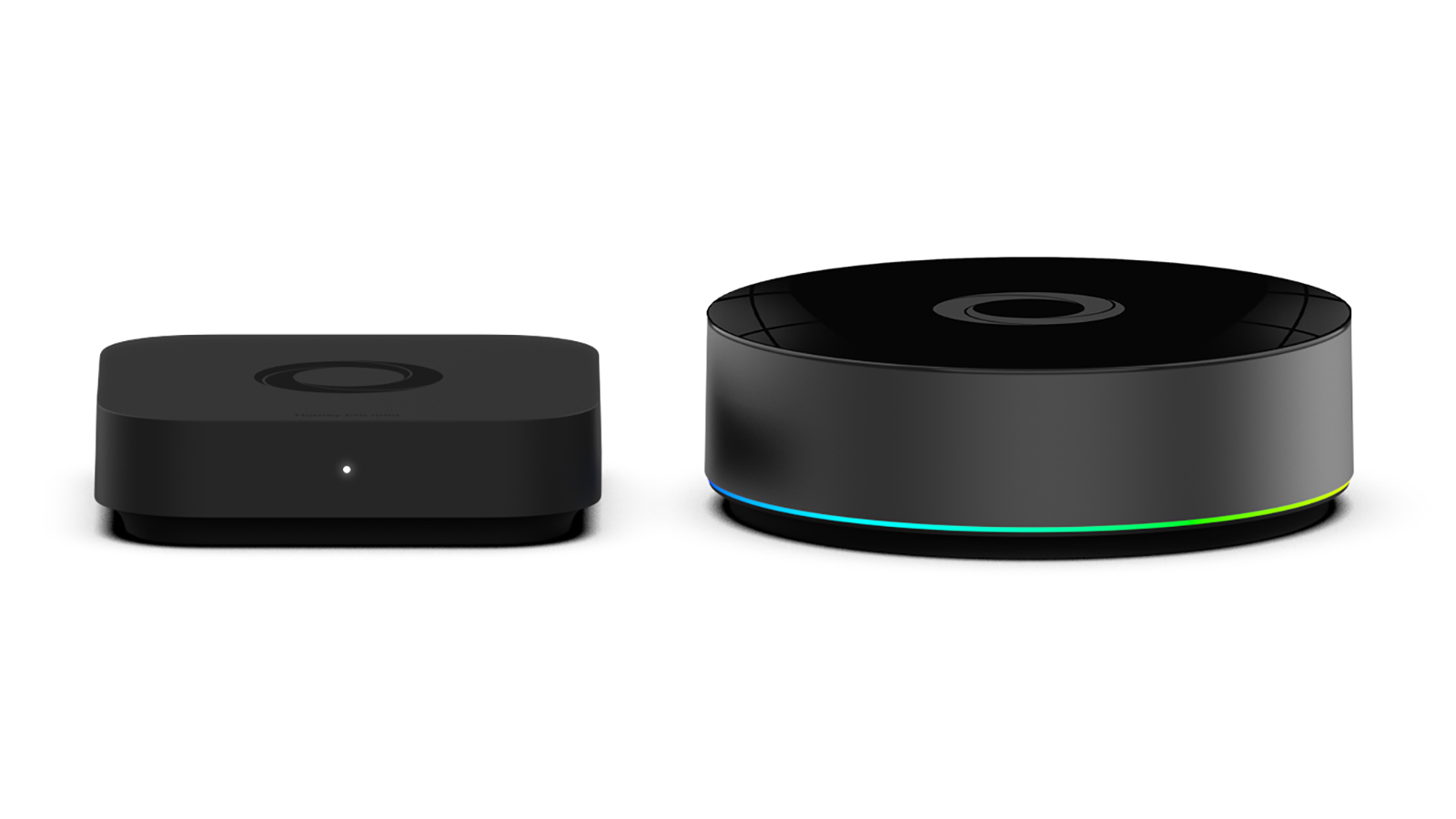
When you use Homey Pro or Homey Pro mini, they take on two key responsibilities: they are your Thread Border Router, and your Matter controller. That means they store and manage the keys that make secure device communication possible.
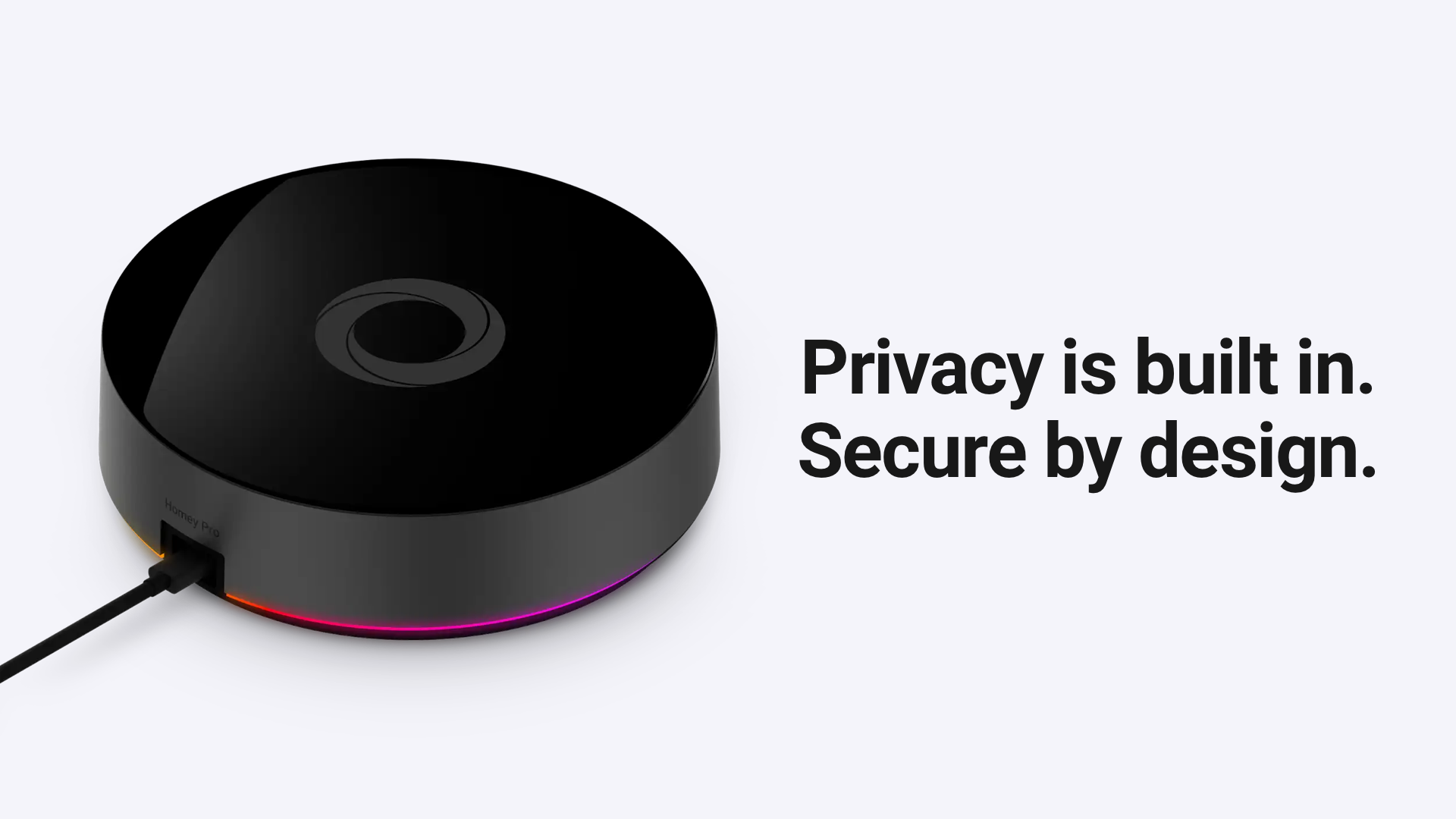
Homey doesn’t just pass messages back and forth, it acts as a gatekeeper. Devices added to Homey’s Matter fabric are cryptographically linked to it. Thread network keys live on the device and all local communication between Homey and your smart devices is encrypted — without any cloud dependency.
That also means Homey becomes a core part of your home’s security posture. If someone compromises your Homey, they’re inside your Thread and Matter networks too. So just like with your Wi-Fi router, keeping your Homey secured matters.
What You Still Need To Do
Even with Thread and Matter doing the heavy lifting, good smart home hygiene still matters. You should use a strong password for your Homey account and keep firmware up to date on both the hub and your connected devices. If you are comfortable with networking concepts, you might also consider segmenting your smart home hardware from your personal devices using VLANs or guest networks.
The benefit of this approach is clear. Once you securely onboard a Matter over Thread device, its communications never travel unprotected or bounce through external vendor clouds. The data stays local, encrypted, and tightly controlled by Homey. This shift represents a new standard that finally makes secure and resilient smart homes the norm rather than the exception.
Conclusion: Security as a Standard Feature
Thread’s biggest security contribution is cultural as much as technical: it assumes from the start that every packet should be encrypted and authenticated. The Matter standard builds on that assumption.
In a Homey smart home, that lets you bring in new devices without having to trust each vendor’s bespoke cloud and crypto. Instead, you lean on Thread and Matter for secure transport and on Homey for integrated control.
This approach effectively closes the door on the common vulnerabilities found in older systems. You do not need to configure complex firewalls or manage individual device passwords to stay safe. The network handles the handshake automatically before a device is even allowed to join. This ensures that your smart home remains a private sanctuary rather than a public access point.
FAQ – Thread Security
Can someone sniff Thread traffic from outside my house?
They can capture encrypted frames, but without keys they can’t interpret or use them meaningfully.
What happens if a Thread device is stolen?
If it stays powered, in theory it remains part of your mesh. If you suspect theft, you should remove it from Homey/Matter fabric and reset/rekey as appropriate.
Is Thread secure enough for security sensors and locks?
Yes, when combined with proper Matter implementations and good operational practices. Several vendors (e.g Aqara, Eufy) are shipping security-relevant devices over Thread/Matter.
Can Thread devices be hacked via the internet?
Not directly; Thread devices aren’t globally routable in the same way as internet hosts. The risk is through controllers or Border Routers that have internet connectivity.
Does using multiple ecosystems weaken security?
Each ecosystem that controls a device has its own keys. It increases complexity, but does not inherently weaken the security.
What about firmware backdoors or vendor mistakes?
Standard security can’t prevent all implementation bugs. Sticking to reputable vendors and keeping firmware updated remains an important practice.
Can I rotate keys or re-secure my Thread network?
Yes. Recommissioning devices or changing network/fabric keys is possible, although it may be a bit involved in practice.
Is Thread more secure than my old 433 MHz setup?
Absolutely. 433 MHz is usually unencrypted and unauthenticated; Thread is the opposite.
Glossary – Security Terms
AES-128
A symmetric encryption algorithm widely used for secure communication. Thread uses AES-128 at the link/network layer.
Network Key
A shared secret used by Thread nodes to encrypt and authenticate traffic within the mesh.
Device Attestation
A process in Matter where a device proves it comes from a certified manufacturer, using signed credentials.
Commissioning
The secure onboarding process for a new device, during which it receives network credentials and joins a Matter fabric.
Confidentiality
The property that only authorised parties can read the contents of a message.
Integrity
The property that a message can’t be altered in transit without detection.
Authenticity
The ability to verify that a message really comes from the claimed sender.
Attack Surface
The collection of points where an attacker could try to compromise a system. Thread aims to reduce the exposed surface at the radio layer.


