






Saving Energy with Homey: Automate with Comfort and Insight
For many people, “saving energy” creates images of sacrificing comfort: turning the thermostat down until you’re cold, switching off lights until it’s gloomy, or constantly reminding family members to unplug things. That’s neither sustainable nor particularly enjoyable.
A HEMS built around Homey approaches energy saving differently. It assumes that you want a warm, pleasant, modern home—and that you also want it to use its energy wisely. The goal is not to do less, but to do things at better moments and with less waste.
Comfort as a Design Principle
Homey is often introduced into a household as a smart home hub, not a pure energy tool. It controls lights, scenes, shades, music, thermostats and more. That’s an advantage when you start using it for energy saving, because comfort is already part of its DNA.
Instead of framing every change as a restriction, you can design automations that maintain or even improve comfort while lowering consumption.
For instance, presence-based lighting avoids dark hallways and forgotten lights at the same time. Night-time dimming can make your home feel calmer while using fewer watts. Zoned heating can concentrate warmth where people actually are, which often feels more comfortable than trying to warm the entire house evenly.
When energy-aware automation is built on top of a well-designed comfort layer, saving stops feeling like a punishment and starts feeling like an upgrade.
Insight That Turns Vague Intentions Into Concrete Actions
Most households have a general desire to “use less energy”, but that’s too vague to act on effectively. Homey narrows that down by showing you which devices and habits really matter.
Homey Energy’s device-level overview and Homey Energy Dongle P1 total measurements (when connected) make it clear whether your main opportunities lie in heating, always-on electronics, EV charging, or specific appliances. Once those patterns are visible, you can prioritize automations that affect the biggest slices of the pie.
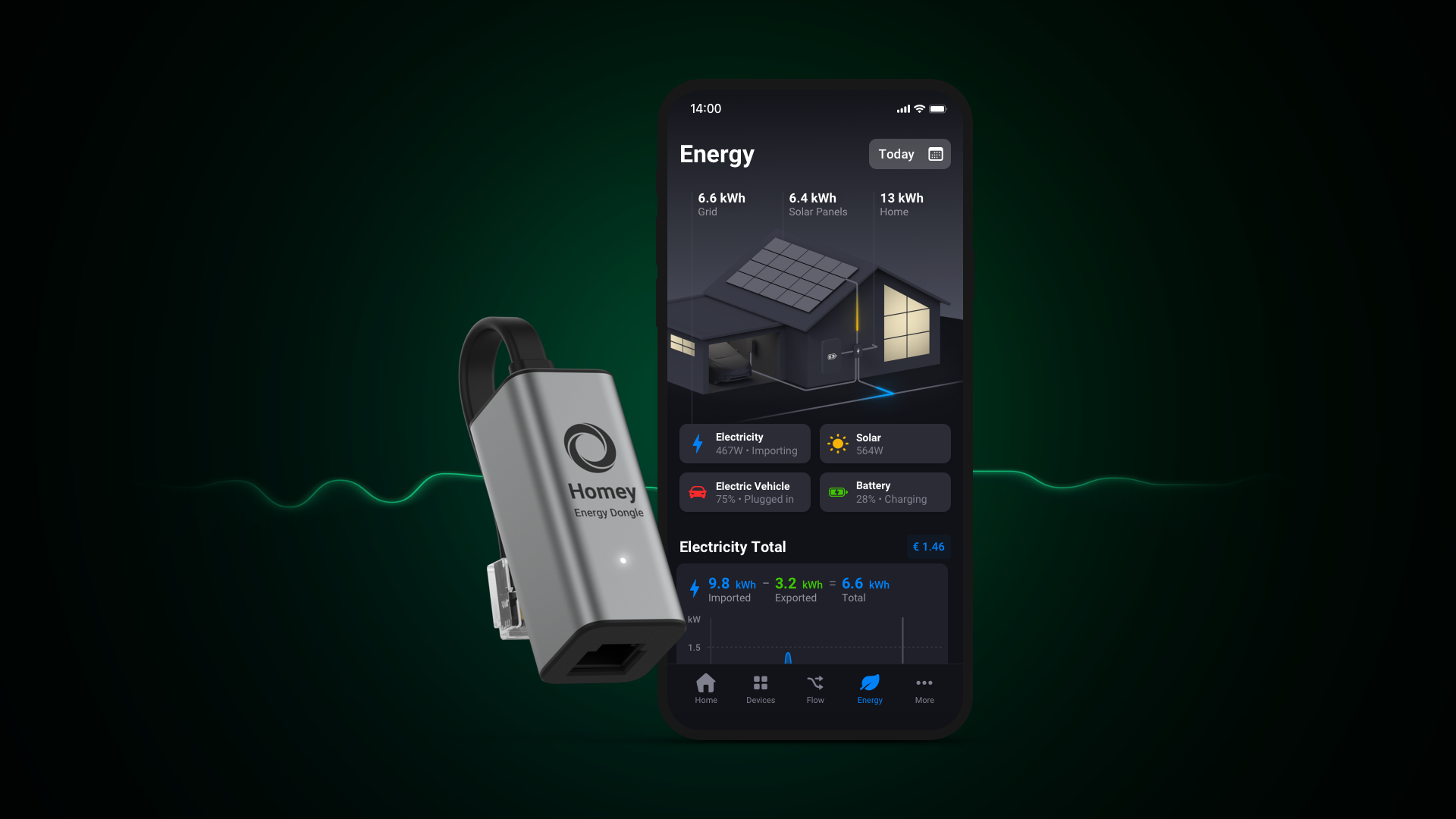
If you see, for example, that your base load is surprisingly high, you might focus first on night-time and away-mode behaviour. If heating dominates, you might centre on presence-based temperature control and better timing. If an EV is the big player, price- and solar-aware charging become logical first steps.
The point is that every automation you create in Homey is informed by real data, not guesswork.
Automation as a Quiet Assistant, Not a Strict Manager
A common fear with automation is losing control. People imagine their home doing things they don’t understand, or going “too far” in pursuit of saving. With Homey, you can design your HEMS as a quiet assistant instead of a strict manager.
That starts with clear boundaries. You decide the lowest acceptable temperatures, the time windows during which certain devices may run, and which practices are non-negotiable for your household. Homey’s Flows then work within those boundaries.
If the system ever does something that doesn’t feel right—maybe a room cools down more than someone likes, or a device turns off at an inconvenient time—you can adjust or disable the relevant Flow. Nothing is permanent, and changes are easy.
Because Flows and Advanced Flows are visual and logically structured, you can also understand at a glance why the system behaved a certain way. That transparency builds trust, both for you and for other household members.
Small Changes, Consistent Results
One of the underrated strengths of a HEMS is that it shines in doing small things reliably. Turning off forgotten lights once saves almost nothing. Turning them off automatically every day for years matters. The same goes for trimming heating times, aligning appliances with solar, or avoiding charging at peak prices.
Homey excels at this kind of quiet consistency. Once you’ve defined an automation, it doesn’t get tired, forget or get distracted. It just follows your logic, day after day, patiently harvesting the benefits of many small optimizations.
Over time, you’ll likely notice two effects. First, your energy graphs and bills will reflect a steady improvement. Second, your own mental load around energy will decrease. You spend less time thinking “Did we turn that off?” or “Should I run this now?” because the home has taken over much of that responsibility.
A New Normal for Energy-aware Living
Saving energy with Homey is ultimately about redefining what “normal” looks like in your home. Instead of lights, heating and devices running on default patterns, they run on patterns that reflect your actual life and your goals.
You keep your comfort, and you gain a sense that your home is actively on your side—avoiding waste, choosing better moments to use power, and integrating new devices into that logic as your home evolves. That’s a much more sustainable path than trying to rely on discipline alone.
FAQs
Will saving energy with Homey make my home less comfortable?
No, the system uses comfort as a design principle. The goal is to eliminate waste—such as heating an empty house or lighting an unused room—rather than forcing you to endure cold temperatures or dark rooms. The result is often a home that feels more responsive and pleasant.
How do I know which devices to automate first?
Homey transforms vague intentions into data-driven actions. By using Homey Energy’s device-level overview and P1 total readings, you can see exactly where your power goes—whether it's heating, EV charging, or always-on electronics—and prioritize the biggest opportunities.
What if I don't want the system making decisions for me?
You remain the manager; Homey acts as a "quiet assistant." You define the boundaries, such as minimum temperatures or specific operating windows. If an automation ever feels intrusive, you can easily adjust or disable the specific Flow to better fit your lifestyle.
Do small changes really affect my energy bill?
Yes, because consistency is key. Turning off a forgotten light once saves very little, but Homey ensures that light is turned off every single time it isn't needed. These small, reliable optimizations accumulate day after day into meaningful long-term savings.
How does "presence-based" control work?
Presence-based control uses sensors to detect when rooms are occupied. It improves comfort by ensuring lights turn on automatically when you enter a hallway, while simultaneously saving energy by turning off heating or electronics when a room is empty.
Glossary
Zoned Heating
The practice of concentrating warmth in specific rooms where people are actually located, rather than heating the entire house to the same temperature. This creates higher comfort in occupied areas while significantly reducing energy waste in empty ones.
Homey Energy
The built-in interface that provides a visual breakdown of your household's power usage. It combines real-time data from smart plugs and main meters to help you identify consumption patterns and energy-hungry devices.
Presence-Based Control
Automations triggered by human occupancy. This ensures that energy-consuming services, like lighting and climate control, are active only when someone is present to benefit from them, preventing waste in unoccupied spaces.
Flow
The logic structure used within Homey to create automations (e.g., "If no motion for 10 minutes, turn off heater"). Flows allow users to set transparent rules and boundaries for how their home manages energy.
HEMS
A Home Energy Management System (HEMS) places a central controller, such as Homey, in charge of your energy flows. It unifies your solar inverter, battery, and appliances into a single responsive network that adapts usage based on real-time production and consumption data.


