








Gareth’s solar-powered cottage with Homey
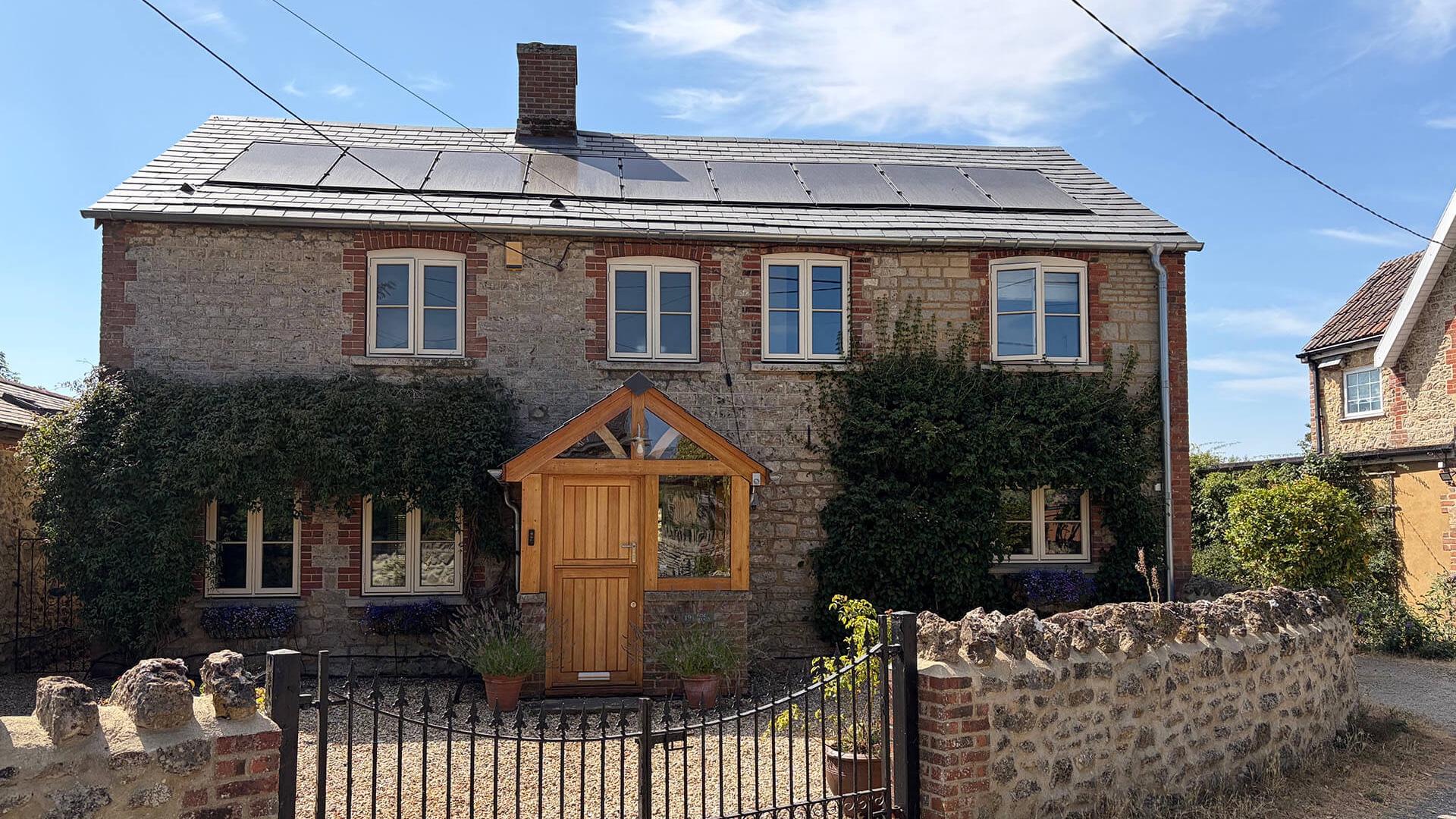
Gareth lives in Rose Cottage, a 300-year-old home in the English countryside. It’s a beautiful place, but old cottages come with costs. He figured that at today’s prices, keeping it running as-is would add up to about £8,000 a year, between electricity, gas, and diesel for his vehicles.
Gareth spent most of his career running large computer systems for banks in London and took part in several startups. He’s now about a year away from retiring. He enjoys walking in the countryside near his home, preferring to leave the land exactly as he found it. With retirement approaching, he knew that bill wasn’t going to be sustainable, so he set out to bring it down.
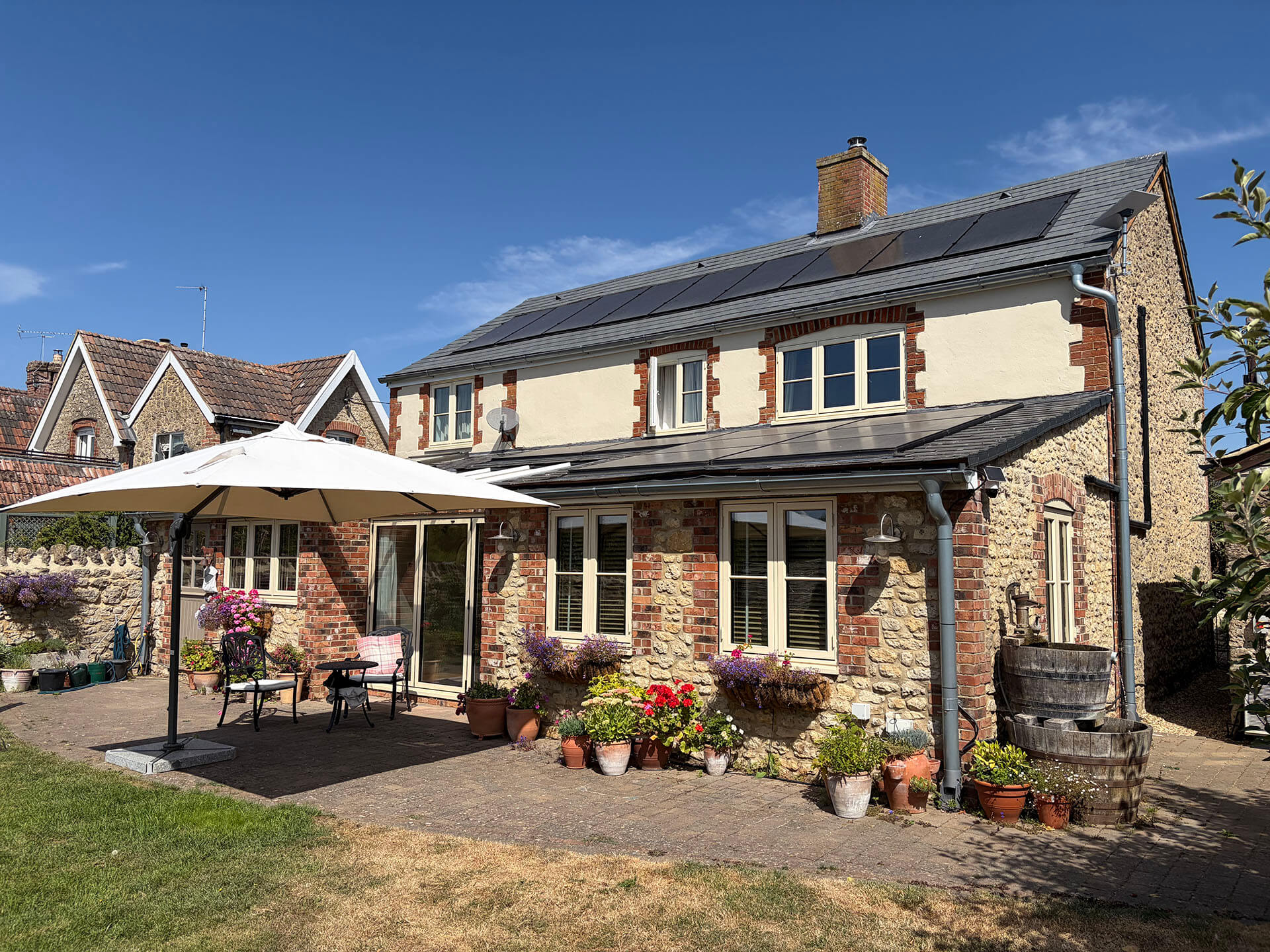
A 300-year-old roof gets solar panels
Like most old houses, Rose Cottage needs constant work. When the lower roof needed replacing, Gareth figured he might as well put solar panels on it while the tiles were off.
A couple of years later, the upper roof needed the same treatment, a much bigger job that meant stripping and re-slating the entire upper section on both sides. Once Gareth factored in the cost of new slate, covering the roof in solar panels came out cheaper, so he went with that.
Between both roofs, Gareth now generates 16.08 kWp of solar power. Around the same time, with all that power coming in, he switched from diesel to electric cars too, ending his fuel bill for good. He added EV chargers to keep his vehicles topped up, and a home battery to store what he wasn’t using right away.
One system to run it all
With solar panels, a home battery, and an EV charger all running at once, Gareth had a problem: separate gadgets that didn’t talk to each other. He wanted one system instead, something that could manage all of it in one place.
He’s a systems guy by trade, but he didn’t want to spend his evenings writing code or running something as complex as Home Assistant. He wanted his smart system to be as simple as using an iPhone. While looking for a way to manage his setup, he found Homey. Homey Pro turned out to be the only smart hub that could integrate and control his Sonnen battery.
The early setup was simple: an integrated Sonnen battery, a myenergi Zappi 7.2 kW EV charger, and a second, cheaper charging point that Brits call a “granny charger.” He wired that granny charger up to a Shelly plug, so Homey could switch it on only when the power was cheap.
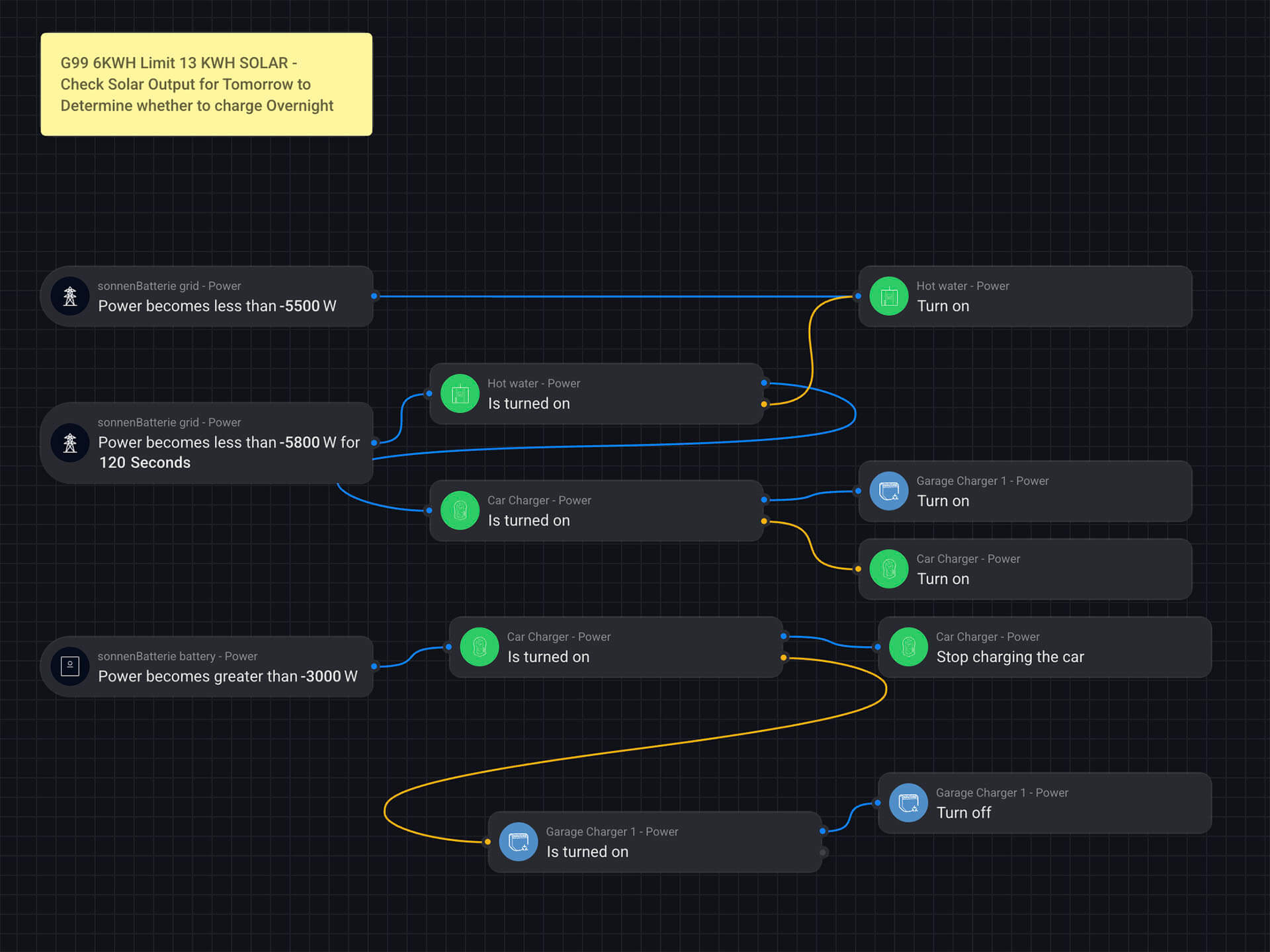
Claude handles the export limit
A 16.08 kWp solar setup sounds great, until the grid connection only allows 6 kW back out. The cable to Rose Cottage physically can’t carry more, and on a sunny day, Gareth’s panels were producing 10 to 11 kW at peak, well past what it could support. Without a way to use that extra power at home, it would go to waste.
Gareth solved that by connecting Claude to Homey through the MCP server. Every day, Claude reads the solar forecast for the next 24 hours and works out when the cottage is likely to have power to spare. Once it knows that, it schedules the big energy jobs, charging the cars, heating water, running the air conditioning, so they land inside those windows instead of drawing from the grid at full price.
The goal is to use the extra solar power at home instead of losing it, and export as much as possible within the 6 kW limit. What’s left gets stored in the battery as a buffer, for Gareth to use whenever he needs it. Between the solar energy, the battery, and Homey’s scheduling, his entire energy bill, including charging two electric cars, now comes to £20 a month.
Homey keeps the cottage comfortable
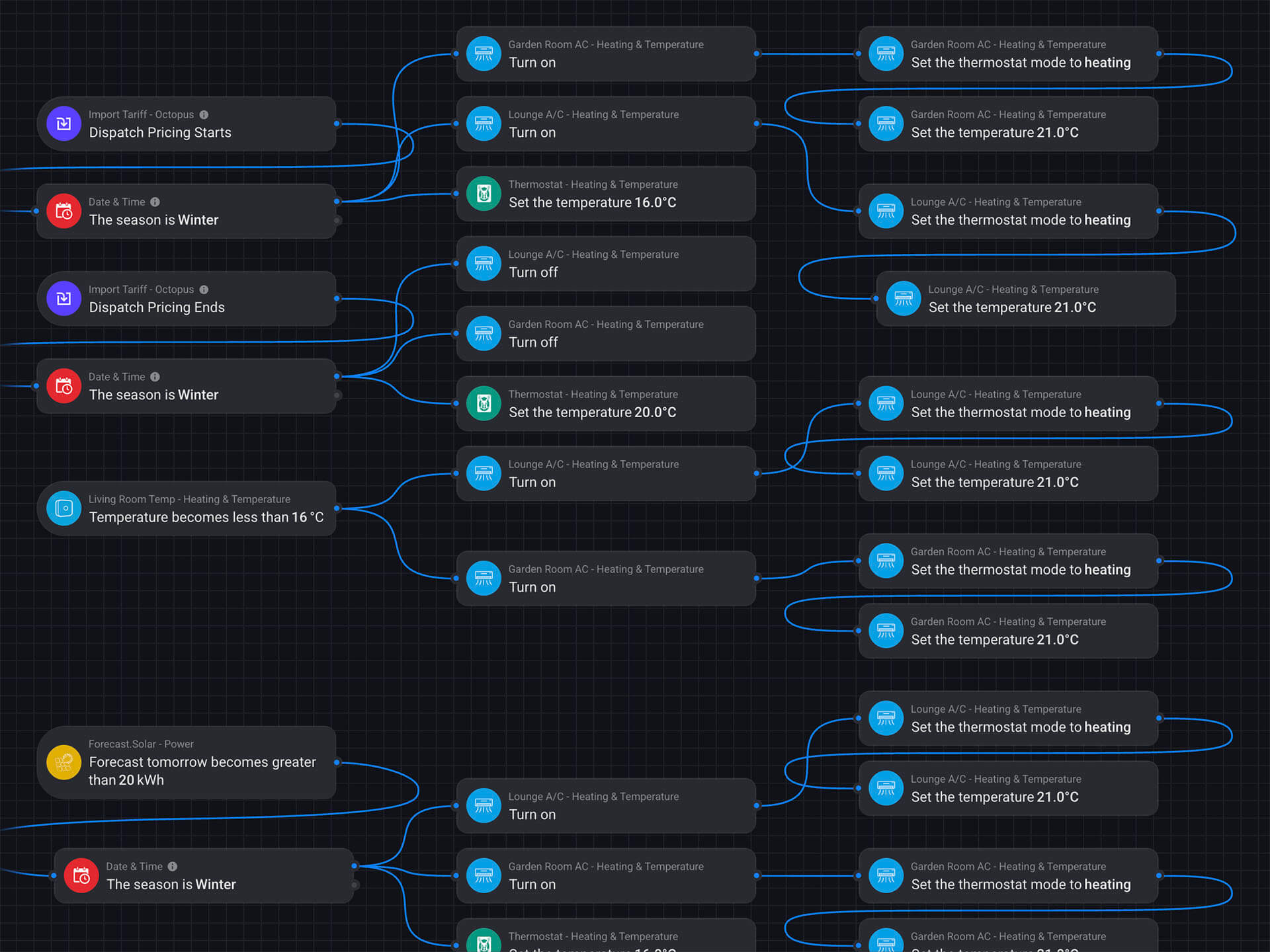
Rose Cottage is four bedrooms across roughly 177 square meters, and like most old cottages, it doesn’t hold heat well. That’s a hard problem to solve with a simple thermostat, so Gareth built a smarter one into Homey. It now predicts how much heat the house will lose overnight, and plans the next day’s heating around that number.
Take a cold night as an example. The cheap electricity window runs until 5:30 am, so right before it closes, Homey boosts the house up to around 23 °C. From there, the cottage loses heat at a fairly steady rate, about a degree an hour, so by the time the sun comes up around 8 am, it’s only dropped to around 20.5 °C. Once solar power starts flowing again, heating and cooling pick back up and the cycle repeats.
The same mini-split system that heats the cottage also cools it, and this summer it barely got a break. Gareth says he’s never had to run cooling for three months straight in the UK before, but this year he has. His south-facing rooms, with their large windows, can hit 40 °C on a hot afternoon. So he built a new Flow to deal with it: if any room passes 23 °C, Homey switches on the air conditioning automatically.
Claude writes the Flows now
Gareth used to write his own Flows in Homey. But it always took time: he had to work through the logic by hand every time something needed to change. These days, he skips that part entirely. He tells Claude what he wants, in plain English, and Claude builds the Flow in Homey for him.
Claude doesn’t run the house on its own, and Gareth is careful to point that out. All it does is follow the forecast and schedule actions inside the conditions Gareth has already set up. The decisions are still his. Claude takes over the part he used to do by hand: writing the logic into a working Flow.
In Gareth’s mind, not having to figure out the logic himself is a bigger deal than it sounds. As he puts it: “If you can use an Apple iPhone, you can use Homey.” He’s already watched it happen firsthand. A friend of his, someone with zero technical background, saw what Gareth had built and decided on the spot that he wanted the exact same setup at his own house.
£8,000 a year, redirected
Homey also handles smaller jobs around Rose Cottage, like running the dishwasher, closing the blinds, and keeping an eye on the temperature in every room. But for Gareth, none of that comes close to the energy savings.
One of his daughters lives in Australia, and he visits her every year. The money that used to go toward heating bills and fuel now goes toward plane tickets and travel. For Gareth, the gadgets matter less than what they free up.
Gareth’s next project, built with Claude’s help, is a Homey app that predicts a home’s heat loss. The idea is to compare how much energy a home uses to stay warm against the outside temperature difference, which gives people a realistic number for how much energy they’ll need. That’s especially useful for anyone weighing a switch to a heat pump.
Gareth documents Rose Cottage in more detail on his own site, decarbonarma.com, where his latest Homey Flows and cottage stats are kept updated.


