




Homey as Energy Management System (HEMS)
Energy management is more important than ever. Increasing energy prices, the rise of solar-at-home, heat pumps, EVs, home energy storage and dynamic energy tariffs all make energy management a key part of smart home. That's why it's also a core part of Homey. Homey creates better smart homes. And that includes better energy management.
Energy management across the home
Energy management takes place in lots of different parts of the home. Because of its versatile connectivity, Homey is able to work with a lot of attractive products in every one of these categories, creating a unified energy management option:
- Energy measurements
- Heating and cooling
- Major energy consumers in the home
- EVs and EV chargers
- Energy pricing, including dynamic tariffs
- Solar at home
- Home energy storage, like home batteries
Energy measurements in Homey
Energy management starts with measuring energy usage. Homey is able to measure energy usage per device, and for the whole home. Per device, Homey uses either the power reporting of the device, or it estimates power usage for known device based on their status. Use a whole-home meter to measure energy for the entire home.
Energy measurement solutions that work with Homey
Estimating power for known devices works out of the box with Homey, and includes popular brands like Philips Hue. Next to that, Homey allows you to enter on and stand-by values for all your devices manually.
Most power-metering plugs and modules work with Homey via Homey Bridge, as they usually use Zigbee or Z-Wave. Supported brands include Innr, Fibaro, Qubino, frient and more. The products from Shelly can be added to Homey even without Homey Bridge as they connect directly to the cloud.
Whole-home energy meters from Tibber, called Pulse, work directly with the Homey service. These are available for the Dutch, Norwegian, Swedish and German market. Next to that, the Energy Monitor from Aeotec and the frient HAN sensor can be linked to Homey Bridge.
Energy measurement solutions that work with Homey Pro
All of the solutions that work with Homey and Homey Bridge work with Homey Pro as well. Next to that, Homey Pro adds support for whole-home energy measurements from HomeWizard, Plugwise, Youless, Enelogic and more.
Smart heating in Homey
Heating (and possibly cooling) is where homes typically use most of their energy. There are multiple types of heating available, and their characteristics differ quite a bit. Homey's energy saving capabilities are interesting for all sorts of heating. If you combine electric heating – heat pumps, HVAC and/or space heaters – with dynamic tariffs for electricity (more on that later), there's also a lot of scheduling opportunities.
All sorts of heating systems are ultimately controlled by thermostats. There's smart thermostats available for almost every heating setup. Homey is compatible with a wide range of thermostats for multiple heating configurations:
- Multi-zone heating with different thermostats. Popular in Scandinavian countries like Norway and Sweden. Homey works with products from Heatit for this option (via Homey Bridge), among other brands.
- Heating with a main thermostat (either single or multi-zone). Popular in Western Europe. Homey works with many brands, including Honeywell Evohome, Tado and Netatmo for multiroom, plus Toon, Nest, ecobee and more for single room.
- Multi-zone heating with just radiator thermostats. Popular in Germany / DACH and Central Europe. Smart radiator thermostats from Eurotronic, Aqara, Danfoss, Fibaro and more can be paired to Homey Bridge or Homey Pro.
- Heating (and cooling) via air conditioning. While you might think of an AC for cooling, the fact that it's based on a heat pump makes it a pretty decent and efficient heater as well. Homey works with connected ACs from Daikin. Homey Pro adds support for Panasonic and Mitsubishi, and both Homey and Homey Pro can connect to Infrared AC controllers from Switchbot and Tado.
- Electric space heaters. Brands like Mill and Adax have connected space heaters that work with Homey Pro. Next to that, most simple space heaters can be switched on and off with a simple smart plug.

Major energy consumers in your home
Beyond heating and cooling, several household appliances account for a significant share of your home's electricity consumption. Think of washing machines, dryers, dishwashers, electric ovens, water heaters, and pool pumps.
While some appliances need to run at specific times, others offer flexibility. By monitoring their energy consumption and automating when they operate, Homey helps you use electricity more efficiently.
Major energy consumers that work with Homey
Homey supports connected household appliances from brands including Bosch and Siemens through Home Connect, and Miele or LG. You can also monitor compatible appliances using smart plugs and energy measurement modules from brands such as Shelly, Fibaro, frient and Innr.
With Homey Flow, you can create automations that respond to energy consumption, electricity prices, or solar production.
For example:
- Receive a notification when your washing machine finishes.
- Schedule compatible appliances during cheaper electricity hours.
- Activate a water heater when your solar panels generate surplus electricity.
- Monitor how much energy individual appliances consume over time.
For appliances that do not support smart controls, energy-monitoring plugs can still provide valuable insights. Always ensure plugs and relays are correctly rated for the connected appliance.
Solar panels and inverters in Homey
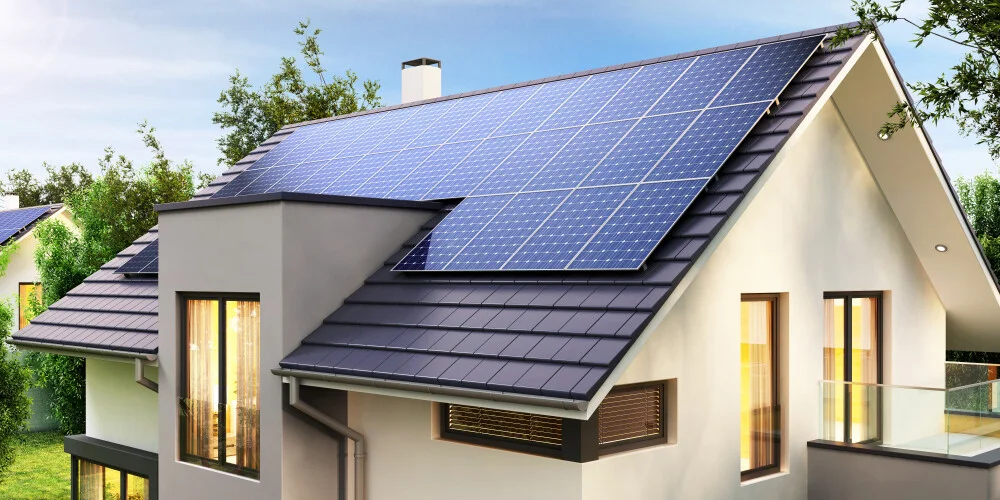
Solar panels generate renewable electricity directly from your roof. But generating solar energy is only part of the equation. Using that electricity efficiently can make an even bigger difference.
Without smart energy management, excess solar production may be exported to the electricity grid while your home continues consuming electricity at other times. Homey helps you understand when your solar panels generate electricity, how much your home consumes, and when energy is exported to the grid.
Solar inverters that work with Homey
Homey Pro integrates with solar inverter systems from brands including Enphase, Growatt, SolarEdge, SMA, GoodWe and Huawei. Depending on the integration, Homey can provide insights into solar production and use this information in automations.
Alternatively, compatible smart meters can measure electricity imported from and exported to the grid.
Make better use of your solar energy
With Homey Flow, you can create automations based on solar production and household electricity consumption. For example:
- Start charging your electric vehicle when sufficient solar surplus is available.
- Charge a compatible home battery instead of exporting excess electricity.
- Heat your water when your solar panels are generating more electricity than your home needs.
- Schedule compatible appliances to run during sunny hours.
By connecting solar production with energy-consuming devices, Homey helps increase the amount of solar electricity you use yourself.
EVs and EV chargers in Homey
Electric vehicles are among the largest electricity consumers in many modern households. Charging an EV at the right moment can make a significant difference to your electricity costs, especially when you have solar panels or a dynamic electricity contract.
Homey connects compatible electric vehicles and charging stations with the rest of your smart home.
Smart EV charging with Homey
Depending on the vehicle or charger integration, Homey can monitor charging activity, battery status, and electricity consumption. Supported integrations may also offer charging controls. Combine these capabilities with Homey Flow to automate charging based on your household's energy situation.
For example:
- Charge your EV during the cheapest electricity hours.
- Start charging when solar production exceeds household consumption.
- Pause compatible charging sessions when electricity prices rise.
- Coordinate EV charging with home battery activity.
- Reduce competing electricity demand when several energy-intensive devices are active.
This makes EV charging part of your broader energy management strategy instead of an isolated process.
Home battery integrations
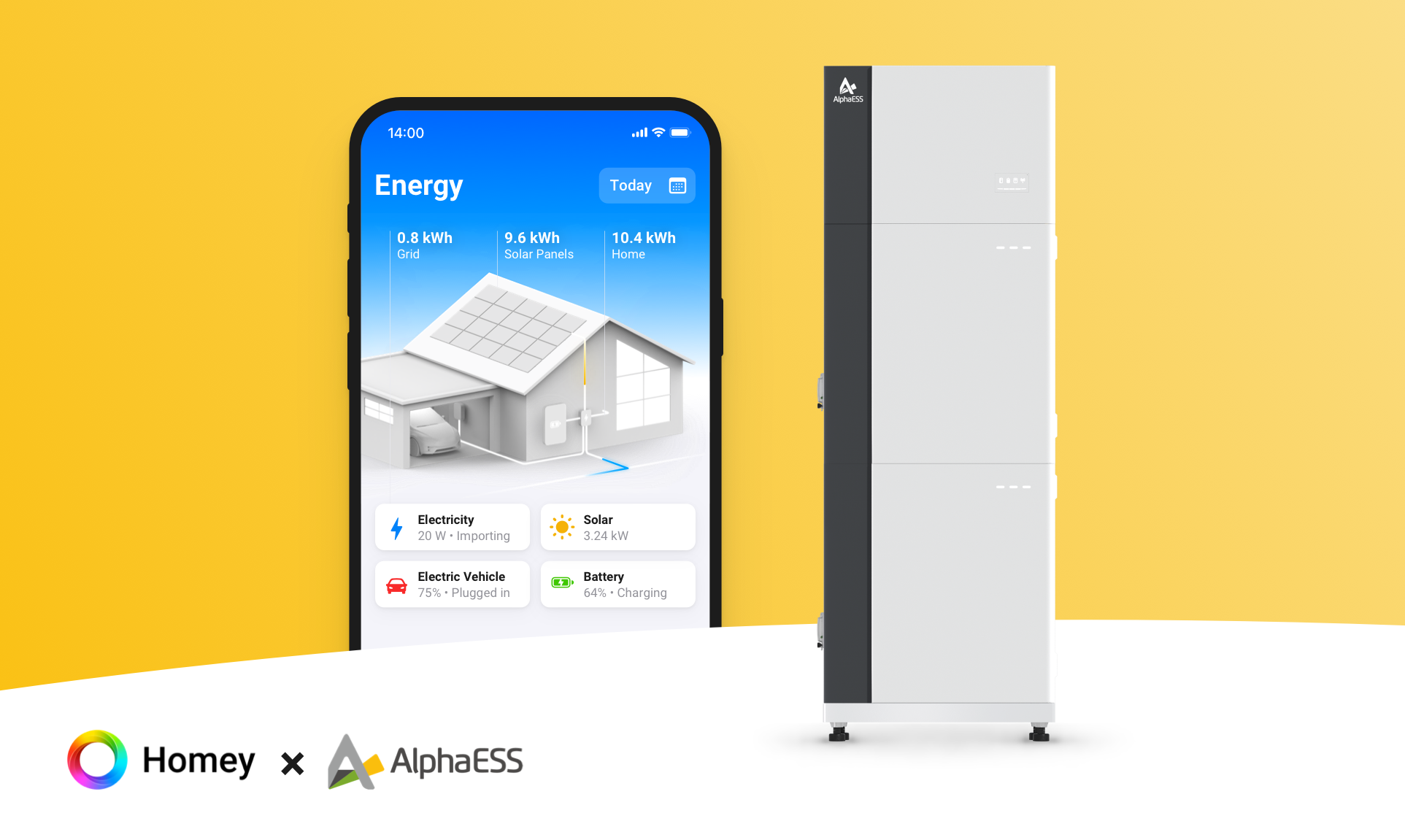
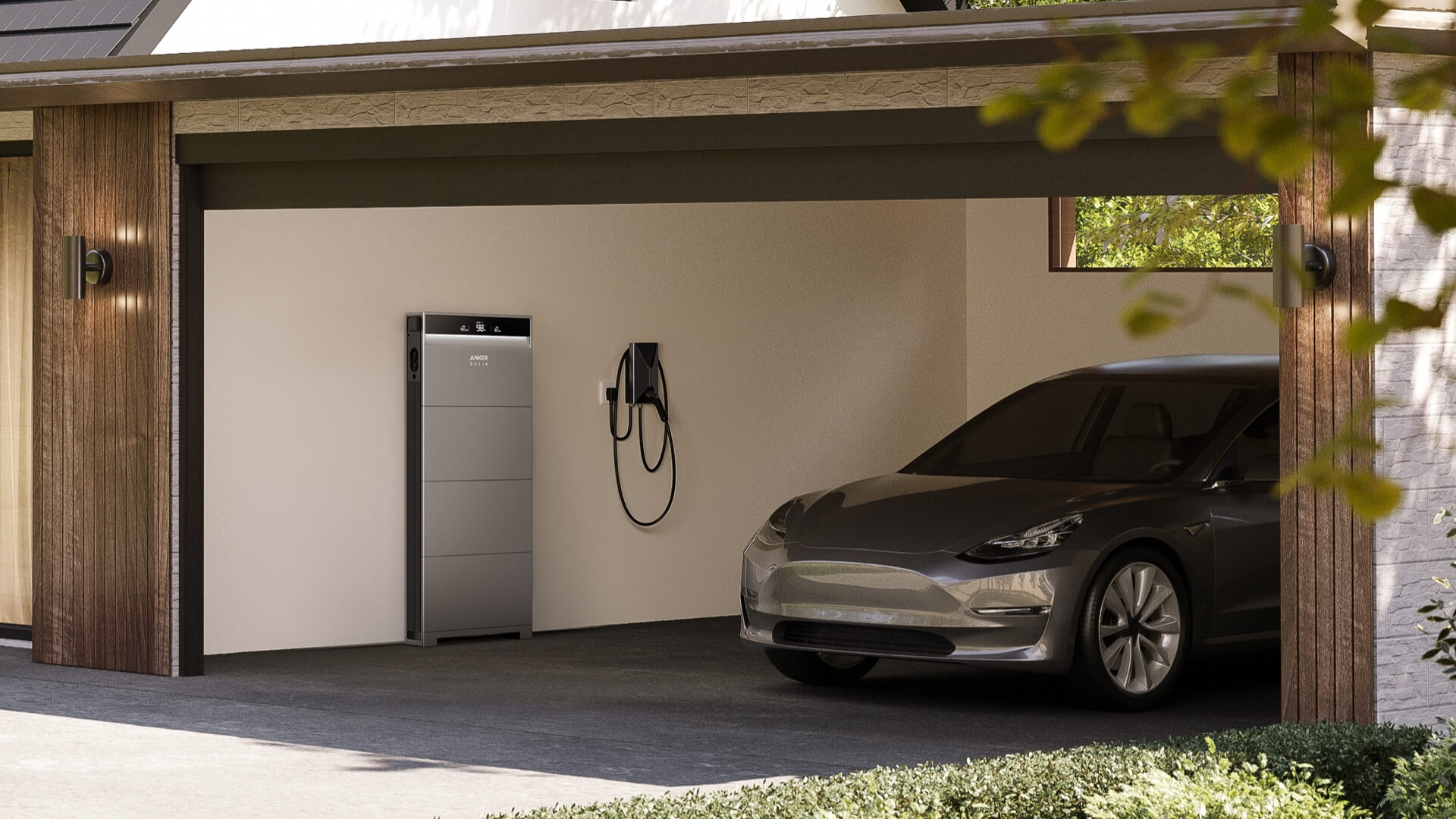
Homey supports home energy storage systems from various manufacturers. Examples include AlphaESS, EcoFlow and Sessy. Depending on the integration, Homey can monitor battery status, stored energy, charging activity, and power flows. Supported integrations can also provide controls for charging and discharging through Homey Flow.
Make your home battery part of your smart home
A home battery should not operate in isolation. Imagine your solar panels generating excess electricity while your EV is connected to its charger. Should that electricity go into your car, your home battery, or the electricity grid? The answer depends on your priorities, energy prices, battery levels, and upcoming electricity needs. Homey brings this information together, enabling automations that coordinate compatible devices.
For example:
- Store excess solar electricity for later use.
- Charge your battery during low-price periods.
- Prioritize EV charging over battery charging when needed.
- Reserve battery capacity for expensive electricity hours.
- Coordinate battery charging and discharging with other household devices.
With Homey, you can move beyond simply storing electricity and start making more informed decisions about when and how it is used.
One energy management system for your entire home
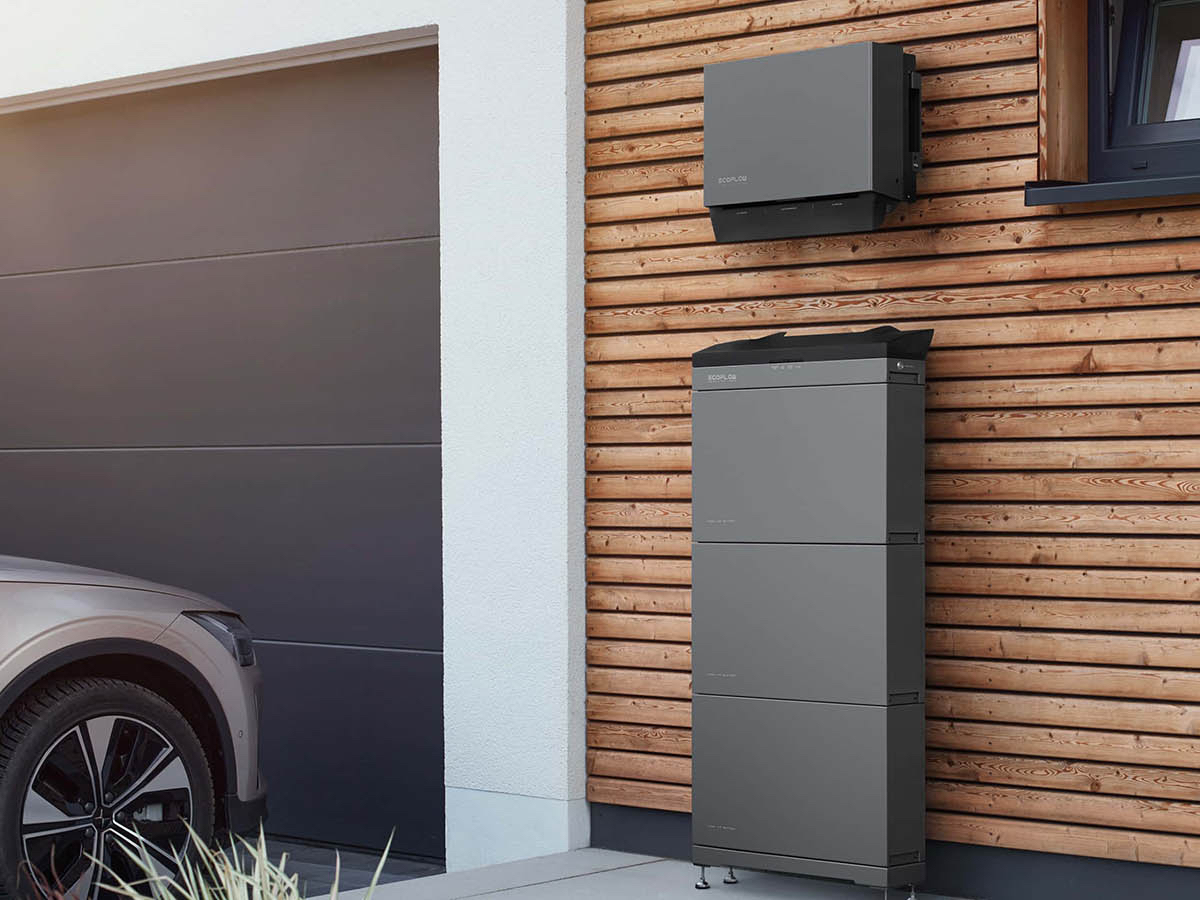
A smart home might contain solar panels from one manufacturer, an EV charger from another, a heat pump from a third, and a home battery from yet another. Each device may have its own app, energy statistics, and automation capabilities. But electricity doesn't operate in separate ecosystems. Your solar panels, battery, heating system, and EV charger all share the same household electricity supply.
That's where Homey makes the difference. Homey connects compatible devices across different brands and technologies, bringing them together in one smart home platform.
Understand your energy with Homey Energy
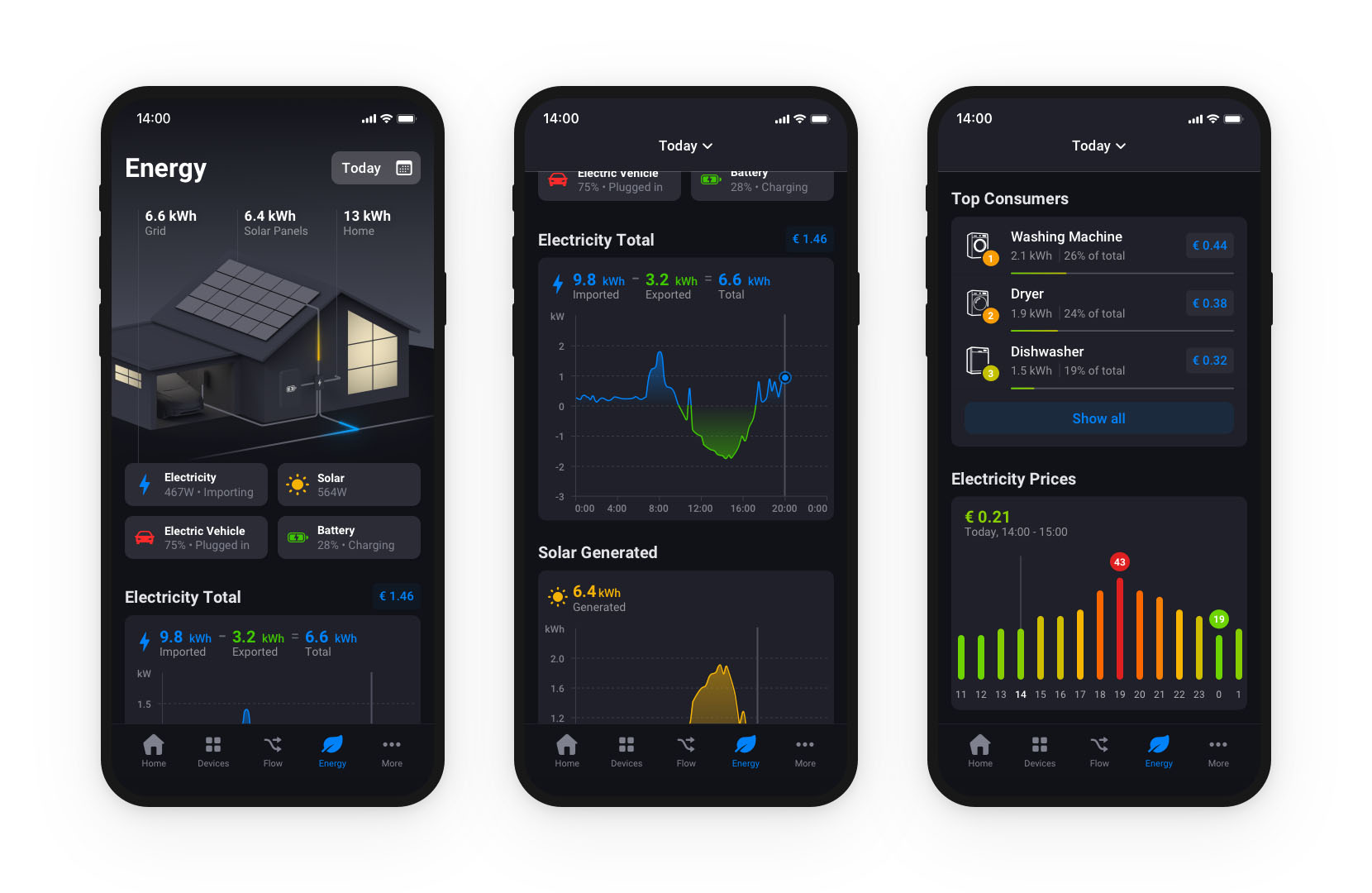
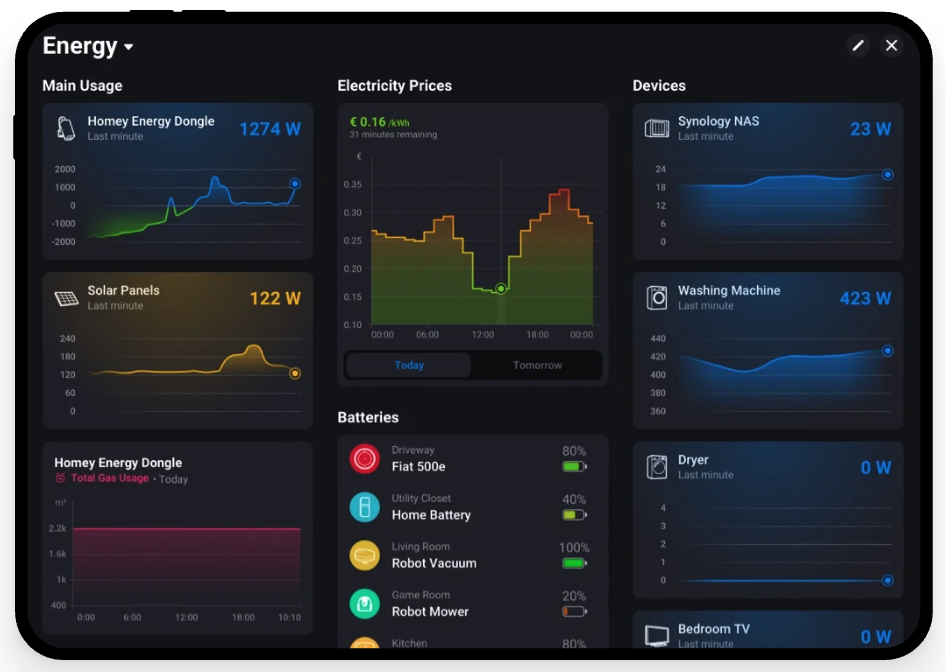
Homey Energy provides an overview of your home's electricity consumption and production. Depending on your connected devices, you can monitor:
- Household electricity consumption.
- Electricity imported from and exported to the grid.
- Solar electricity production.
- Home battery charging and discharging.
- EV charging activity.
- Individual device energy consumption.
- Electricity costs and dynamic tariffs.
This helps you understand not only how much electricity your home consumes, but also where it comes from and how it is being used.
Connect your smart meter with Homey Energy Dongle
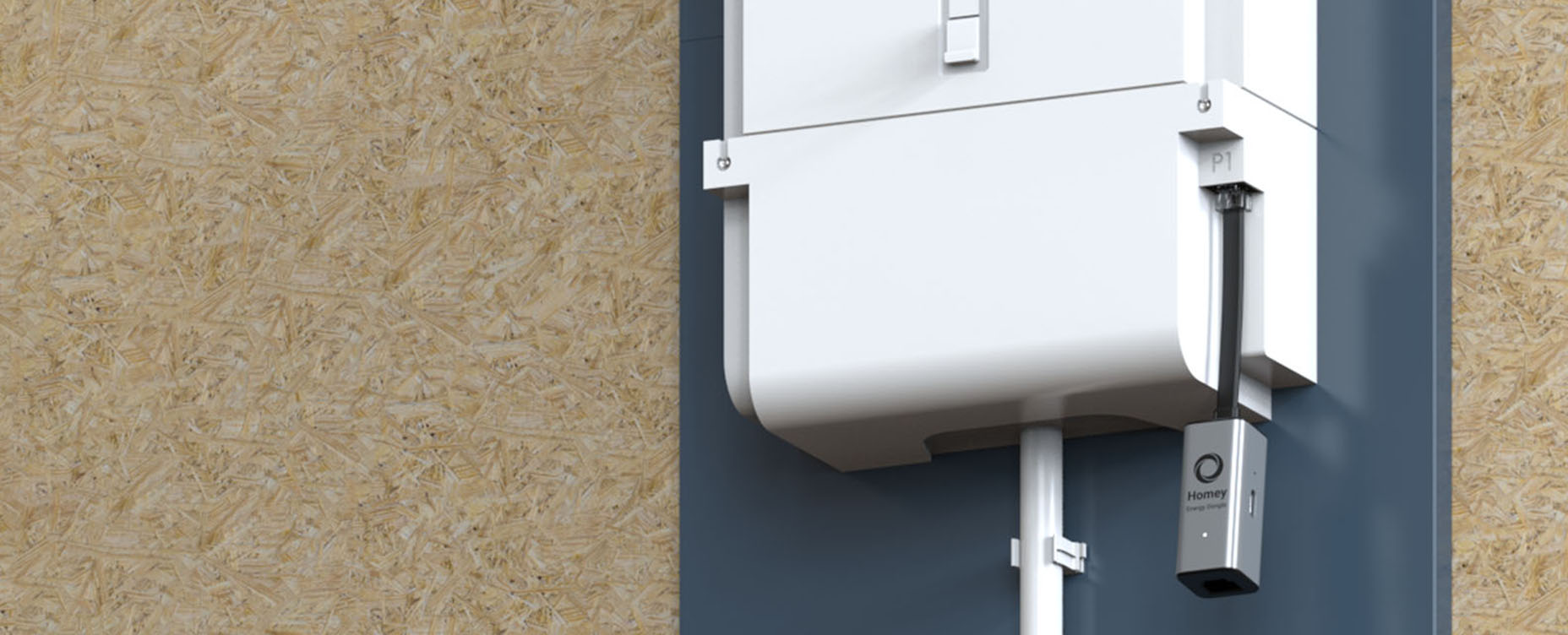
The Homey Energy Dongle makes it easy to connect a compatible smart meter directly to Homey. Simply plug it into your smart meter's P1 port and connect it to Homey. The Energy Dongle provides real-time electricity measurements, helping you understand household energy consumption and electricity exchanged with the grid.
Depending on your smart meter, it can also provide gas consumption data. Combine these measurements with solar panels, EV chargers and home batteries to build a more complete picture of your home's energy usage.
Automate energy management with Homey Flow
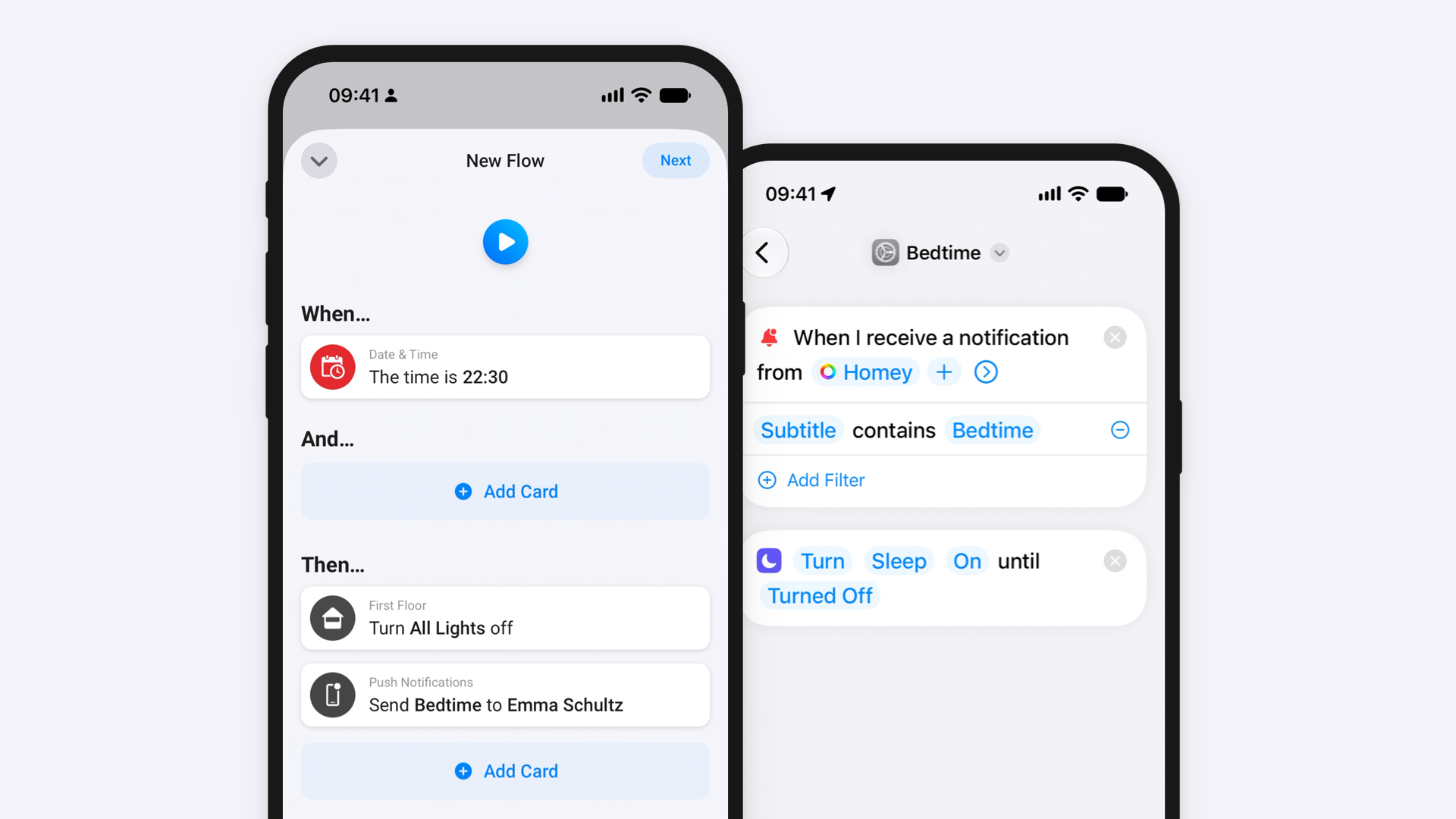
Monitoring energy is useful. Automating it is where things get interesting. Homey Flow lets you create automations that bring together devices, energy measurements, and electricity prices. And because Homey supports devices from many different brands, these automations aren't limited to products from a single manufacturer.
Example: Make the most of solar energy
- When: Your solar panels generate more electricity than your household consumes.
- And: Your electric vehicle is connected.
- Then: Start charging your EV using the available solar surplus, where supported by the charger.
Example: Charge when electricity is cheap
- When: Electricity prices enter a low-price period.
- And: Your home battery is below a selected charge level.
- Then: Start charging the battery, provided the integration supports this control.
Example: Avoid expensive electricity
- When: Electricity prices rise above your chosen threshold.
- And: Your EV is charging.
- Then: Pause compatible EV charging until prices fall again.
Example: Coordinate your energy devices
- When: Your solar panels generate excess electricity.
- And: Your home battery is nearly full.
- Then: Direct flexible consumption toward a compatible EV charger or water heater.
These examples illustrate how different parts of your smart home can work together. Actual automation options depend on the capabilities of your connected devices and integrations.
Why choose Homey as your Home Energy Management System?
Traditional energy management solutions often focus on specific hardware categories or manufacturers. Homey takes a broader approach by connecting energy management with the rest of your smart home.
| Capability | Homey |
|---|---|
| Whole-home electricity monitoring | ✓ |
| Individual device energy insights | ✓ |
| Solar production monitoring | ✓ |
| EV and EV charger integrations | ✓ |
| Home battery integrations | ✓ |
| Dynamic electricity prices | ✓ |
| Smart heating integrations | ✓ |
| Energy-based automations | ✓ |
| Cross-brand smart home connectivity | ✓ |
| Smart home and energy management in one platform | ✓ |
Available features depend on your Homey model, connected devices, region, and supported integrations.
More than an energy management system
Homey doesn't just connect your energy devices. It connects your entire smart home. That means information from motion sensors, thermostats, lighting, weather conditions, electricity prices, and energy devices can all contribute to smarter automations.
For example, your heating can respond to whether someone is home, while your EV charging can respond to solar production and electricity prices. Instead of separate systems making separate decisions, Homey helps your devices work together.
Get started with energy management in Homey
Whether you're just beginning to monitor electricity consumption or already have solar panels, an EV charger and a home battery, Homey helps bring everything together.
Start by connecting your smart meter or energy measurement devices. Add your compatible solar inverter, heating system, EV charger, and home battery. From there, use Homey Energy to understand your household's electricity consumption and Homey Flow to automate how your energy devices work together.
Discover Homey and explore how connected energy management can make your home smarter and more efficient.
Frequently asked questions
What is a Home Energy Management System (HEMS)?
A Home Energy Management System monitors and helps manage electricity consumption, generation, and storage within a home. It can connect smart meters, solar panels, batteries, EV chargers, heating systems, and other devices to improve how energy is used.
Can Homey function as a Home Energy Management System?
Yes. Homey combines energy monitoring with smart home automation. It connects compatible energy devices from different manufacturers and allows them to work together through Homey Flow.
Can Homey monitor electricity consumption?
Yes. Homey supports whole-home energy monitoring through compatible smart meters and energy monitoring devices. Individual device consumption can be measured or estimated, depending on the device.
Can Homey control a home battery?
Homey supports various home battery integrations. Available controls depend on the manufacturer and integration. Some systems allow charging and discharging to be automated through Homey Flow.
Does Homey support dynamic electricity prices?
Yes. Homey Energy supports dynamic electricity prices in selected European markets. These prices can also be used in automations.
Can Homey help increase solar self-consumption?
Yes. By connecting solar production data with compatible appliances, batteries, and EV chargers, Homey can automate flexible electricity consumption when solar energy is available.
Do all energy devices need to be from the same brand?
No. One of Homey's strengths is its ability to connect compatible devices from different brands in one smart home platform.
Do I need solar panels or a home battery to use Homey Energy?
No. You can start by monitoring electricity consumption with compatible smart meters or energy measurement devices. Additional energy devices can be connected as your setup grows.
Related terms
HEMS
Home Energy Management System, a system for monitoring and managing household energy.
Dynamic electricity tariffs
Electricity pricing that changes according to market conditions.
Solar self-consumption
The proportion of solar electricity generated by your panels that is used within your home.
Peak shaving
Reducing electricity demand from the grid during periods of high power consumption.
Home battery
An energy storage system that stores electricity for later use.
Smart meter
A digital electricity meter that can provide consumption and, where supported, export measurements.
Homey Flow
Homey's automation system for connecting events, conditions, and actions across smart home devices.


