


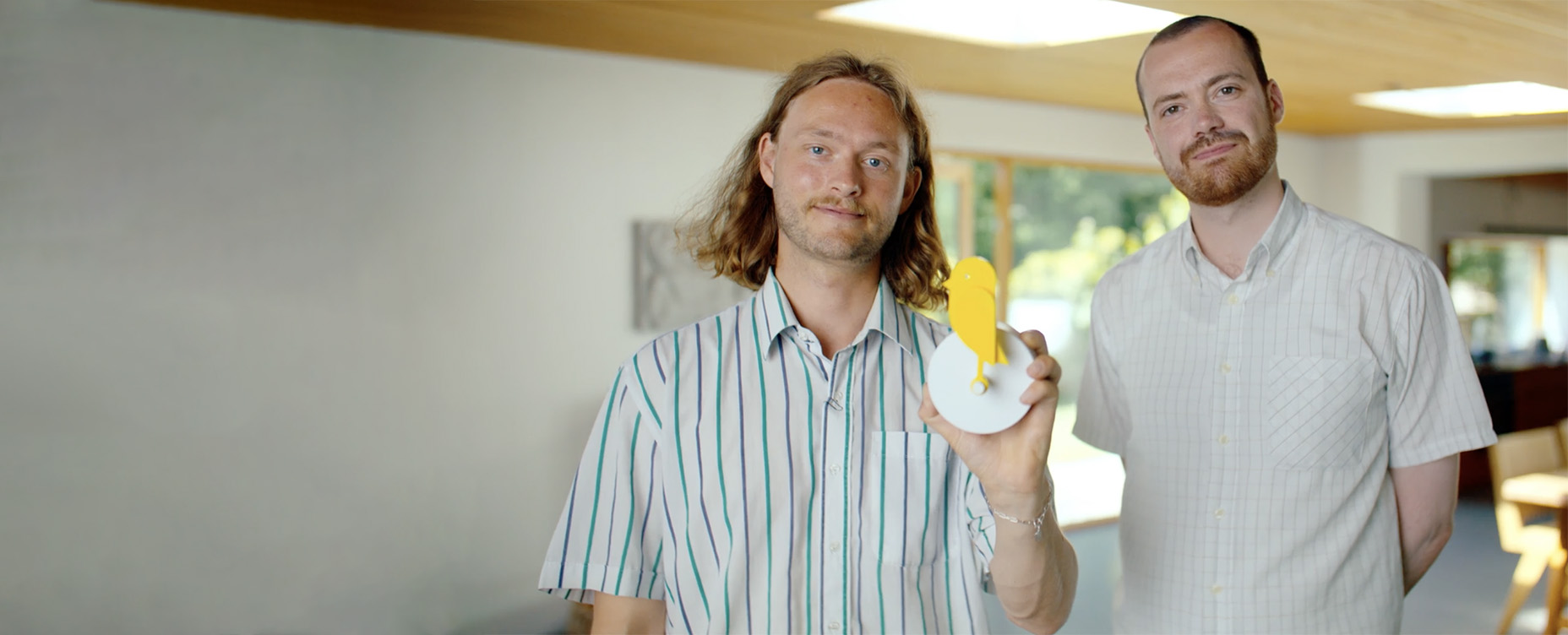
Hans Augustenborg from Birdie
 Written by Dino K.
A school project about indoor air quality turned into a Kickstarter campaign, and then into a company. For the Smart Home Founder Series, we talked to Birdie co-founder Hans Augustenborg about how that happened.
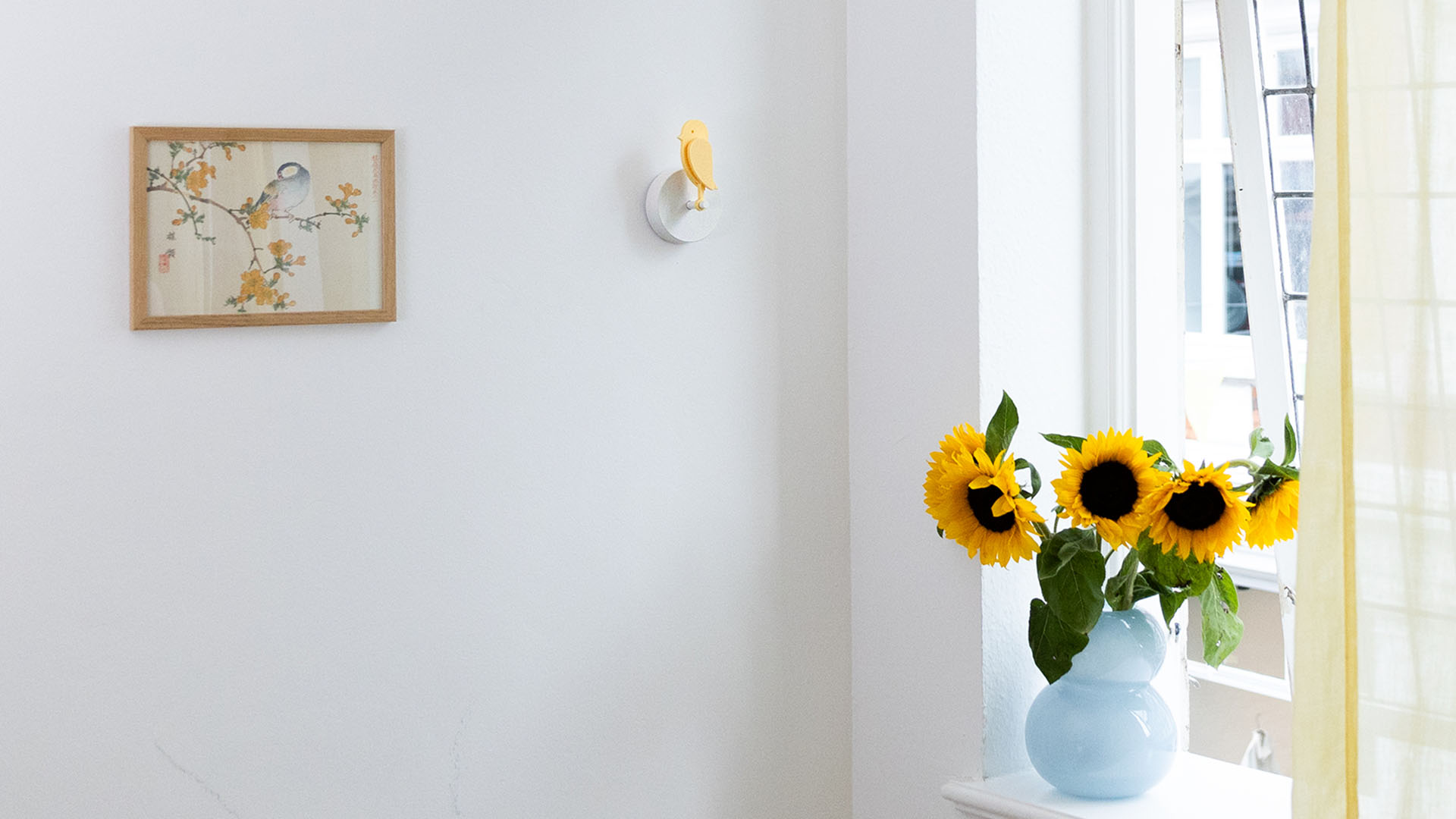
Birdie Scandinavia, from Denmark, makes the Birdie Fresh Air Monitor. It’s a small bird-shaped device that drops when indoor air quality turns poor and rises again once you open a window. Birdie Pro, the connected successor, recently closed its own Kickstarter campaign at over 50 times the funding goal, and now supports Homey.
Hello Hans, thanks for joining me today. Before we get into the product, can you tell me who’s behind Birdie and how the idea came about?
HANS: “Birdie was born in 2022, out of a school project where I had to solve a problem with a creative solution. I was studying advertising and visual communication at the time, so I decided to see if I could tackle poor indoor air quality in homes, and it turned out to be a much bigger problem than I expected. We spend 90 percent of our life indoors, mostly in poor air quality, and that raises your risk of asthma, headaches, poor sleep, and even lung disease.”
“What really got me was that every expert agreed on the fix: just open your windows two or three times a day, and the indoor air quality improves dramatically. So you have this huge health problem with a solution that’s free and almost embarrassingly easy. Especially if you compare that to losing weight or staying healthy, which takes real effort, exercise, discipline, and doing everything right day after day. This didn’t take any of that; it was just sitting there for the taking, which made me wonder why nobody bothers. Part of it is that we’re busy or lazy and just forget. But the real reason, I think, is that we simply don’t see it. It’s an invisible problem, out of sight and out of mind.”
“So I set out to make it visible, to build a bridge from this huge, hidden problem to the simple act of opening a window. That’s when I found the story of the canaries in the coal mine. A couple hundred years ago, miners would bring canaries down into the mines with them, and if the bird fainted, it meant the air had turned toxic, and it was time to get out. I found that story fascinating, and I think it still resonates with a lot of people today, so I set out to create a bird that would faint the same way whenever the air quality turned bad.”
“The problem was, I don’t have an engineering background, so I didn’t really know how to get there. I just had a rough idea: Something with a motor and a CO2 monitor, since CO2 is the best indicator of poor air quality. And I knew that if this idea was ever going to reach the world, my skills alone wouldn’t be enough. I can make things look good, and I know advertising, but the business side, administration, organization, all of that, I knew I’d need help with. So I called my best friend and co-founder Andreas, who was just finishing business school. I figured he’d bring exactly what I was missing, and he was ready to jump in.”
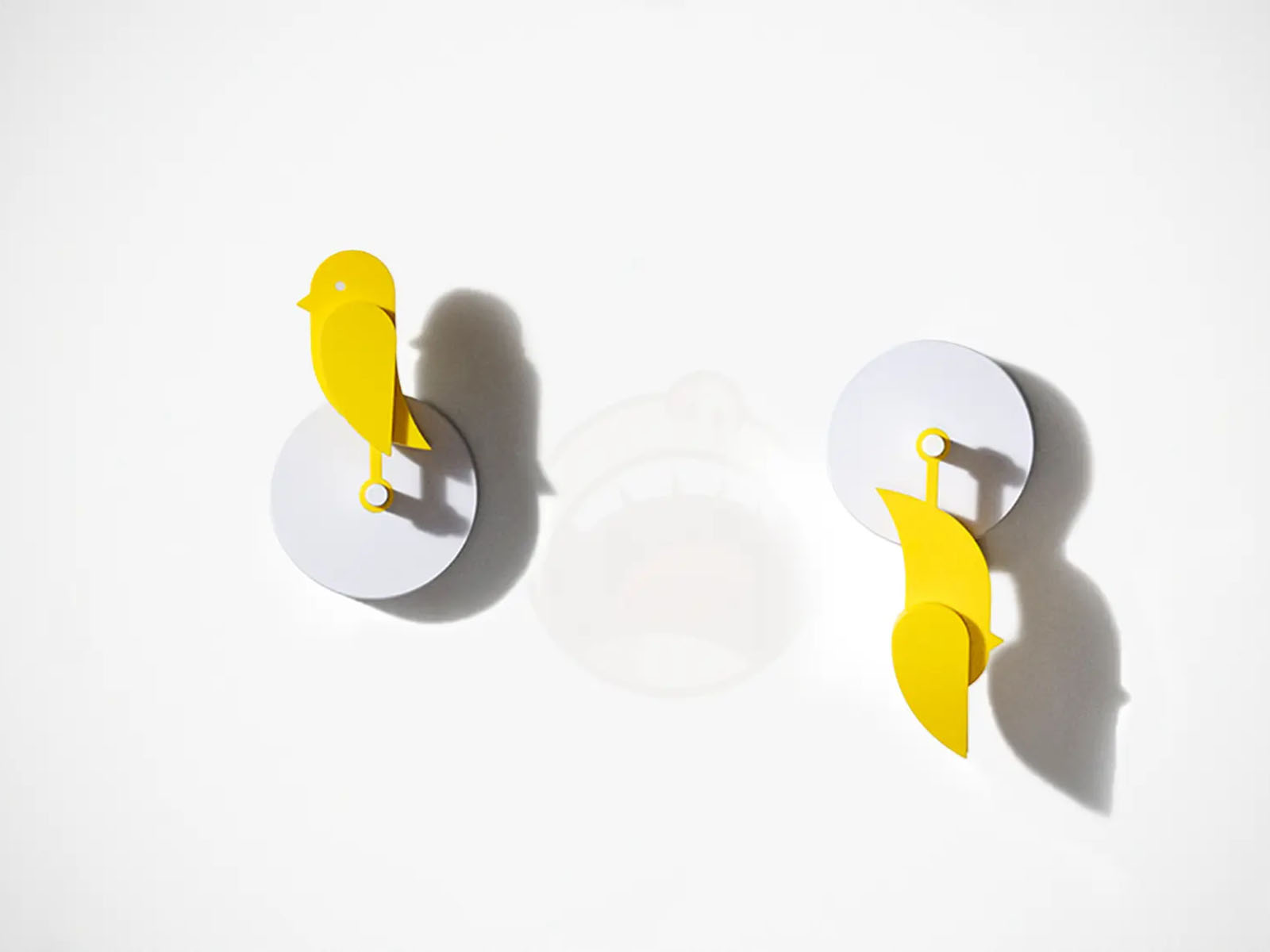
The original Birdie was called Canairi at first. What prompted the name change to Birdie, and what has changed about the product itself since that first version?
HANS: “That’s a whole story on its own, and honestly, we didn’t really choose it. Another company in the US already had a similar name, and it turned into a legal issue that meant we had to change ours. We turned it into a competition instead; people could submit name ideas, and whoever we picked would win a trip to the Canary Islands. Pretty funny, looking back.”
“Once the idea felt real, we both took a break from our jobs. We had full-time work at the time, but we got two or three months of leave and spent it making a Kickstarter film, since that’s where we knew we’d launch. I already had some film experience, and that whole platform really comes down to making a convincing film. We needed capital to actually develop the product, and the film was how we’d get it. Luckily, it worked; we raised half a million dollars, exactly what we needed to move forward.”
The original Birdie famously had no app, no screen, nothing to check, but now Birdie Pro does. What made you decide to develop an app?
HANS: “It’s an interesting shift, and you’re right, we launched saying there’s no app. There’s even a video of me saying that outright. I still believe there’s something nice about a product you don’t have to install via an app, constantly check, or get notifications from. That hasn’t changed. What changed is that we realized different users have different needs.”
“A lot of people either skipped the original product entirely, or bought it and then wanted more. Things like adjusting the level where the bird drops, connecting it to another system, or tracking historical data. So it felt natural to give people what they were asking for, without taking anything away from the original experience. We think of it now as two products built for two different kinds of people.”
“And even with all that connectivity in Birdie Pro, the analog core is still there. It still drops when CO2 rises, no phone required. That’s the part I’m proud of: you don’t need a phone, but you have the option. Analog first, app optional. I think that’s actually where a lot of home tech is heading. People don’t want to be glued to their phones and dashboards all day, but it’s nice to have that option when you need it.”
Birdie Pro retains the same analog magic as the original, but now it also tracks CO2, humidity, temperature, mold risk, pollen, and outdoor air quality. How did you decide which air quality factors are important to monitor?
HANS: “CO2 is still the best indicator for knowing when you need to ventilate, and ventilating is the single best thing you can do for your indoor air quality. That’s why it stayed as our main sensor. But once you start thinking about indoor climate more broadly, other things start to matter too. Humidity, temperature, air quality index (AQI), mold risk, so it made sense to add those too. Outdoor air quality and pollen data come in through Google APIs, and folding that into the same app just made sense. Nobody wants five different apps just to get the full picture.”
“PM, particulate matter, is definitely more alarming in a lot of ways; it’s something you have to act on immediately if it spikes. But acting on it is really the point, and our upcoming air purifier is what actually runs on PM data. So we decided not to build a PM sensor into Birdie Pro itself, since without a purifier, you’d just be looking at a number you can’t do much about. That said, the PM tab does show up in the Birdie Pro app, so if you own our other products, you’ll see everything in the same place, or in Homey if that’s your setup.”
In Birdie Pro, you now have smart home integration with platforms like Homey. What’s the story behind that, going from no app at all to full platform integration?
HANS: “Honestly, and I want to be transparent about this, we don’t fully know the real benefits of that connectivity yet. But we’re open to finding out. We want to see how people actually use the data from Birdie Pro inside their own smart home setup. Maybe people connect it to their air purifiers, maybe to windows that open automatically. We’re genuinely curious to see where this goes, and in a way, we built it to pull people into that process with us, to help us figure out how Birdie Pro should connect into their smart home.”
“I should say, I’m probably still in the original Birdie target group myself. I’m not super technical, which is a little funny given where the product’s headed. I like technology and seeing what’s possible, but I also have an instinct to keep things simple. I brew my own coffee, I clean the floors myself, and I still like opening windows by hand. There’s something nice about doing simple, physical things yourself in a life that’s otherwise full of constant input. That said, it’s not all black and white. I did end up buying a robot vacuum eventually. And I’ve actually caught myself using the Birdie app a lot, getting curious about humidity levels and what I could do about them.”
You just closed a Kickstarter that raised fifty times your goal. Was this something you expected, or did it catch you by surprise?
HANS: “I’ll be honest, Kickstarter goals aren’t really the full truth; you set them low on purpose just to hit the goal early. But even accounting for that, we didn’t expect anything close to this. When we launched the original Birdie, it had a lot of built-in news value, since nothing like it existed yet, and we picked up design awards and a ton of media coverage along the way. So going into Birdie Pro, we assumed it would be hard to recreate that same energy.”
“What we didn’t account for was the huge number of people who’d seen the original Birdie, never bought it, and were simply waiting for the next version. That’s how it goes with technology: people wait, sometimes for years. A lot of those people had clearly been sitting on the decision, and once Birdie Pro launched, it just clicked: now’s the moment. So yeah, we were genuinely, positively surprised. It ended up becoming the most-funded air quality monitor Kickstarter has ever seen.”
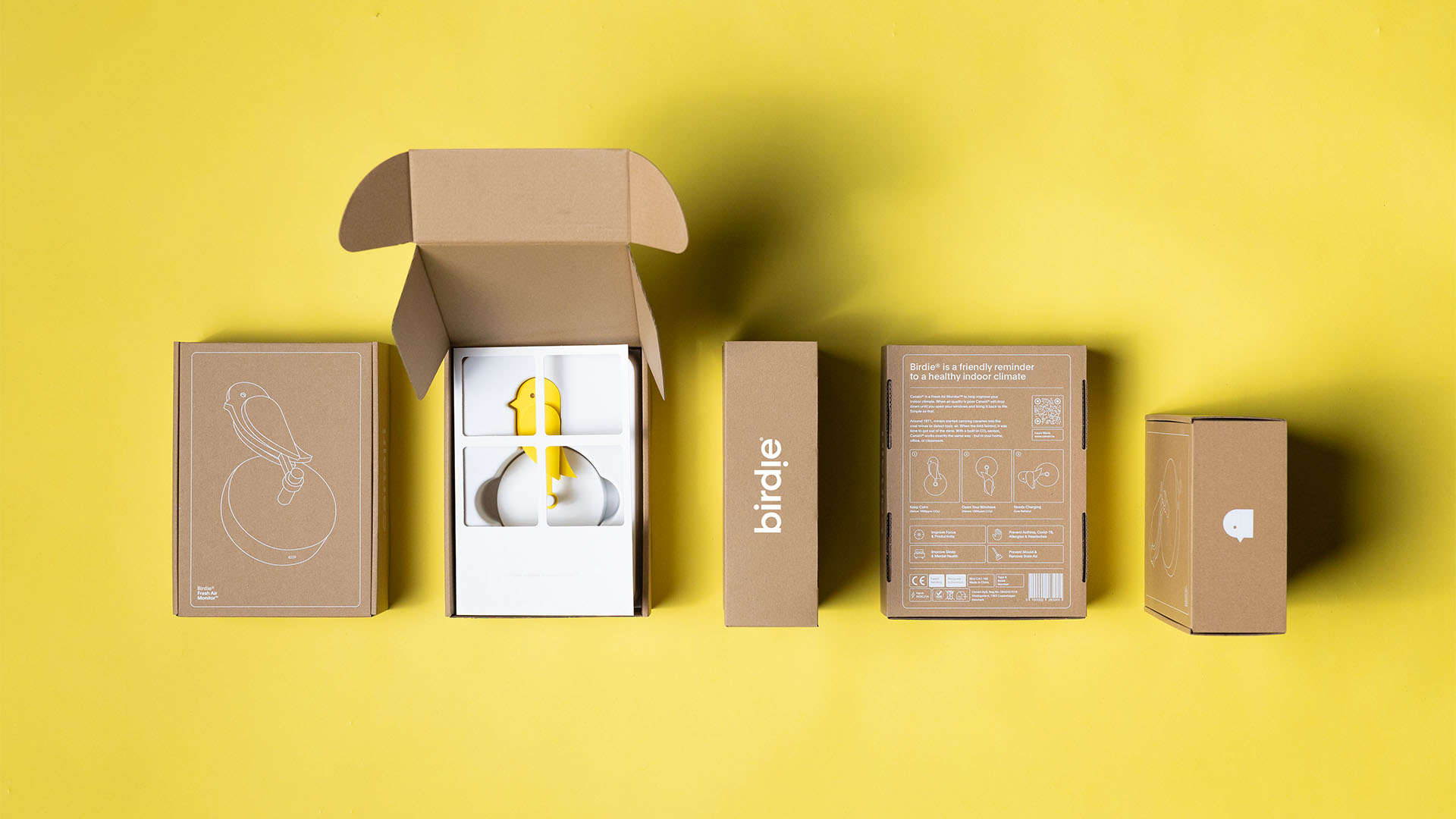
Did your backers play a role in shaping the product? Was there feedback, good or bad, that actually changed something in development?
HANS: “Good question. I don’t think any single backer told us exactly what to build. Our product team already had a clear direction, and the product turned out pretty much how we set out to make it. But backers were incredibly helpful with the practical stuff, things like asking whether you could connect multiple Birdie Pros in the same household. Small, specific questions like that ended up mattering a lot, because they were things we hadn’t even thought to ask ourselves. Now, multi-device support just works, and many of those little practicalities in the app came straight from the crowd. In that sense, it really was co-developed with our users.”
You went from two guys with an idea to a company shipping physical products worldwide. What did the manufacturing side teach you that design or business school never could have?
HANS: “Honestly, we still don’t fully know how we pulled it off. Building a completely new product, custom molds, unique programming, mass manufacturing, all of it. What actually got us there was a lot of coffee with a lot of different people who knew things we didn’t. We teamed up with manufacturing experts and engineers who understood how to get to the next step, and we leaned heavily on external consultants along the way. These days, we’re lucky enough to have some of that expertise in-house. Our product manager, for instance, understands the supply chain far better than either of us ever did starting out.”
“From the outside, it’s a total black box. You don’t know anything about product requirements, quality control, or certifications, and there’s an enormous amount that goes into properly developing and mass-producing a product. Add recycled materials into that mix, and it gets even harder. We assumed we could just pick materials off the shelf like anyone else. Turns out getting the exact color you want with recycled material is much harder, and everything gets more expensive along the way. It just hasn’t been easy, at any step.”
You’re expanding your product portfolio soon, with an air purifier and a very interesting LED candle. What made you decide to branch out into other product categories rather than focus solely on air quality monitoring?
HANS: “We’re planning to stay within air quality, at least for the next couple of years. Our brand mission is basically ‘home of fresh air,’ and everything within that mission still counts. Ventilators, maybe smoke alarms, humidifiers, dehumidifiers; it’s all still air quality at its core. Down the road, who knows, maybe we move into healthy home more broadly, and that could mean almost anything.”
“But we go back and forth on this a lot internally, because we don’t want to spread ourselves too thin. If we suddenly tried to be Google or IKEA overnight, that just wouldn’t work for a company our size. So the right call, at least for now, is to stay focused on air quality, and let expansion into the wider healthy home space happen slowly, if it happens at all.”
“Both the air purifier and Birdie Flame are launching before the end of this year. The purifier fits naturally into that air quality mission, but Birdie Flame is a bit of an outlier. It’s an LED candle, and it won’t be smart at launch. Maybe that changes down the line if people ask for it, but that’s not the plan for now.”
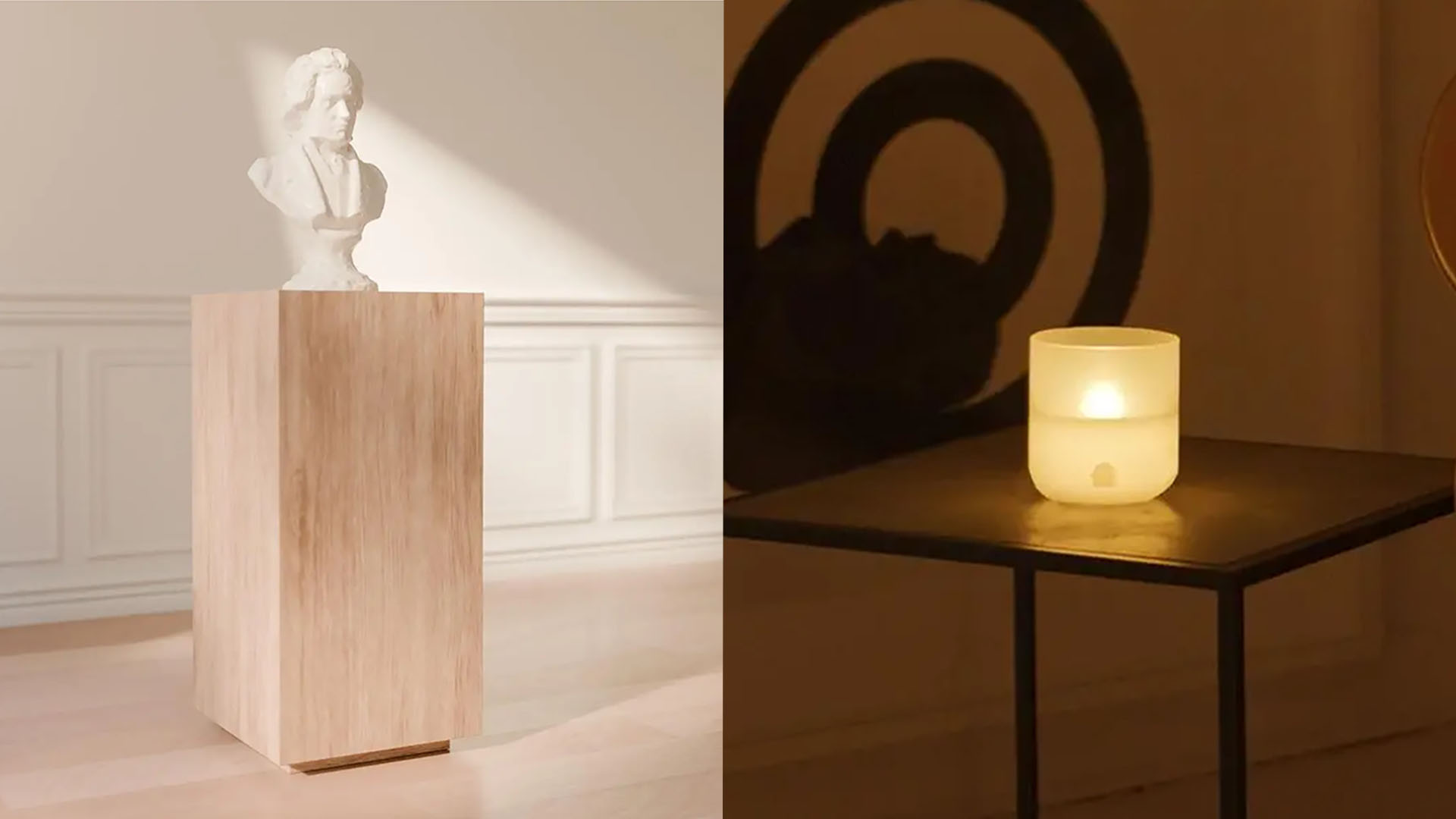
“Honestly, the idea started as a bit of a joke, and it connects back to Birdie in a funny way. Everyone knows real candle flames aren’t great for your health. They emit harmful particles, but we still love them because they’re cozy. LED candles have existed for at least a decade, yet most people still haven’t made the switch. We think that’s because they don’t look good enough, and because you don’t get to interact with them the way you do with a real candle, lighting it, blowing it out.”
“So we focused on making it beautiful first. There’s a flicker hidden behind matte glass that moves like a real flame, so once it’s lit, it genuinely looks alive. With the final version, you turn it off by blowing on it, just like a real candle, and light it by waving your hand over it as if you’re holding an imaginary match. You never actually touch the candle to use it.”
Compatibility with smart home platforms like Homey seems to matter more for a device like this than voice assistants such as Alexa or Google. How are you thinking about which standards to prioritize as connectivity becomes more central to Birdie Pro?
HANS: “Right now we’re using Bluetooth to connect to the hub, and we’re still figuring out where things go from here. On Matter specifically, I won’t pretend to be a technical expert, but from what I understand, it’s not really built for small companies. The certification costs and the ongoing subscription fees make it a tough fit for a company our size. Especially when there are already better open standards out there that don’t box you in the same way.”
What are you most proud of when you look back since 2022, and where do you see Birdie five or ten years from now?
HANS: “I’m just proud, honestly. As a kid, I always had that dream of being an inventor, having an idea and bringing it to life. I think most kids have that, drawing something and saying, look what I made. Actually turning an idea into a real product that people connect with is something else entirely. From day one, we had five thousand users across seventy countries, and that alone felt like a massive achievement, putting something into the world that people genuinely wanted.”
“I’m also really proud that we hold a patent on the product. It’s proof, in a way, that this is a real invention, not just a nice idea. We’re even part of the school curriculum in Australia now, teaching kids about innovation, which I think is genuinely cool. And we were the first air quality monitor ever featured in Vogue. That one matters to me, because let’s be honest, smart home tech and air quality monitors aren’t exactly glamorous. It’s just a device sitting in the corner of a room. So making it into Vogue tells me we built something that resonates beyond the obvious audience.”
“We even have customers who’ve tattooed our logo on their skin. That still amazes me. I’m proud of the community we’ve built around something as unglamorous as an air quality monitor, and proud of the brand itself.”
“And then there’s the softer side of it. I’m just deeply grateful to be running this company with my best friend, spending our days together as adults the same way we did as kids. That’s a real privilege, and I don’t take it for granted.”
You’ve been through the whole arc now: design, manufacturing, crowdfunding on Kickstarter, and shipping hardware to many users. What’s the one piece of advice you’d give someone trying to build a smart home product for the first time?
HANS: “My main advice, and the simplest one, is just start. Make it exist first, then worry about making it good. When we made our Kickstarter film, we showed a 3D printed prototype that honestly didn’t even work properly. But polishing it further at that stage would have been a waste of time. It was enough to show people the essential idea.”
“My second piece of advice is to share your ideas early and often. People will tell you to keep quiet, that someone will steal it, but I’ve genuinely seen that happen very rarely. What you actually get from sharing an idea is a live test of your pitch. You find out if it resonates with another human being, and you notice the moment they start losing interest, maybe because you got too deep into the technical details.”
“Next time, leave that part out and replace it with something sharper. Do that ten times, and your pitch becomes tight. You know exactly what the core idea is. So by the time you’re standing in front of an investor or a potential co-founder, you’re ready. That’s my advice: don’t wait, and don’t keep your idea to yourself. Sharing it is what sharpens it.”


