







Jeroen’s pool as a thermal battery
For most people, a swimming pool is somewhere to swim. Jeroen Bakker built one and spent a year turning it into a battery.
Jeroen lives in Groningen, in the north of the Netherlands. He runs Jeroen.nl, a platform focused on energy awareness. His roof carries sixty solar panels facing south, east, and west. On a good day, they produce far more electricity than his household can use. For years, that surplus went straight back to the grid, sold at low rates.
When he decided to build a pool, he saw an opportunity to change that. The idea wasn’t just to have a pool. It was to give all that excess energy somewhere useful to go.
Storing summer in the ground
The pool sits at the center of a system that Jeroen and his installer developed over many conversations. Both of them, as Jeroen puts it, “are the kind of people who can’t leave a good problem alone.”
The core insight was simple: water holds heat. On days when the solar panels generate more than the home can use, Jeroen uses Homey to divert that surplus to the pool’s heat pump, warming the water. By midsummer, the pool runs at 32 or 33°C, warmer than most people want to swim in. That’s intentional.
When the pool gets too warm, the valves switch over. The heat travels from the pool water through a heat exchanger and down into the ground sources that feed the house’s main heat pump. Excess solar energy collected in July becomes warmth stored for January.
The ground-source system runs warmer than it otherwise would, and the heat pump works less hard as a result. It’s a loop that took almost a year to validate. In April 2026, the pool sits at 26°C — heated from 7°C using nothing but surplus generation.
Six meters and a lot of questions
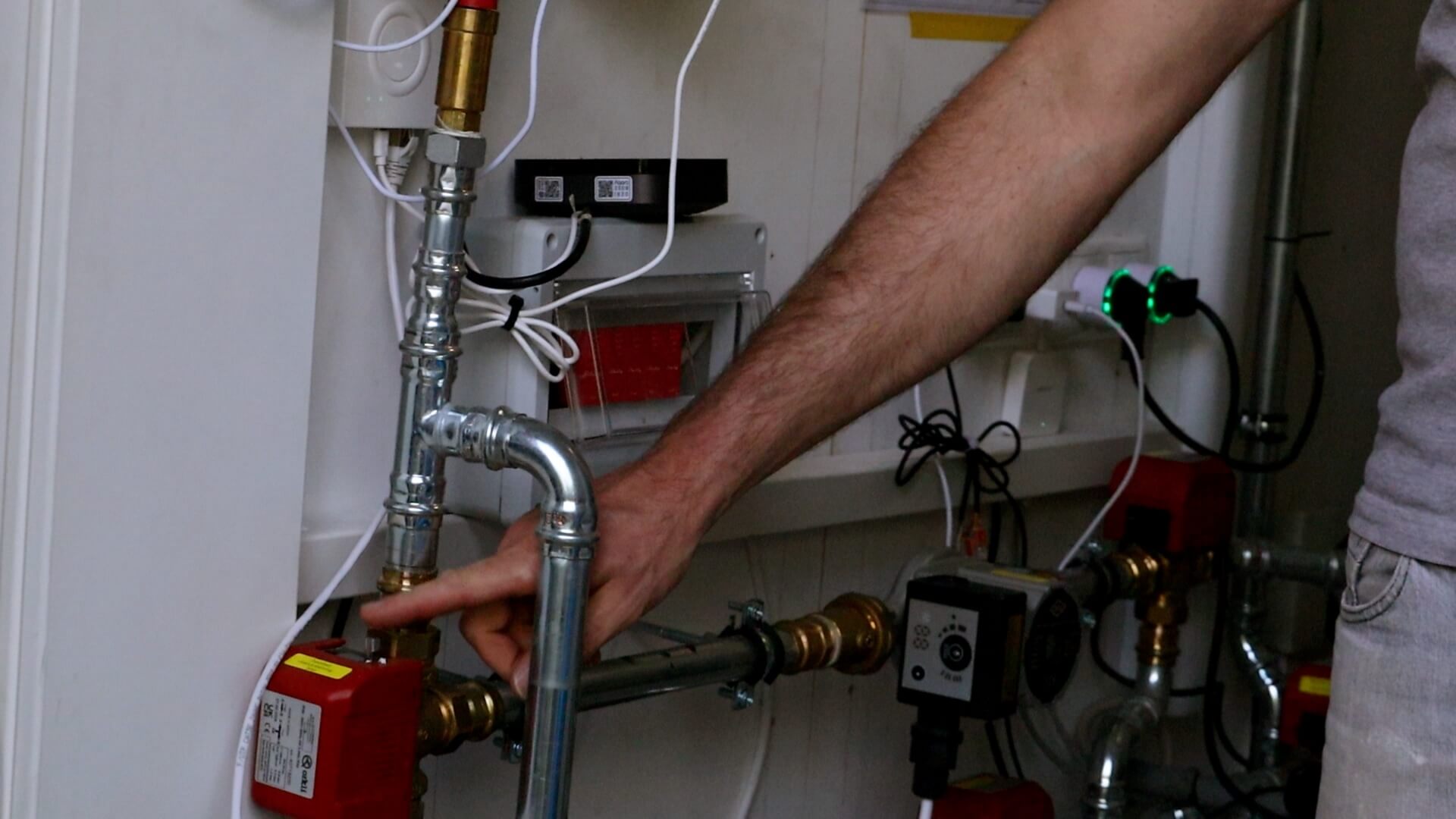
Jeroen’s meter cupboard holds six P1 meters, mostly for fun and testing. Together, they measure energy flows across different circuits and phases. Shelly power monitors track the heat pump, the charging station, and the solar output from the garage roof separately. The inverters for all sixty panels report live generation figures through their APIs.
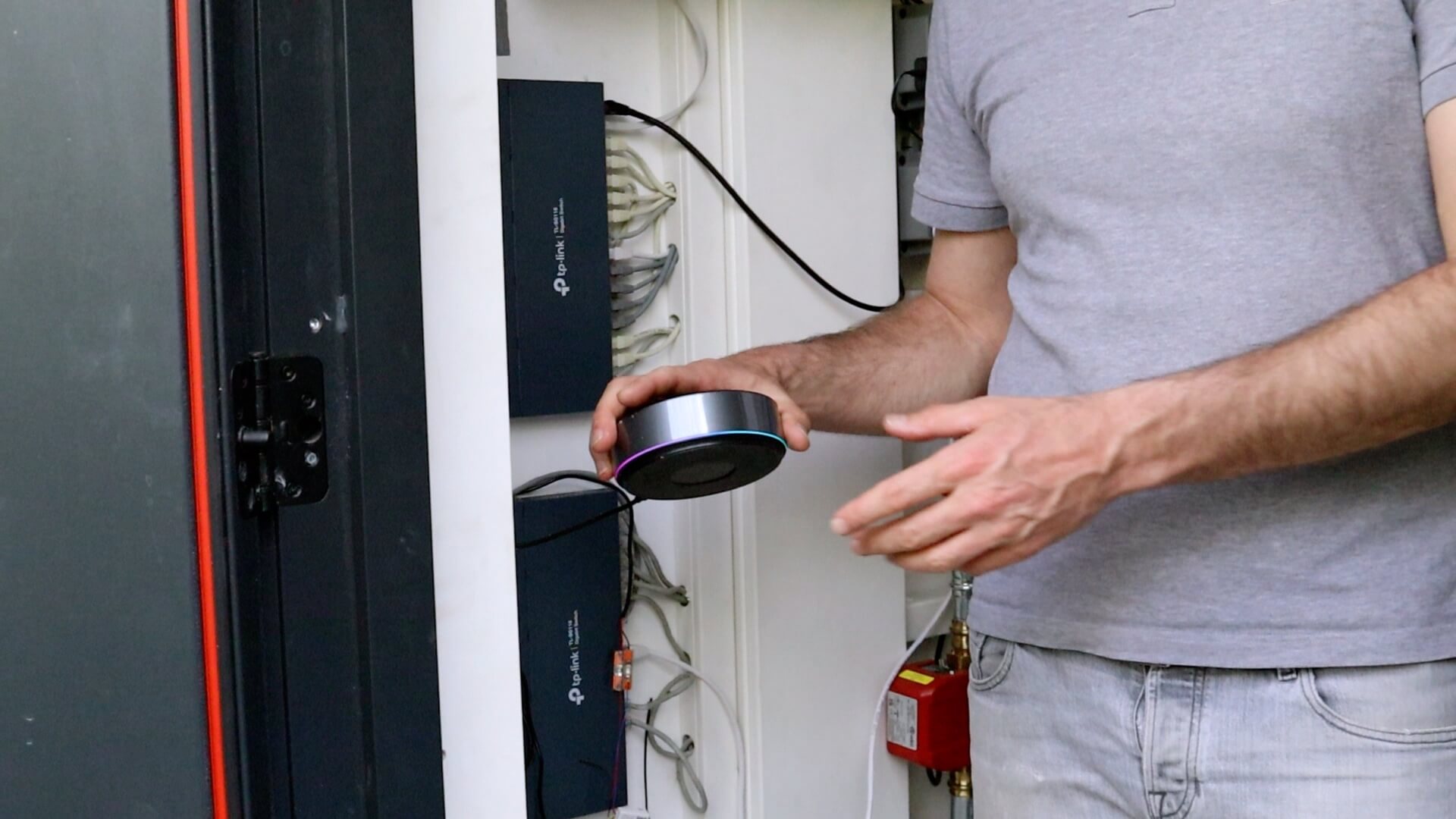
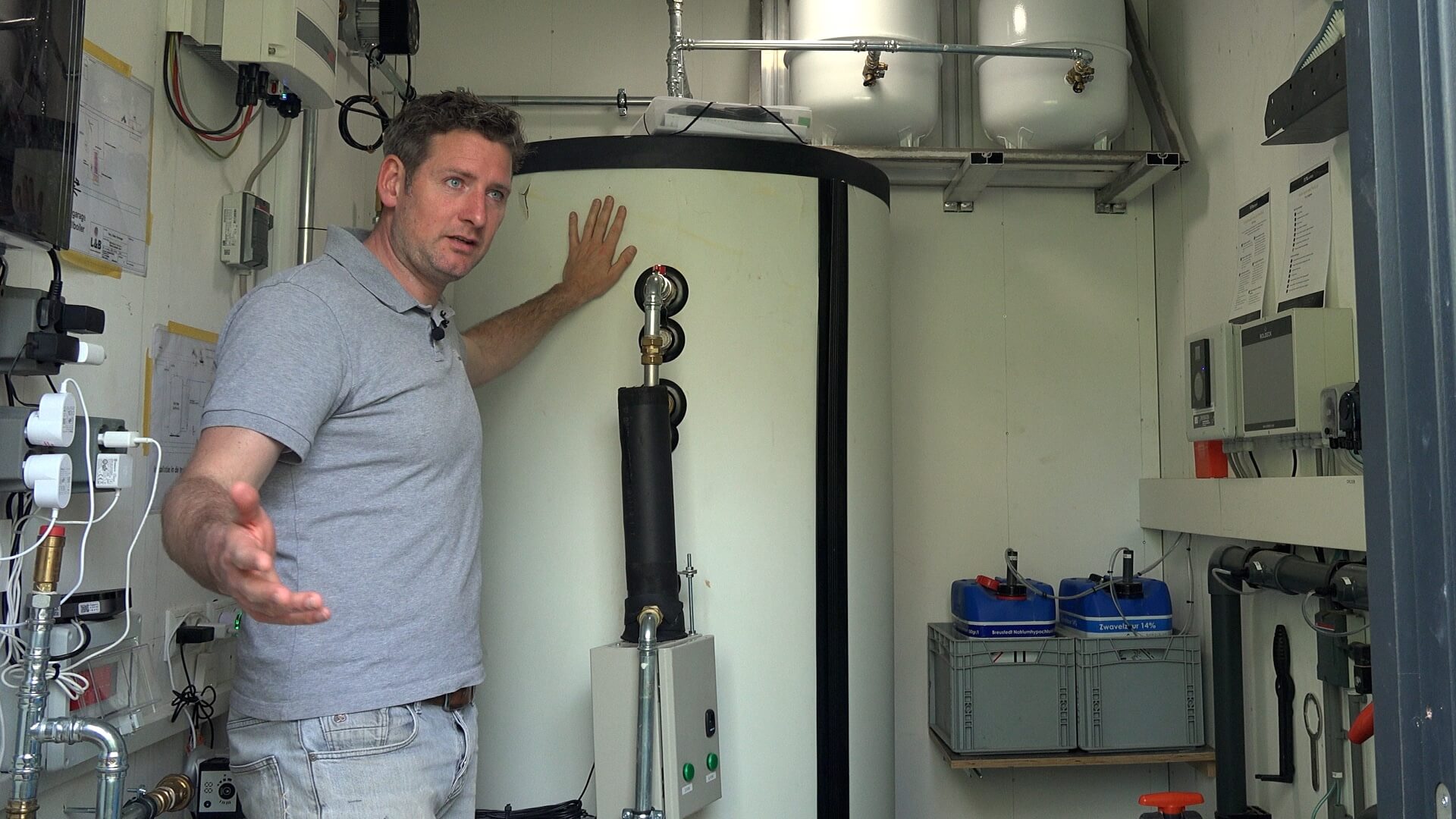
Two Homey Pros tie it all together. One lives in the meter cupboard, the other in the pool’s technical room, connected via HomeyLink. Together, they maintain a reliable Zigbee and Z-Wave mesh across the entire property, reaching sensors and switches that would otherwise sit too far from any single hub.
The Advanced Flows Jeroen has built don’t just react to what’s happening now. They look ahead. If tomorrow’s weather forecast shows strong sunshine, he can begin routing heat into the ground sources today. If the afternoon spot price for electricity rises, large consumers shut off at four o’clock, and the surplus flows back into the grid instead. Every decision has a reason. Every reason comes from a sensor.

Water that reports back
The pool also monitors itself. A PoolCop controller continuously tracks pH, ORP, and chlorine levels. Jeroen reads those values through the PoolCop API, sends them to Homey via a webhook, and stores them alongside everything else. His dashboards show not just energy flows but also water quality — how temperature affects chlorine consumption and how usage patterns shift across the season.
Underneath the pool, temperature sensors are embedded in the concrete at one and two meters below the surface. They measure how heat moves through the ground over time, giving Jeroen the data he needs to understand whether the thermal storage is actually working, and by how much.
A home that earns its complexity
Jeroen is careful to point out that this kind of setup requires patience. The Flows are intricate. A heat pump, solar arrays, dynamic pricing, and a swimming pool, all talking to each other through Homey.
For anyone else, he says, it might look overwhelming. For him, it’s become intuitive. Each piece of the puzzle has a clear role. Homey is what makes them aware of each other.
What started as a question of what to do with all this excess power turned into a home that stores summer heat in the earth and uses it to get through winter. A pool that isn’t a luxury item, but part of the infrastructure.
“Homey has become a mature platform,“ Jeroen says. “Stable enough to keep my girlfriend happy, and flexible enough to run all of this.” He calls the whole thing obvious, now that it’s built. The kind of obvious that only comes after a year of measuring, adjusting, and waiting.
Jeroen’s setup starts with insight. With Homey Energy, you can see where your energy goes and respond to it automatically with Flows.


