



Homey vs. Zipato: Which Smart Home Hub Is Better?
Choosing the right smart home hub is about more than connecting devices. The hub brings your entire smart home together, automates everyday routines, and has to keep working as your home evolves. Both Homey and Zipato aim to make smart home technology easier to manage, but they differ in important ways when it comes to hardware, connectivity, supported brands, and everyday functionality.
For most smart home enthusiasts, Homey Pro is the stronger choice. It supports over 70,000 devices from more than 2,000 brands and combines eight built-in wireless technologies with powerful automation tools and local control, which adds up to a more complete smart home experience. Here's a closer look at what sets the two apart.
Homey Pro and Zipabox2 at a Glance
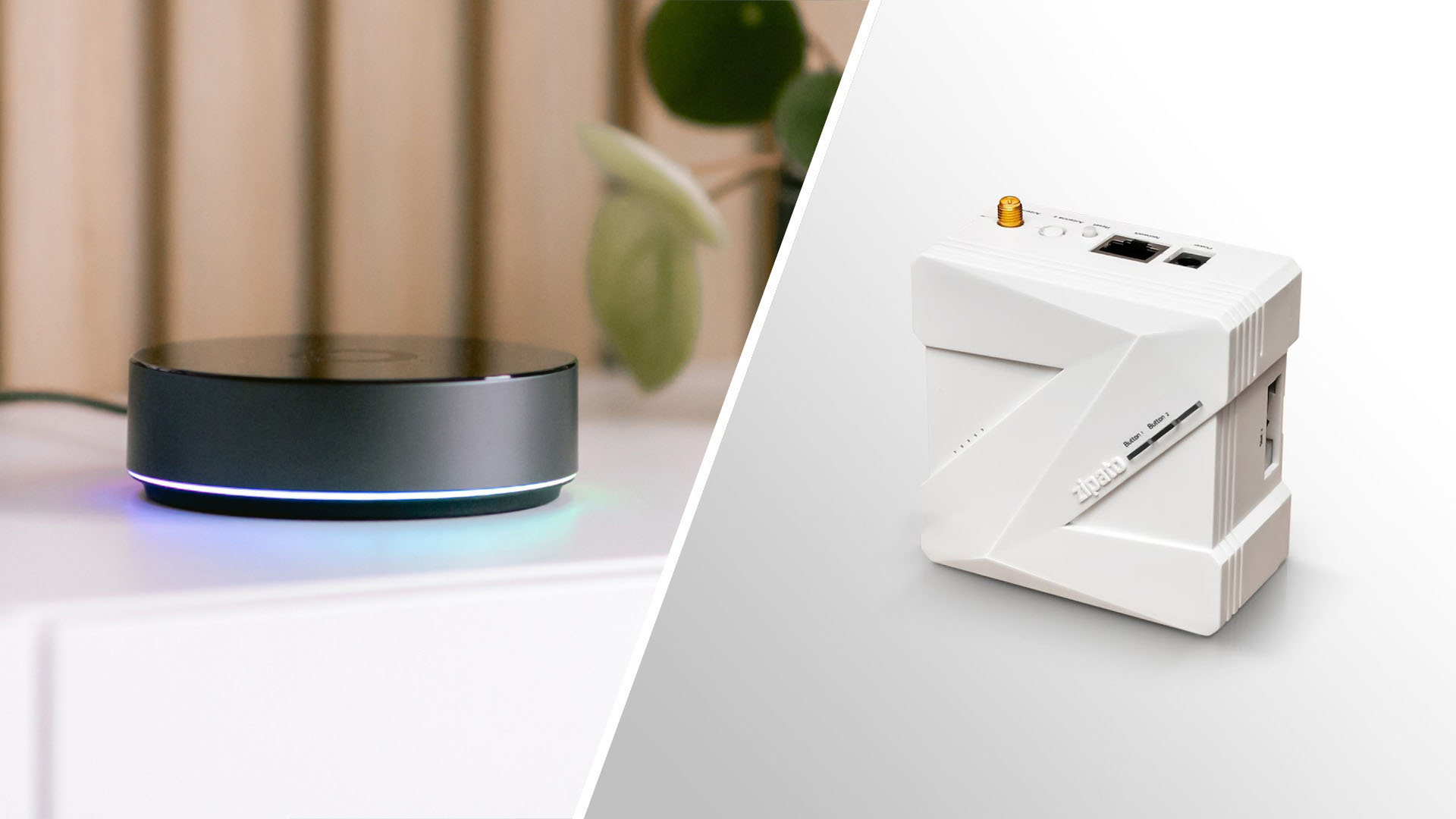
Homey Pro and Zipato Zipabox2 both let you connect and automate smart home devices, but they take different approaches. Zipato builds on a modular system that you expand with additional hardware modules, while Homey Pro takes an all-in-one approach that combines a wide range of connectivity technologies with powerful software and an extensive ecosystem of integrations. The table below shows how they compare.
| Feature | Homey Pro (2026) | Zipabox2 |
|---|---|---|
| CPU | 1.5 GHz quad-core | 1.3 GHz quad-core |
| RAM | 4 GB | 256 MB |
| Storage | 8 GB | 4 GB |
| Wi-Fi | 2.4 & 5 GHz | 2.4 GHz |
| Bluetooth | 5.0 LE | 4.0 |
| Zigbee | Built-in | Module |
| Z-Wave | Built-in (700) | Module |
| Matter | Yes | No |
| Thread | Border Router | No |
| 433 MHz | Built-in¹ | Module |
| Infrared | Built-in | No |
| KNX, EnOcean | No | Module |
| Ethernet | Adapter | Built-in |
| Ecosystem | 70,000+ devices, 1,200+ apps | Not published |
| Automation | Flow, Advanced Flow | Rule Creator |
| Local automation | Yes | Varies |
| Energy | Homey Energy | Power, P1 modules |
| Dashboards | Homey Dashboards | Web interface |
| Remote access | Included | Zipato cloud |
Device Compatibility and Wireless Technologies
A smart home works best when devices from different brands can communicate with each other. Imagine arriving home after a long day as your smart lights turn on, the temperature adjusts to your preferred setting, and your favorite music starts playing, all without opening multiple apps or pressing a single button. That's exactly the kind of experience you can create with Homey.
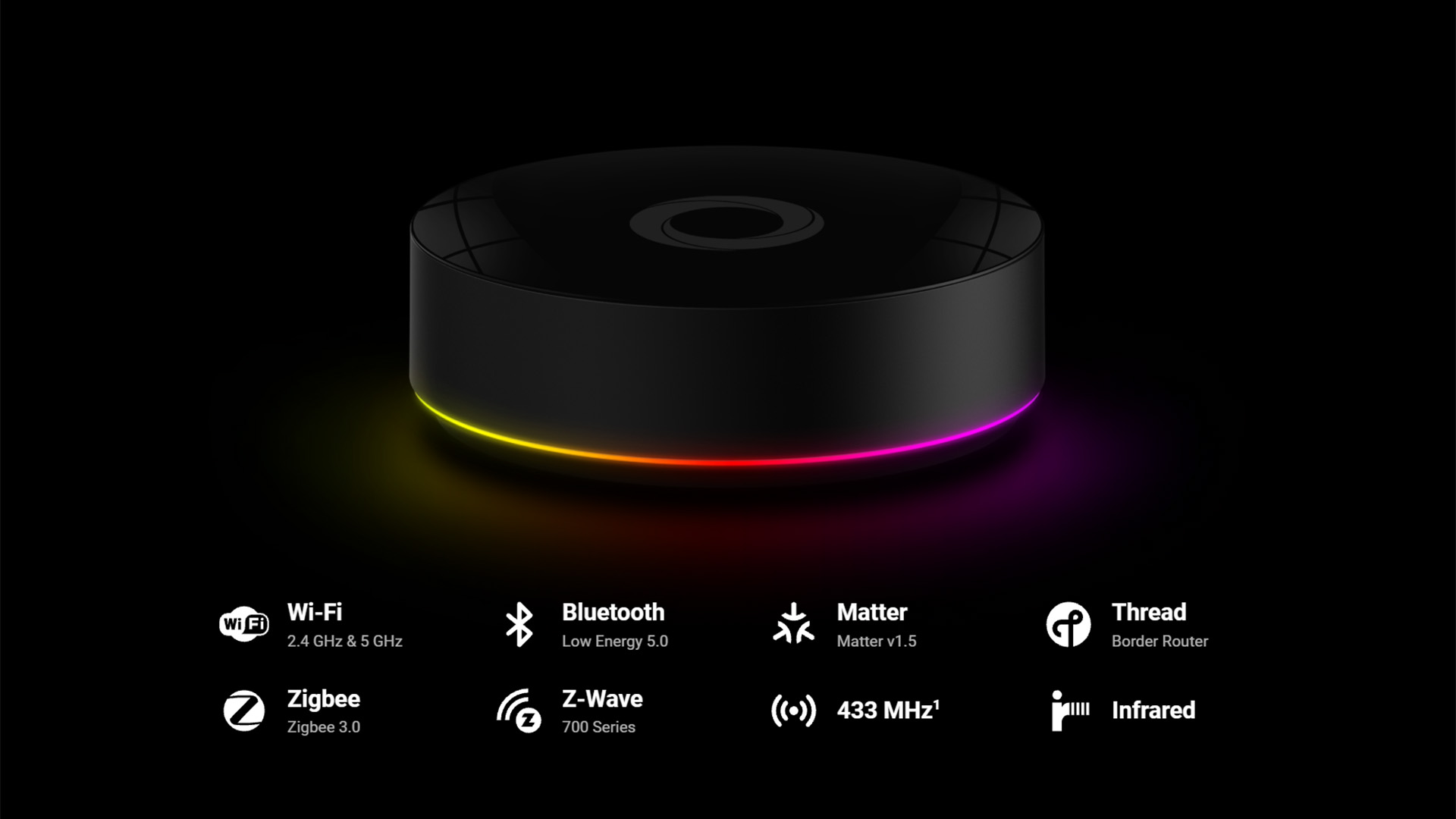
Homey connects over 70,000 devices from more than 2,000 brands, including Philips Hue, IKEA, Sonos, Shelly, Aqara, Fibaro, and many more. Rather than being tied to a single manufacturer, you can combine your favorite devices into one smart home that runs on eight wireless technologies: Zigbee, Z-Wave, Matter, Thread, Wi-Fi, Bluetooth, infrared, and 433 MHz.
Zipato supports several established smart home protocols, including Z-Wave and Zigbee, but Zipabox2 requires separate expansion modules for these technologies. Homey Pro includes them right out of the box, which makes it a particularly attractive option if you want to connect existing devices, add new brands, or expand your smart home without constantly thinking about compatibility.

Hardware and Processing Power
A smart home hub is the brain of your connected home, and its processing power and memory become increasingly important as you add more devices and automations. Homey Pro (2026) features a 1.5 GHz Quad-Core ARMv8 processor, 4 GB of RAM, and 8 GB of storage. Zipabox2, in comparison, runs on a 1.3 GHz Quad-Core Cortex-A7 processor with 256 MB of RAM and 4 GB of storage.
That gives Homey Pro 16 times the RAM and twice the flash storage of Zipabox2. The additional memory leaves room for more apps, automations, and integrations, and Homey Pro can run well over 100 Homey apps, so your smart home can grow alongside your needs.
Specifications alone don't determine real-world performance, since software and device configurations matter too. Even so, Homey Pro offers substantially more hardware resources to build on.
Automation With Flow and Rule Creator
A smart home becomes truly useful once your devices start working together. Both Homey and Zipato offer automation capabilities, with Zipato providing its Rule Creator, a web-based tool for building custom automation scenarios. Homey takes a different approach with Flow and Advanced Flow.
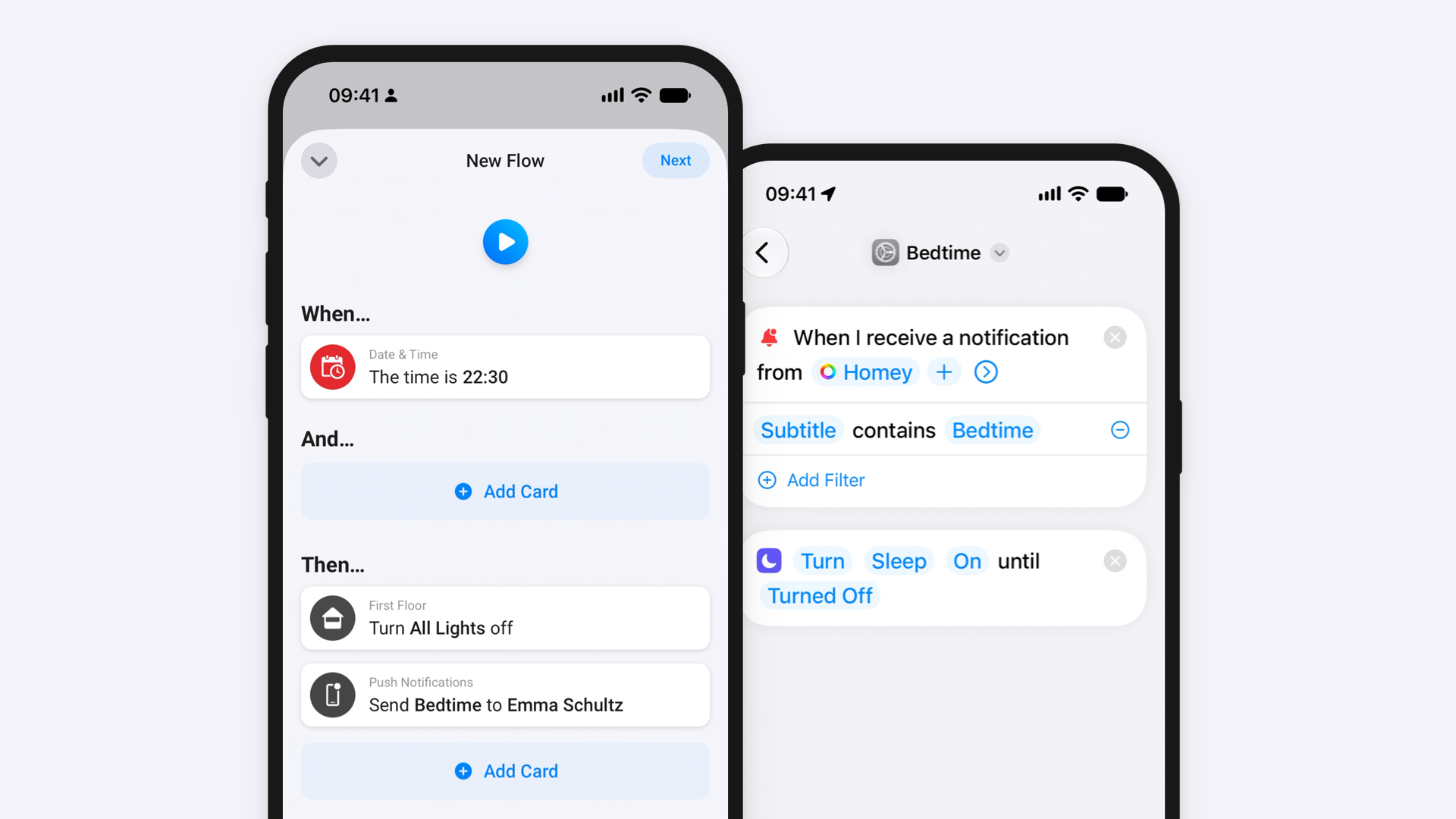
Flow lets you easily create everyday automations, such as turning on your hallway lights when motion is detected after sunset or lowering your heating when everyone leaves home. When you want to take things further, Advanced Flow gives you a visual canvas for building more sophisticated automations that combine multiple triggers, conditions, and actions.
You could, for example, create an evening routine that adjusts your lighting, checks whether doors are locked, lowers your blinds, and switches your entertainment system to the right settings, all in one place. Because Homey Pro runs its automation engine locally, your Flows can also continue working without an internet connection, provided the devices and integrations involved support local operation.
Energy Monitoring, Insights and Dashboards
A modern smart home should do more than switch lights on and off, and Homey brings automation, monitoring, and control together in one platform. With Homey Energy, you can monitor electricity consumption and production from compatible devices, including smart meters, solar panels, home batteries, and EV chargers.
Homey Insights helps you understand what's happening in your home over time, while Homey Dashboards lets you create personalized views of the devices and information that matter most. If you want to see your home's energy consumption, living room temperature, and security devices on one screen, a dashboard puts them all side by side.
Zipato also offers energy monitoring, security features, and customizable automation scenarios. Homey, however, combines these capabilities with a broader integration ecosystem and a unified experience across its mobile and web apps, which makes it easier to connect different parts of your home and turn information into useful automations.
Support for Matter, Thread and Specialized Protocols
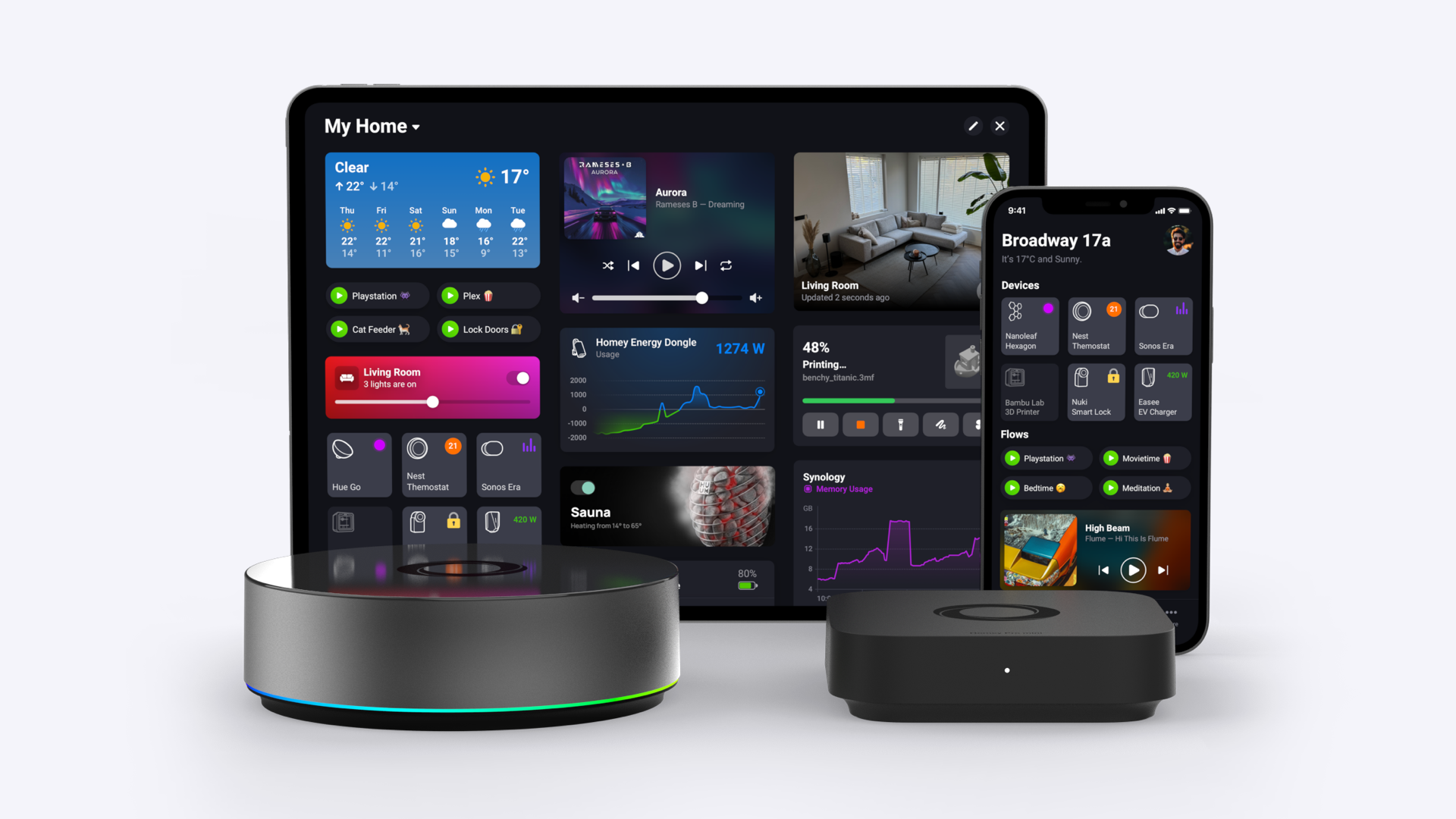
Smart home technology keeps evolving as new devices arrive, brands introduce new products, and standards such as Matter and Thread make it easier for devices from different manufacturers to work together. Homey Pro already supports both Matter and Thread alongside established technologies such as Zigbee and Z-Wave, so you can keep using many of your existing devices while exploring newer smart home technologies.
Zipabox2's modular design has its own advantages, particularly for specialized installations that require protocols such as KNX or EnOcean. Zipato's module lineup, however, doesn't include Matter or Thread. For homeowners looking for a versatile hub that combines established and newer technologies in one device, Homey Pro has the clear advantage.

Choosing Between Homey and Zipato
Zipato provides a modular home automation platform with useful options for specialized configurations. For most homeowners, though, Homey Pro delivers a more complete solution, with significantly more powerful hardware, extensive device compatibility, built-in connectivity, and intuitive automation tools that make it a strong foundation for almost any smart home.
With Homey, you don't have to choose between your favorite brands or smart home technologies because you can bring them all together. If you already have a collection of smart home devices, explore Homey's compatible brands and discover how easily they can work together.
Frequently Asked Questions
Is Homey better than Zipato?
For most homeowners, Homey Pro offers a more comprehensive smart home solution. It combines more powerful hardware, built-in support for modern connectivity standards, an extensive integration ecosystem, and advanced automation features.
What's the main difference between Homey and Zipato?
Homey Pro is an all-in-one smart home hub with multiple built-in wireless technologies, while Zipabox2 uses a modular design that requires additional hardware for several connectivity standards.
Does Homey support more brands than Zipato?
Homey currently supports more than 2,000 brands and 70,000 devices. Zipato publishes a considerably smaller brand ecosystem, although direct compatibility always depends on the specific device.
Does Homey support Z-Wave?
Yes, Homey Pro has built-in Z-Wave support through a 700 Series controller, so it works without any additional module.
Does Homey support Zigbee?
Yes, Homey Pro supports Zigbee 3.0 out of the box without requiring additional hardware.
Does Zipato support Matter and Thread?
No, Zipato doesn't offer Matter or Thread for Zipabox2. Its expansion modules cover Z-Wave, Zigbee, 433 MHz, EnOcean, and KNX, while Homey Pro includes native support for both Matter and Thread.
Can Homey work without an internet connection?
Yes, Homey Pro runs its core automation system locally. Automations involving locally connected devices keep operating without internet access, while cloud-dependent integrations still require a connection.
Can I migrate from Zipato to Homey?
Yes, many devices can move to Homey as long as they're compatible. Zigbee and Z-Wave devices generally need to be removed from their existing network and paired with Homey, and you'll need to recreate your existing automations using Homey Flow or Advanced Flow.
Does Homey support energy management?
Yes, Homey Energy provides energy insights for compatible devices, and Flow and Advanced Flow let you automate those devices based on energy-related information.
Is Homey suitable for advanced smart home users?
Yes, Homey Pro pairs an accessible interface with powerful features such as Advanced Flow, Logic, HomeyScript, and an extensive app ecosystem.
Smart Home Terms Explained
Smart home hub
A central device that connects, controls, and automates smart home products.
Zigbee
A wireless communication protocol commonly used by smart lights, sensors, and other low-power smart home devices.
Z-Wave
A wireless smart home protocol designed for reliable communication between compatible devices.
Matter
A smart home connectivity standard designed to improve interoperability between devices and platforms.
Thread
A low-power wireless networking protocol used by compatible smart home devices, including Matter-over-Thread products.
RAM
Short for Random Access Memory, RAM is the working memory a smart home hub uses to run software, apps, and automations.
Local control
The ability to control and automate compatible devices without relying on an external cloud service.
Flow
Homey's automation feature that connects triggers, conditions, and actions to make devices work together.
Advanced Flow
Homey's visual automation tool for building more complex routines from multiple connected automation steps.
Integration
Software or hardware that allows products and services from different manufacturers to communicate with a smart home platform.


