


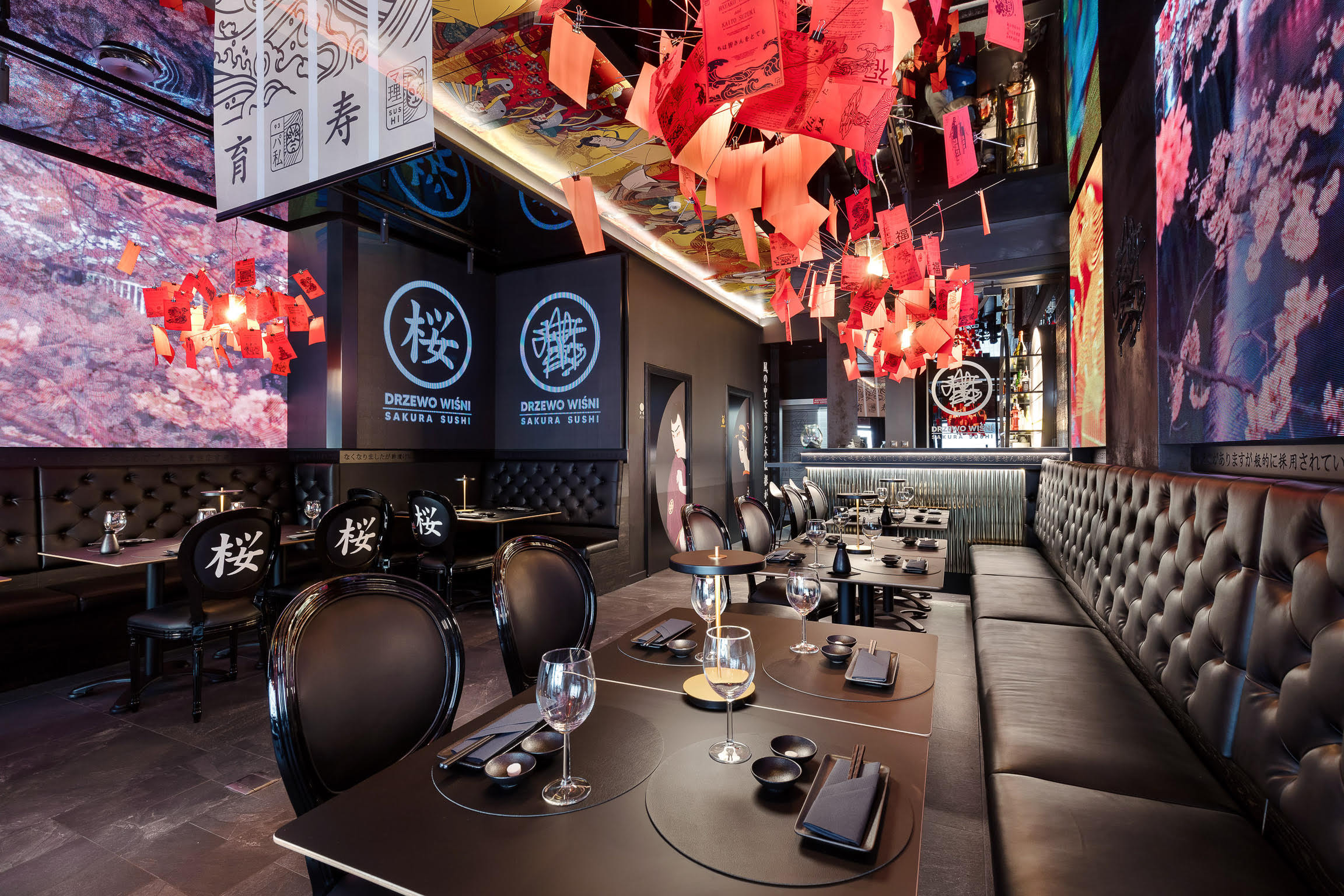

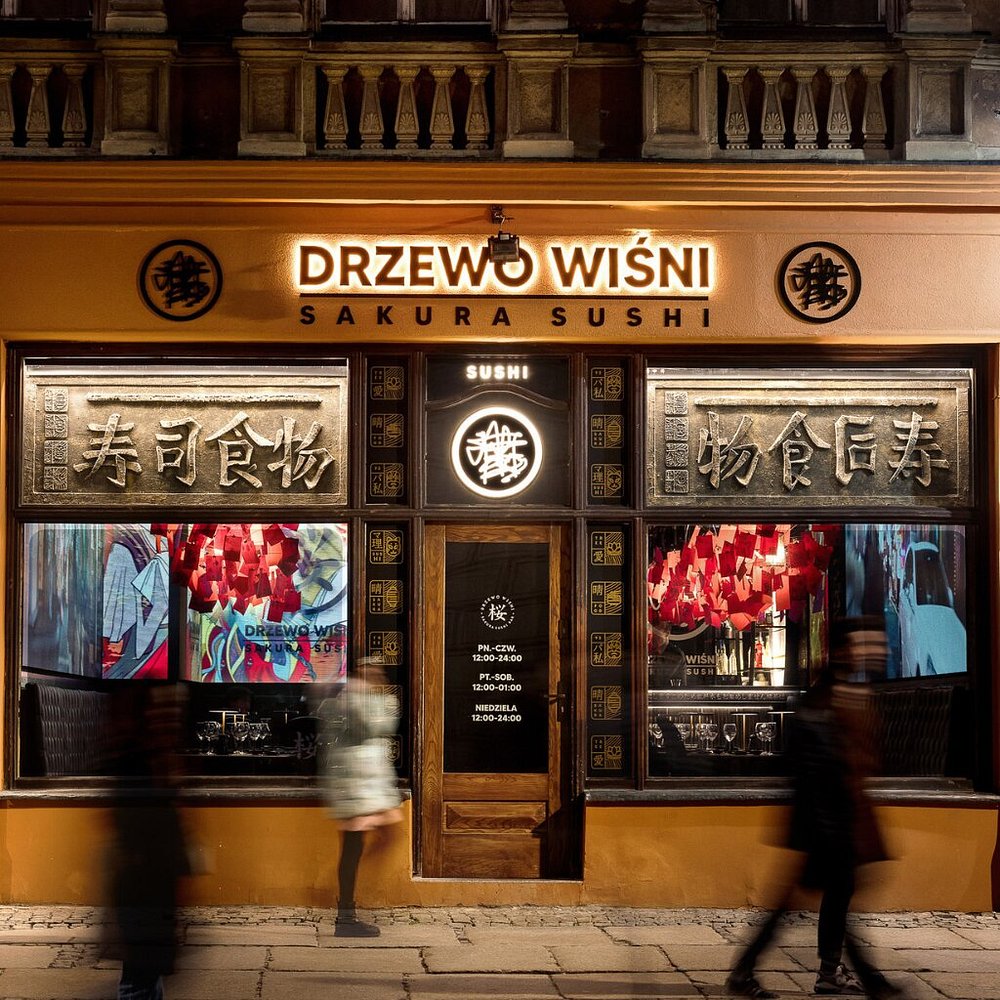
Drzewo Wiśni, Polish for “cherry tree,” opened on the Old Market Square in Poznań, Poland, in the middle of the pandemic. It took an old Japanese proverb as its motto: “The roots of a tree that grew in the wind are strong.”
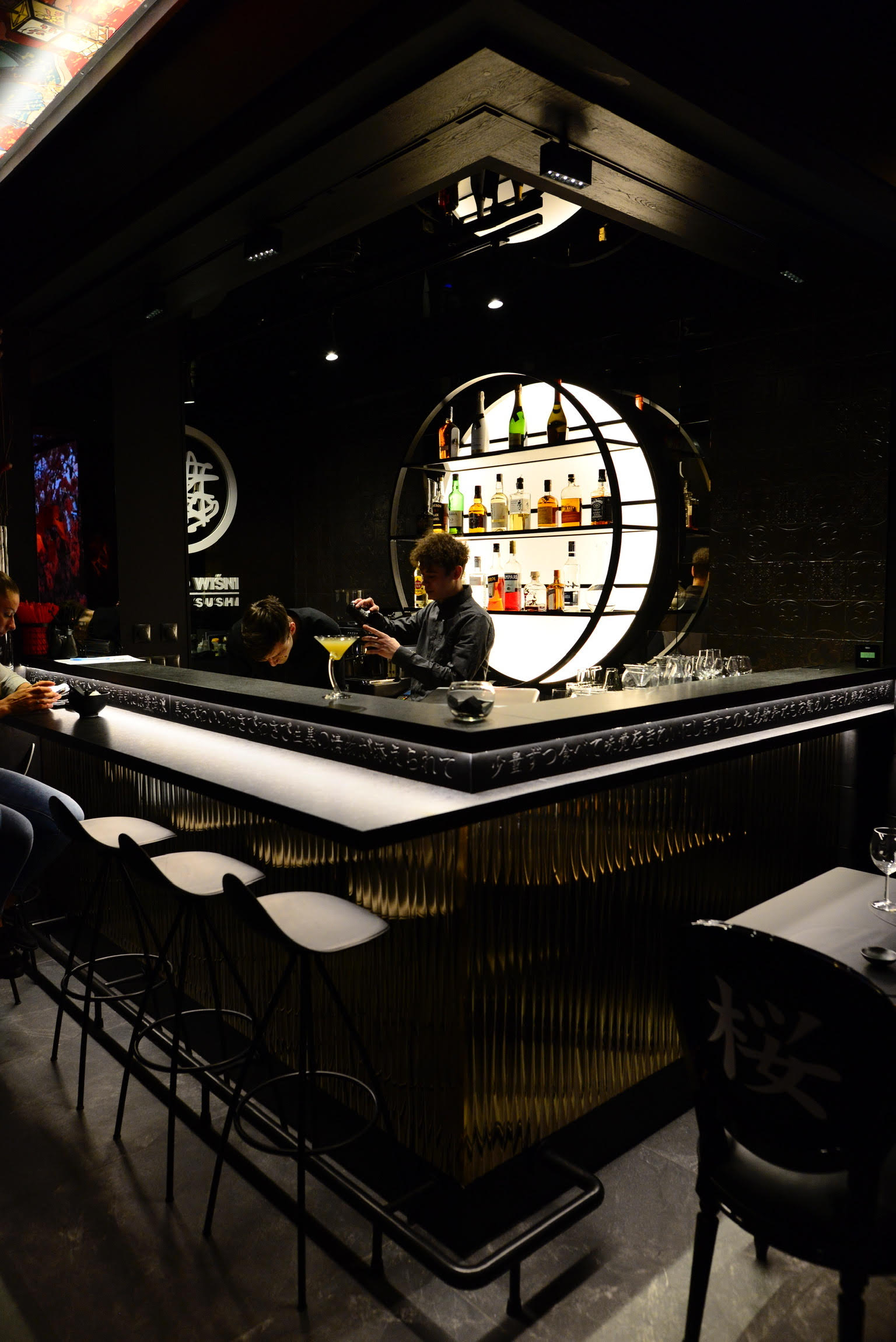
The interior is inspired by Japan, with large screens in the Main Hall playing Tokyo street scenes. The restaurant serves Asian cuisine made with seasonal ingredients. Every dish on the menu is the work of head chef Petru Gudzovati, a finalist at the 2023 World Sushi Cup.
More than a kitchen to run
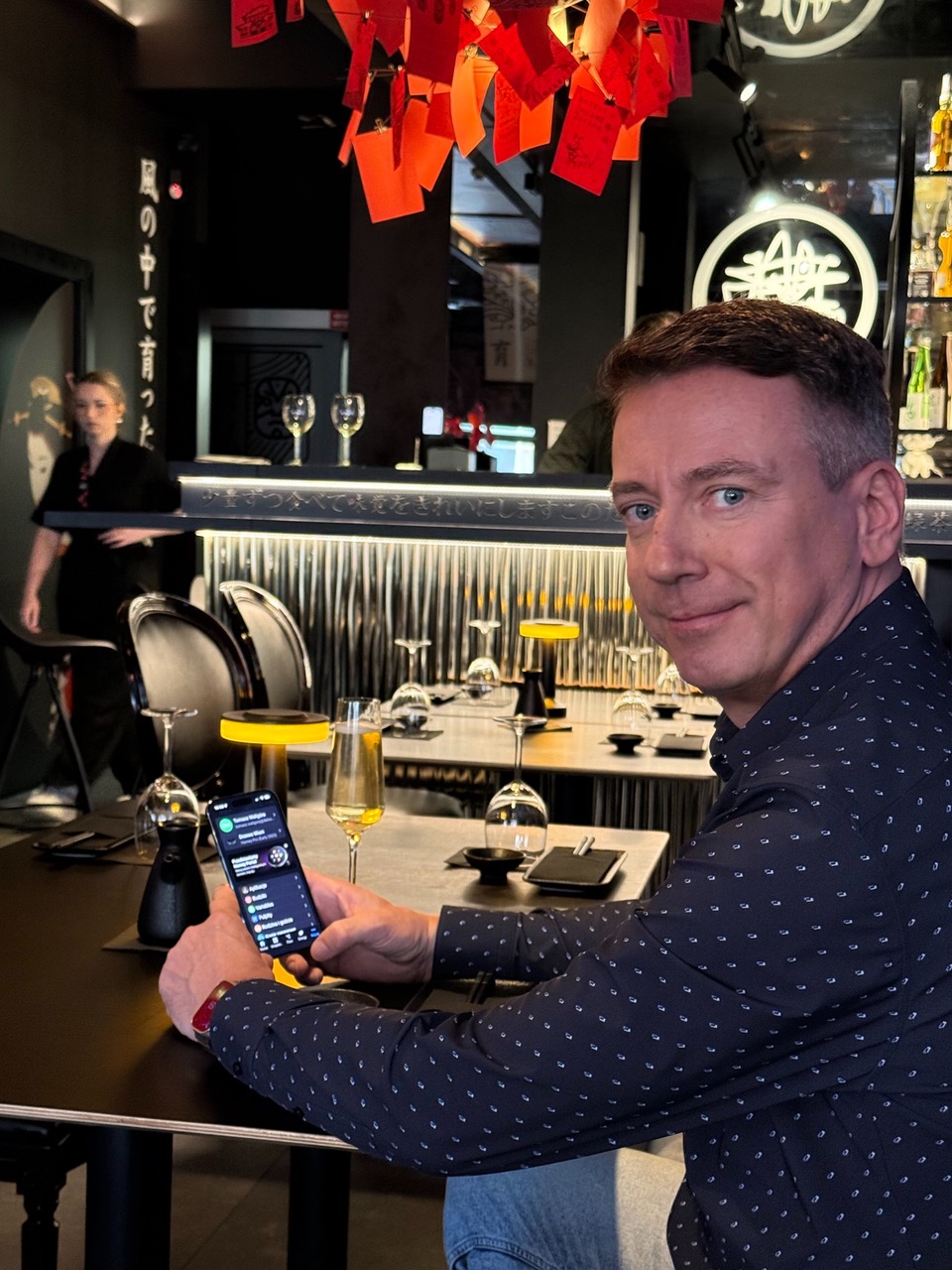
Tomasz Waligóra owns the restaurant. A freezer door left open can ruin all the fish inside. An air conditioner that quietly fails can make a full dining room uncomfortable halfway through dinner. And during service, nobody has a minute to check.
Tomasz leaves much of that checking to Homey Pro. It connects hardware from Aqara, Shelly, IKEA, SwitchBot, Sonos, and SATEL, all running on a UniFi network. It also pulls data from two business systems: GoPOS for point of sale and Kadromierz for staff attendance. His Flows run from before the first employee arrives until after the last one leaves.
Ozone in an empty building
Every night, the restaurant disinfects the Main Hall, the VIP Room, and the kitchen with ozone. At 4:00 AM, Homey uses Aqara smart plugs to switch on the ozone generators. Ozone is harmful to breathe, so the Flow has one condition: the SATEL alarm must be fully armed. If anyone disarms it while the generators are running, Homey cuts their power immediately, so no more ozone is produced.
The first one in
The alarm also marks the start of the working day. When the first employee disarms it, Homey switches the restaurant into preparation mode. Bright work lighting comes on where the team needs it. In the kitchen, music starts early for the prep team.
As the rest of the team arrives, Homey compares the clock-ins in Kadromierz with the staff schedule. If someone in a key role hasn’t clocked in, or the schedule has changed unexpectedly, the manager gets a notification before service starts. Homey also logs late arrivals in Google Sheets for review. Based on who has clocked in, it sends task reminders and updates to the restaurant’s WhatsApp groups.
A bulb for every restroom
In the restrooms, guests hear the sound of Tokyo’s Shibuya Crossing. In the staff room, three color-changing IKEA GU10 bulbs stand for the guest restrooms. At the start of the day, all three are red because none of the restrooms have been checked yet.
Each restroom has a hidden IKEA button. When a staff member finishes an inspection, they press the button, and the matching bulb turns green. After a set interval, the bulb turns red again to show that the next check is due. Instead of a paper checklist, a glance at the staff room shows which restrooms need attention.
Staff use a similar button to confirm the daily pressure check on the CO2 cylinders for the sparkling water. Guests can drink as much of it as they like with their meal.
Tokyo on, work lights off
Shortly before the doors open, Homey turns the workspace into a dining room. The bright work lights go off, warmer lighting comes on, the Tokyo screens start up, and background music begins in the Main Hall. Outside, the illuminated logo and signs switch on before sunset. In Poznań, that’s anywhere from around 3:40 PM in December to just after 9:00 PM in June.
Taking cues from the register
Once guests start arriving, a script pulls guest counts from GoPOS every 15 minutes, and Homey uses them to estimate how many people are seated in each room.
Homey adjusts two systems based on that estimate. On a quiet afternoon, the ventilation runs at a lower level, and as the rooms fill up, Homey turns it up. The music works the same way: Homey raises the volume slightly as the restaurant gets busier and lowers it again as people leave. Staff don’t have to keep adjusting either of them.
Proof from the power meter
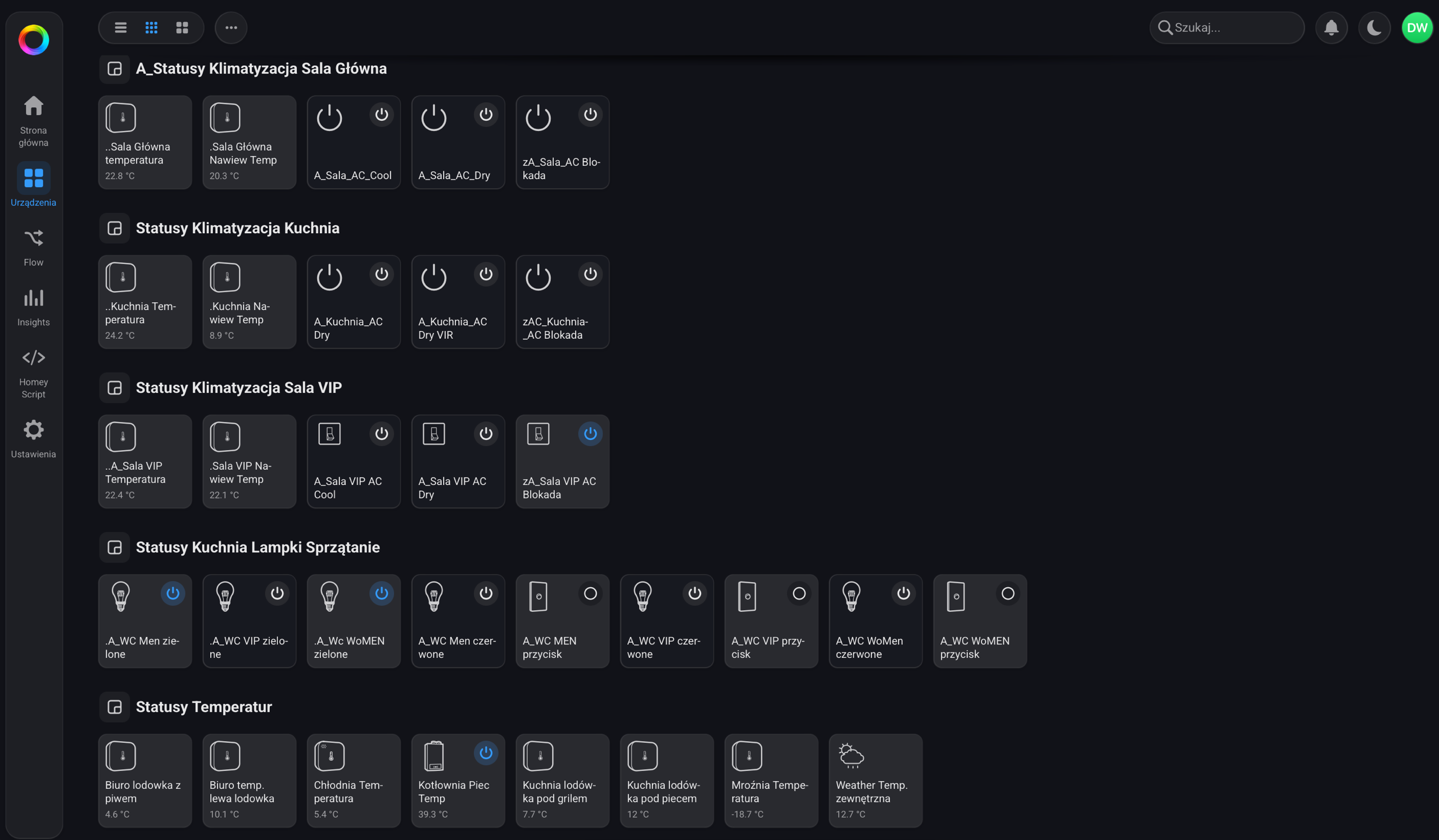
The Main Hall, the VIP Room, and the kitchen each need a different temperature, so Homey runs them as three independent air-conditioning zones. SwitchBot Hub Mini devices send infrared commands to the AC units, and Aqara temperature sensors report how warm each room actually is.
Infrared commands only go one way. The hub sends the signal but gets no confirmation that the unit received it. An air conditioner that misses a command during a busy dinner goes unnoticed until the room is already too warm, so Homey verifies each one.
Before sending a command, Homey checks whether the right SwitchBot hub is responding. If it isn’t, Homey restarts the hub by switching its Aqara smart plug off and on, then tries again. Afterward, Shelly energy meters show whether the air conditioner’s power use has changed as expected. If it hasn’t, the manager gets a critical notification.
One button for the VIP Room
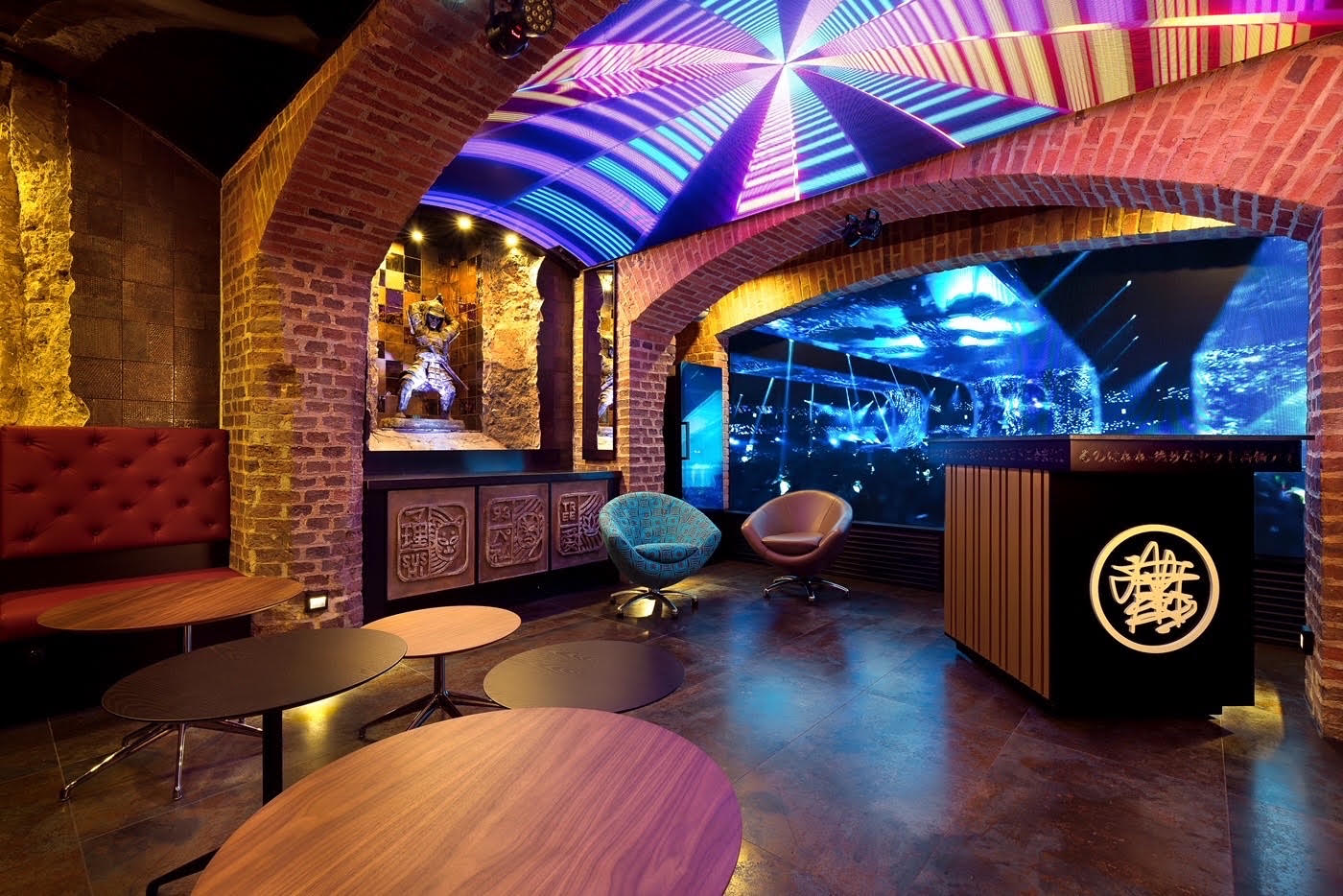
The VIP Room sits on 17th-century stone foundations, is fully soundproofed, and hosts business dinners, private parties, and karaoke nights. When a group is booked, staff prepare it with one button. Homey starts the right Sonos playlist, sets the lighting, turns on the screens, and brings the room to temperature, so four systems from different brands respond at once.
Watching the cold rooms
Some Flows aren’t tied to a time of day. Aqara door sensors watch the walk-in fridge and the freezers around the clock. If a door stays open too long, Homey sends a WhatsApp alert and announces a warning through the Sonos speaker in the kitchen, where staff will hear it.
Aqara and SwitchBot temperature sensors monitor the cooling equipment itself. If a reading drifts out of the expected range, the manager is notified. IKEA and Shelly sensors watch for leaks, and when one detects water, Homey closes a Shelly valve on the main water supply.
Back to the alarm
At the end of the night, a waiter presses an IKEA remote. The signage switches off, the music fades out, and the bright work lights come back for cleaning and closing out the registers. When the last person arms the alarm and leaves, the ozone can run again at 4:00 AM, and the day starts over.
Guests come for Petru Gudzovati’s sushi, the Tokyo screens, and a room at the right temperature. During service, that’s where the team’s attention goes. Homey only calls on them when something needs it: a freezer door left open too long, an air conditioner that didn’t respond, or a restroom that’s due for a check.
Behind that are systems that were never designed to work together. The ozone depends on a SATEL alarm, the ventilation on a point-of-sale system, and every air-conditioning command on a Shelly energy meter. Homey Pro connects them.


