






Water Battery: How to Store Heat Smartly With Homey
If you have solar panels and a heat pump, you’re not only generating sustainable energy — you’re also creating opportunities to use that energy more effectively. That can be done not only electrically, but also thermally: with a water battery.
A water battery, also called a thermal battery or buffer tank, stores heat in water. This lets you use the sun more intelligently, heat more cheaply and relieve the electricity grid. In combination with Homey, you fully automate that process: charging when there is sun or low prices, discharging when there is heat demand, and always with the right safety margins.
In this article you’ll read how a water battery works, which combinations yield the most return, how to control it smartly with Homey, and how to easily secure maintenance and lifespan.
What Is a Water Battery and How Does It Work?
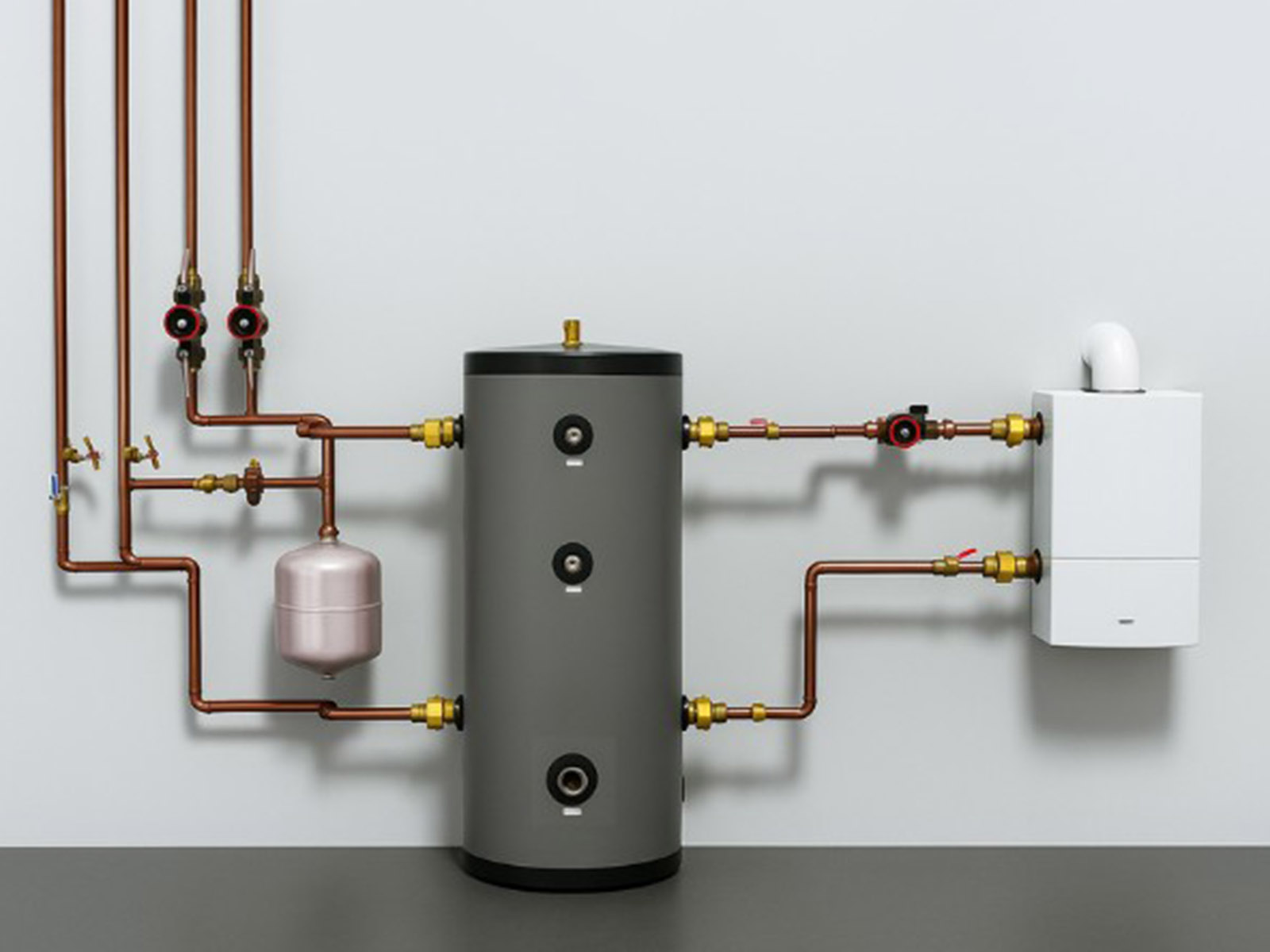
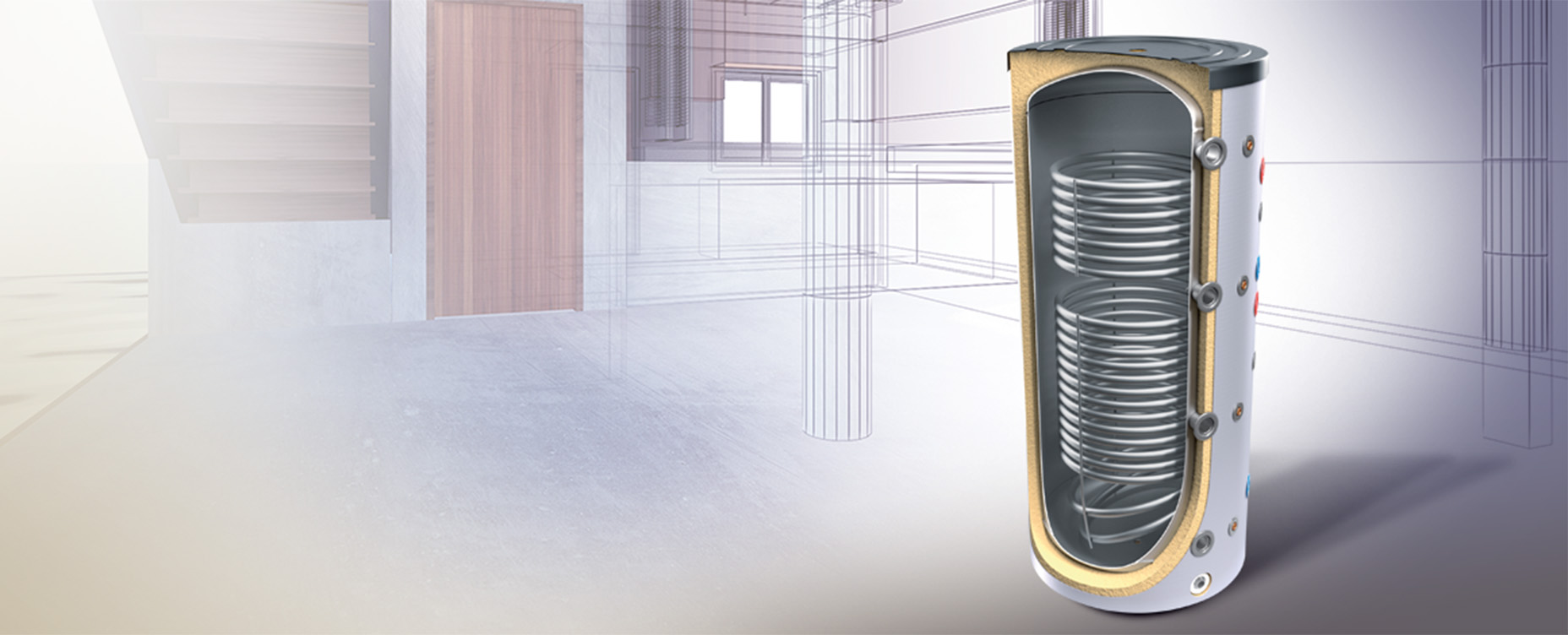
A water battery is an insulated tank filled with water in which heat is temporarily stored. When your solar panels or heat pump generate heat that you don’t need immediately, the water battery stores that energy for later use.
Water is ideal for this: it has a high specific heat capacity, which means it can hold a lot of energy per liter. A tank of 300 liters, for example, can contain more than 15 kWh of heat — comparable to an average home battery in electrical energy.
Active vs. Passive Water Battery Systems
- Active water battery: connected to a heat pump or electric element; actively charged and discharged via valves and pumps.
- Passive buffer: acts as a hydraulic tank between heat pump and emission system, mainly intended to make the system more stable.
Both can be controlled smartly by Homey, especially if you add sensors that measure temperature, generation and consumption.
Common Water Battery Sizes
The size of a water battery (or buffer tank) depends on the volume in liters and the physical dimensions of the tank. Below is an overview of what you can roughly expect:
Small (100–200 L)
- Dimensions: approx. 50–65 cm diameter × 100–130 cm high
- Application: suitable as domestic hot water buffer or for small hybrid systems
- Heat capacity: approx. 4–8 kWh
- Use: mainly domestic hot water, limited contribution to space heating
Medium (300–500 L)
- Dimensions: approx. 60–80 cm diameter × 140–180 cm high
- Application: all-electric systems or large households with underfloor heating
- Heat capacity: approx. 12–20 kWh
- Use: sufficient to charge during the day with sun and heat in the evening
Large (800–1,000+ L)
- Dimensions: approx. 80–100 cm diameter × 180–200 cm high
- Application: homes with high heat demand or seasonal storage
- Heat capacity: approx. 25–35 kWh
- Use: extensive storage, suitable for connection with large heat pumps or collectors
A tank of 300–500 liters fits in most technical rooms or storage spaces, but is often too large for a standard cupboard. Take into account at least 80 cm of passage during installation, because the tank must be placed upright.
Choosing a Water Battery: Volume, Temperature and Insulation
Choosing the right water battery starts with a good estimate of your heat demand, the capacity of your heat pump and the yield of your solar panels. Only want to buffer domestic hot water? Then 200–300 liters is usually enough. Want to preheat your central heating water as well (underfloor heating, all-electric)? Then 300–500 liters is the ideal size.
A tank that’s too small empties quickly at peak demand, while a tank that’s too large takes up unnecessary space and costs extra energy to keep at temperature. With the right volume, insulation and application, you use your own energy optimally — comfortable, efficient and without waste.
The ideal size depends on the type of home, heating system and your daily usage pattern. Guideline: 50–80 litres of storage per kW of heat pump capacity.
- For hybrid systems, at least 200 litres is recommended.
- For all-electric installations, the ideal capacity is between 300 and 500 litres.
- If you combine this with 4–6 kWp of solar panels, you have enough surplus to regularly charge your tank with solar power.
Insulation is also crucial for efficiency. Choose a tank with a heat loss of maximum 1 °C per 24 hours, so stored energy doesn’t slowly disappear. The better the insulation, the more constant the temperature and the less the heat pump has to assist.
Finally, your goal determines the right configuration: a solar water heater (solar thermal) is ideal if you mainly want to buffer domestic hot water and use the heat pump as secondary. For systems that provide both space heating and hot water, a buffer tank is more practical — it can distribute heat flexibly between heating circuit and sanitary water. This way you get maximum comfort from every kWh produced, without waste.
Integrating Water Batteries in Homey
Homey turns your water battery into a smart heat buffer. You can build Flows based on temperature, consumption, PV generation and prices. For example:
- PV storage Flow
- If PV > 1200 W (10 min) → heat buffer
- If PV < 800 W (5 min) → pause
- Price Flow
- If hourly price < € 0.10/kWh → increase setpoint +5 °C
- If hourly price > € 0.25/kWh → restore normal
- Peak guard
- If total consumption > 3.5 kW → pause heating 10 min
- Legionella run
- If Sunday 14:00 → to 60 °C; 15:00 → eco 50 °C
Homey Pro processes this locally — without cloud delay — so heat demand, PV generation and tariffs come together in real time.
Monitoring and Insights
With Homey Energy, you get insights into consumption, generation and heat production. Add temperature sensors to:
- supply and return of the heat pump
- top and bottom of the buffer tank
- boiler outlet
With this data you can refine Flows: for example only heating when the temperature difference (ΔT) is greater than 5 °C, or automatically notifying when the tank drops below the desired temperature.
Flow idea:
- If top < 40 °C & bottom < 35 °C → push notification: “Buffer below minimum temperature — check pump or Flows.”
Heat Storage and Solar Panels: Using the Sun as Heat
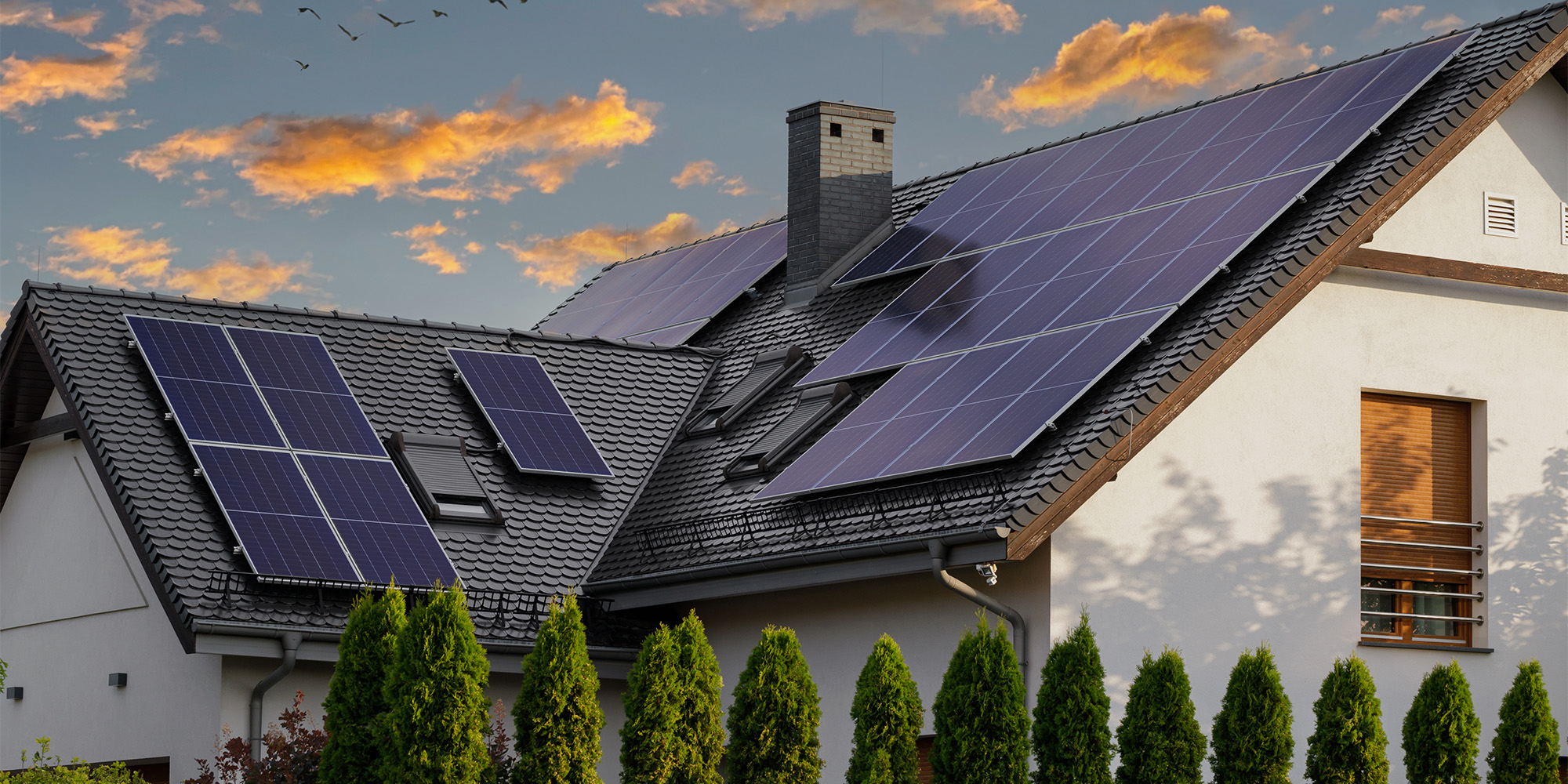
If you have solar panels, you’ll recognize this: in the middle of the day you produce more than you use. Instead of feeding back to the grid, you can use that solar power to heat water. A water battery then acts as a thermal storage tank: surplus solar energy is converted into heat, stored in water and later used for heating or domestic hot water.
With Homey Flows, you can automate this process:
- If PV generation > 1200 W for 10 min
- And water temperature < 60 °C
- Then switch heating element or heat pump to “charging”
If generation drops (for example due to clouds), Homey pauses charging again. This way you maximize use of solar energy without burdening the grid.
Homey can also use weather forecasts to estimate when it will be cold or sunny. This way the water battery can preheat with sun, or charge less when the weather is warm.
Dynamic Energy Prices: Heating When Power Is Cheap
If you have a dynamic energy contract, it also pays to buffer heat during cheap quarters or hours. The water battery makes this easy: produce hot water during the day or at night and use it later when electricity is expensive.
With Homey, you add price data to your logic:
- If hourly price < € 0.10/kWh
- And water temperature < 60 °C
- Then start charging (max 45 min)
- If price > € 0.25/kWh
- Then pause heating
Combine this with your PV rules and the battery works in hybrid mode: solar power has priority, cheap grid power tops up, expensive power is avoided.
Peak Shaving: Saving With Heat
A water battery not only helps you save, but also flatten energy peaks. Heat pumps sometimes demand a lot of power at startup. By buffering heat smartly, you need to draw fewer peaks during cold moments.
Example Flow:
- If total consumption > 3,500 W for 3 min
Then pause heat pump or switch off electric auxiliary heating - If water temperature in buffer > 45 °C
Then use buffer tank for heating (circulation pump on)
This way your comfort stays the same, but you spread the load. Homey can measure your grid consumption in real time via the Homey Energy Dongle (P1) and respond immediately.
Water Batteries Safety and Lifespan
A water battery is safe, provided it is properly installed and managed. However, hot water brings risks such as legionella or overpressure. With smart automation you can limit these risks. Here are some common problems and solutions.
Legionella Run
Automatically perform a heating cycle weekly:
- If Sunday 14:00 → increase temperature to 60 °C (max 1 hour)
- If 15:00 → back to eco setpoint 50 °C
This keeps your system safe and energy efficient.
Gentle Bandwidths
Use bandwidths (hysteresis) to prevent short cycling:
- Start heating below 48 °C, stop at 54 °C
- Minimum runtime: 10 min, pause 5 min
This gives you long, steady cycles that protect the pump, heating element and sensors.
Emergency Power and Heat Reserve
A water battery is not only a smart buffer for daily use, but also a silent safeguard in case of power failure. Because the water in the tank retains heat, you can use that energy for hours — even when the heat pump or inverter temporarily doesn’t work. A well-insulated water battery loses less than one degree per day, so even during an outage you still have hot water or pleasant residual heat in your underfloor heating.
In a normal situation, Homey manages the balance between heating, peak limiting and comfort. But during an outage you can have Homey switch to an emergency profile. This keeps the system stable and limits unnecessary electricity use once power returns.
Example:
- If grid power = outage → activate “Backup mode”
- Then only enable the circulation pump for 30 minutes (no auxiliary heating, no legionella run)
- And send a push notification: “⚠️ Power outage — system temporarily in energy-saving mode.”
As soon as power returns, Homey automatically restores the normal heating schedule. This keeps your home comfortable and safe, even when things go wrong — thanks to the thermal reserve of your water battery and Homey’s smart logic.
Payback Time of a Water Battery
The investment in a water battery is lower than for electrical storage, but the return is comparable. The benefit comes from higher self-consumption and less auxiliary heating.
The payback time of a water battery strongly depends on how well you match the system to your home, solar panels and heat pump. Essentially, you earn back a water battery by using less electricity from the grid and using more of your own solar power.
A well-configured water battery can increase the share of self-consumption of solar energy from around 30–40% to 60–70%. That means you feed back less (at low compensation) and use more directly — for example for heating or hot water.
On average, a water battery or buffer tank costs between € 1,500 and € 3,000, depending on volume, insulation and installation. A small buffer tank has a volume of 100–200 litres, a large one 300–500 litres. There are water batteries with capacities of over 1,000 litres for large homes with high heat demand.
The annual savings usually lie between € 150 and € 400, depending on energy prices, your consumption and how much you automate with Homey (for example heating at low price or at PV surplus).
Example calculation:
- Purchase and installation: € 2,000
- Annual savings: € 250
→ Payback time: approx. 8 years
If you use a dynamic energy contract and let Homey automatically heat at low prices or sunny hours, that payback time can drop to 5 to 6 years.
In addition, a water battery not only saves money, but also provides comfort and stability: fewer peaks, quieter operation of the heat pump and a longer lifespan of your installation. That makes it a smart investment — not only for your wallet, but also for the sustainability of your home.
Getting Started Without Hassle (Step-by-Step Plan)
A smart water battery doesn’t have to be complicated if you know where to start. With a few sensors, smart Flows and insights via Homey you lay a solid foundation in one go. Follow this simple step-by-step plan and you’ll see results within a week: more comfort, lower costs and a water battery that does exactly what you want, without needing attention.
- Measurement: add temperature sensors to buffer tank and return line.
- Insight: activate Homey Energy + P1 dongle to see consumption and PV.
- Build Flows: start with 3 basic Flows — PV storage, price-based heating and legionella run.
- Safety: set bandwidths and timers (hysteresis).
- Optimization: add weather data, battery SoC and peak guard.
Within a week your home runs more smoothly, with lower costs and constant warmth.
Common Mistakes and How To Avoid Them
A well-configured water battery operates quietly, efficiently and reliably, but small mistakes can quickly disrupt that. Without the right settings or maintenance, you use more energy than necessary, the efficiency of your heat pump drops and even safety can be at risk.
By avoiding these common mistakes, you keep your system stable, efficient and easy to maintain — just as a smart home should be.
- No hysteresis: systems that switch on/off every minute.
- Buffer too small: tank empties too quickly with hot water or underfloor heating.
- No legionella run: safety risk.
- Heating and domestic hot water both too hot: higher losses, lower COP.
- No maintenance: dirt, limescale and sensor errors reduce efficiency.
Conclusion
A water battery is the silent force behind a smart and sustainable home. Where solar panels and heat pumps take care of generation and conversion of energy, the water battery ensures that not a single kilowatt hour is wasted. It captures heat surpluses, smooths out consumption peaks and makes sustainable energy usable exactly at the moments you need it — in the evening, in the cold, or when electricity prices are high.
In combination with Homey Pro and Homey Energy, the water battery changes from a passive tank into an intelligent heat buffer. You get full insights into temperature, generation and consumption, and you can build Flows that respond to weather, energy prices and your own rhythm. This way you heat smartly when there is sun or low tariffs, protect your system against short cycling and keep control over comfort and costs.
Thanks to gentle bandwidths, safety Flows and automatic maintenance reminders, your system runs stable and efficiently without you having to monitor it daily. You extend the lifespan of your heat pump and battery, limit wear and get maximum return from your own energy.
In short: with a water battery and Homey you don’t work harder, but smarter. Your home remains comfortable, your energy costs drop and you heat largely with your own sun — fully automated, safe and future-proof.
FAQs
What is the difference between a water battery and a home battery?
A water battery stores heat, a home battery stores electricity. Both increase self-consumption, but a water battery does so thermally — often cheaper per kWh.
How large should my water battery be?
Calculate 50–80 litres per kW of heat pump capacity. For a 6 kW heat pump, 300–500 litres is a good match.
Can I automate my water battery with Homey?
Yes. With temperature sensors, PV data and dynamic prices you can build smart Flows for charging, discharging and legionella management.
What is the efficiency of heat storage in water?
A well-insulated water battery achieves a round-trip efficiency of more than 90%, meaning little loss and heat that's immediately usable.
Is a solar water heater the same as a water battery?
They are similar: a solar water heater uses solar collectors (thermal) to store solar heat in a water tank, whereas a water battery often uses heat pump or electric heating. Both store heat in water.
A water battery (or thermal battery) is a heat buffer that you charge with different sources, such as a heat pump, electric element or solar power via Homey. The goal is to temporarily store heat and use it later for heating or hot water.
A solar water heater, on the other hand, uses solar collectors (thermal) on your roof to directly store solar heat in a water tank. The energy therefore does not come from electricity, but from solar irradiation.
Can I combine my water battery with a heat pump and home battery?
Yes. The heat pump fills the tank with heat, the home battery supplies power for the pump or electric auxiliary heating, and Homey coordinates both. This way you use your own solar power twice: electrically and thermally.
How much heat do I lose per day with a water battery?
A well-insulated water battery loses less than 1 °C per 24 hours, which corresponds to about 2–4% energy loss. Place the tank in a warm place (technical room or utility room) to limit that loss even further.
Can Homey give a warning if my water battery becomes too cold or too hot?
Yes. You can set temperature thresholds with Flows, for example:
- If top < 40 °C → push notification "Buffer too cold"
- If top > 70 °C → warning "Overheating, check thermostat"
How often should I perform a legionella run?
Once a week is sufficient. Set it so that the temperature reaches at least 60 °C for 10–15 minutes. Homey can schedule this automatically and then return the tank to eco temperature.
Is a water battery useful without a heat pump?
Yes, especially in combination with a solar water heater or electric element. This way you use surplus solar power to heat water, even without a heat pump. With Homey you can automate this based on PV surplus or low electricity price.
Glossary
Water Battery
An insulated tank filled with water used to temporarily store heat, generated by a heat pump, electric element or solar panels, for later use in heating or domestic hot water. Also called a thermal battery or buffer tank.
Buffer Tank
Another term for a water battery. Sizes typically range from 100 litres for small domestic hot water buffers to over 1,000 litres for homes with high heat demand or seasonal storage.
Active Water Battery
A water battery connected to a heat pump or electric element that is actively charged and discharged through valves and pumps.
Passive Buffer
A hydraulic tank placed between a heat pump and emission system, mainly intended to stabilise the heating system rather than actively store surplus energy.
Hysteresis
A bandwidth used in heating control to prevent short cycling, for example starting heating below 48 °C and stopping at 54 °C. This protects the pump, heating element and sensors.
Legionella Run
A weekly heating cycle that raises water temperature to at least 60 °C for 10 to 15 minutes to prevent legionella bacteria growth, before returning to the normal eco setpoint.
Self-Consumption
The share of self-generated solar energy that a household uses directly, rather than feeding it back to the grid. A well-configured water battery can increase self-consumption from around 30–40% to 60–70%.
Peak Shaving
Flattening short spikes in electricity demand, such as those caused by a heat pump starting up, by drawing on stored heat instead of pulling extra power from the grid.
Homey Energy Dongle (P1)
A device that lets Homey measure grid consumption in real time, enabling Flows that respond immediately to demand peaks or generation changes.
Solar Water Heater
A system that uses solar collectors on the roof to directly convert solar irradiation into heat, storing it in a water tank. Unlike a water battery charged by a heat pump or electric element, its energy source is solar thermal rather than electrical.


