







Home Lighting Explained: Watts, Lumens and Temperature
Good lighting makes a big difference to how your home feels. With LED lighting, you can choose how bright a room is, how warm or cool the light feels, and how much energy your lights use.
But terms like lumens, watts, Kelvins and light output can make choosing the right light bulb or LED strip seem more complicated than it needs to be. Once you know what they mean, it becomes much easier to pick lighting that fits both the room and the way you use it.
In this guide, we explain the basics in simple terms and show you how to choose the right LED lighting for different spaces in your home.
Why LED lighting has become the standard
LED lighting is now the most common choice for homes, and for good reason. LED bulbs use considerably less electricity than traditional incandescent or halogen bulbs while producing a similar amount of light.
They also tend to last much longer, so you need to replace them less often. LED bulbs produce less heat as well, which makes them more efficient and practical in everyday use.
Another advantage is flexibility. LED lighting is available in many brightness levels, color temperatures and shapes. There are also dimmable and smart LED bulbs, making it easier to adapt your lighting to different moments of the day.
That means the same room can feel bright and practical in the morning, comfortable during dinner and calm in the evening.
What are lumens, watts and light output?
When choosing a light bulb, you will usually see several numbers on the packaging. Two of the most important are lumens and watts.
In the past, people often chose bulbs based on wattage. A 60-watt bulb was brighter than a 40-watt bulb, so watts became an easy way to estimate brightness. With LED lighting, that no longer works very well. LEDs are much more energy-efficient, which means a low-wattage bulb can still produce plenty of light.
Today, it is better to look at lumens when you want to know how bright a bulb will be.
Lumens tell you how much light a bulb produces
Lumens (lm) measure the amount of visible light produced by a bulb. The higher the lumen value, the brighter the light. A simple way to think about it is that watts tell you what the bulb uses, while lumens tell you what you get.
As a rough guide:
- 100–300 lumens works well for soft accent or mood lighting
- 400–800 lumens can be suitable for general lighting in smaller spaces
- 1,000 lumens or more can be useful where you need brighter, more functional lighting
These values are only a starting point. A large room usually needs more total light than a small room, and several lower-output lamps can often feel more comfortable than one very bright ceiling light. Some people prefer a softly lit living room, while others like brighter surroundings.
Watts tell you how much power a bulb uses
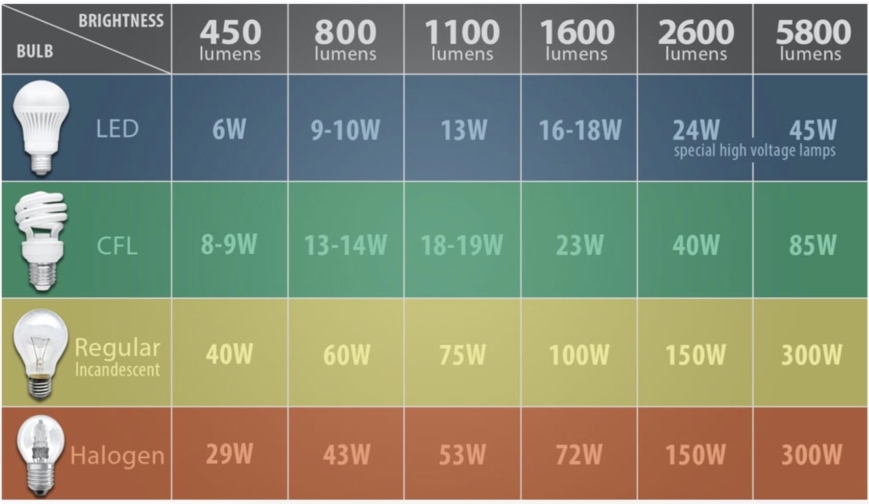
Watts (W) describe electricity consumption. They do not tell you directly how bright an LED bulb is. If two LED bulbs both produce 800 lumens but one uses less power, the lower-wattage bulb is more energy-efficient.
If you are used to traditional incandescent bulbs, these rough comparisons can help:
- A traditional 25W bulb is roughly comparable to around 200–250 lumens
- A traditional 40W bulb is roughly comparable to around 400–470 lumens
- A traditional 60W bulb is roughly comparable to around 700–800 lumens
Exact values vary between products, but the principle is simple: choose brightness based on lumens and use watts to understand energy consumption.
Color temperature: warm or cool light
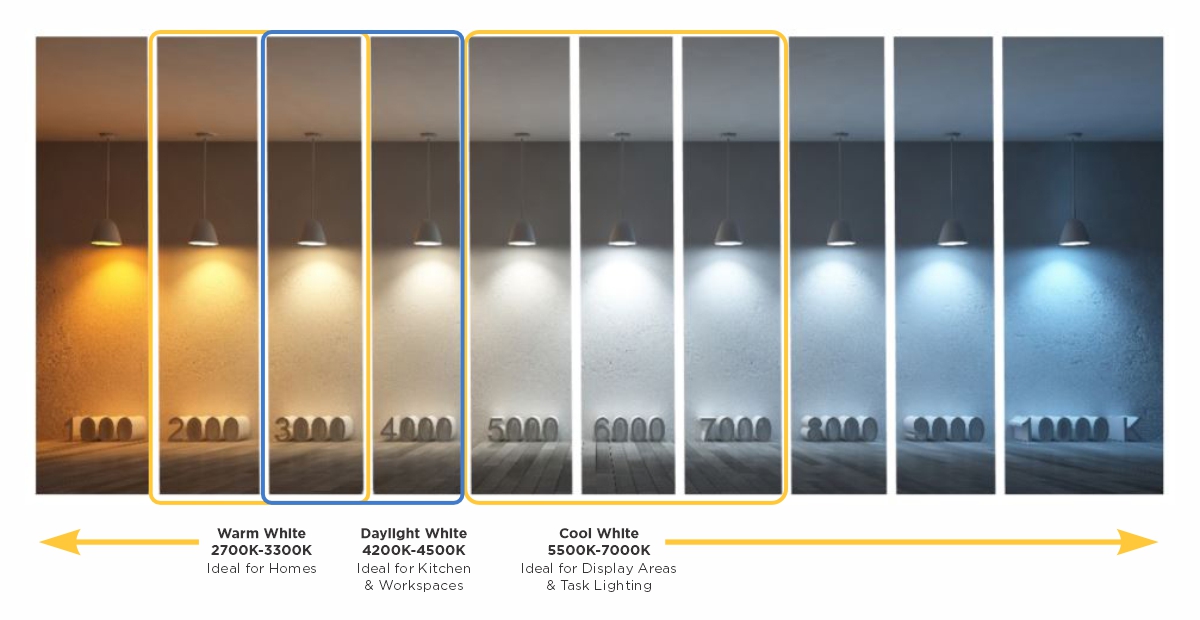
Brightness is only part of the story. The color of the light has a big influence on how a room feels. This is expressed as color temperature, measured in Kelvin (K). Lower Kelvin values produce warmer, more yellow-toned light. Higher values create cooler, whiter light.
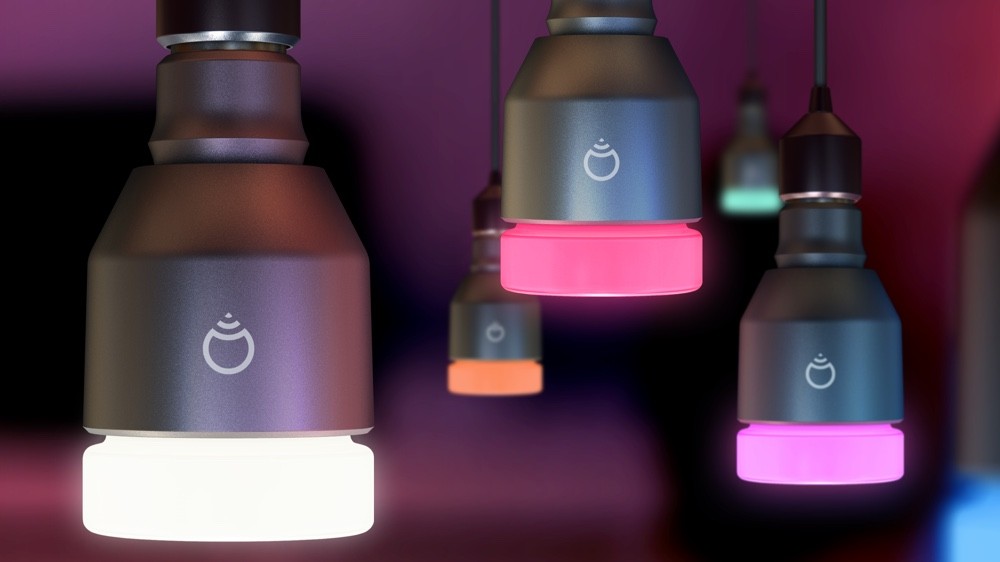
Choosing the right color temperature can make a room feel more relaxing, more practical or more focused.
2700–3000K: warm white
Warm white light feels soft and comfortable. It is close to the familiar glow of traditional incandescent lighting. It works particularly well in places where you want to relax, such as the living room, bedroom or dining area.
3000–4000K: neutral white
Neutral white feels fresher and clearer without becoming overly cool. It is a practical choice for kitchens, hallways and home offices, where good visibility is important but you still want the room to feel comfortable.
4000–6500K: cool white or daylight white
Higher color temperatures produce a cooler, brighter-looking light. This can be useful in workspaces, hobby rooms or other places where seeing details clearly matters. Very cool light is usually less suitable for relaxed evening lighting.
A useful rule of thumb is: warmer light for relaxing, cooler light for tasks and concentration.
How much light do you need in each room?
There is no single perfect amount of light for every home. Room size, wall colors, natural daylight and personal preference all make a difference. It helps to start with the function of the room. Think about what you usually do there, and then combine general lighting with more focused or atmospheric light where needed.
Living room
A living room often has several functions. You might watch TV, read, talk with family or friends, or simply relax at the end of the day. That is why one central ceiling light is rarely enough to create comfortable lighting for every situation. A combination of different light sources gives you much more flexibility.
For example, you can use ceiling lights or spotlights for general illumination and add floor lamps, table lamps or wall lights for softer lighting.
Warm white light around 2700–3000K usually works well here. Dimmable or smart lighting gives you even more flexibility, allowing you to use brighter light when you need it and softer light later in the evening.
Kitchen
The kitchen needs a mix of practical and comfortable lighting. You need enough light to safely prepare food, read labels and clean surfaces. At the same time, many kitchens are also social spaces where people eat, talk or have a coffee.
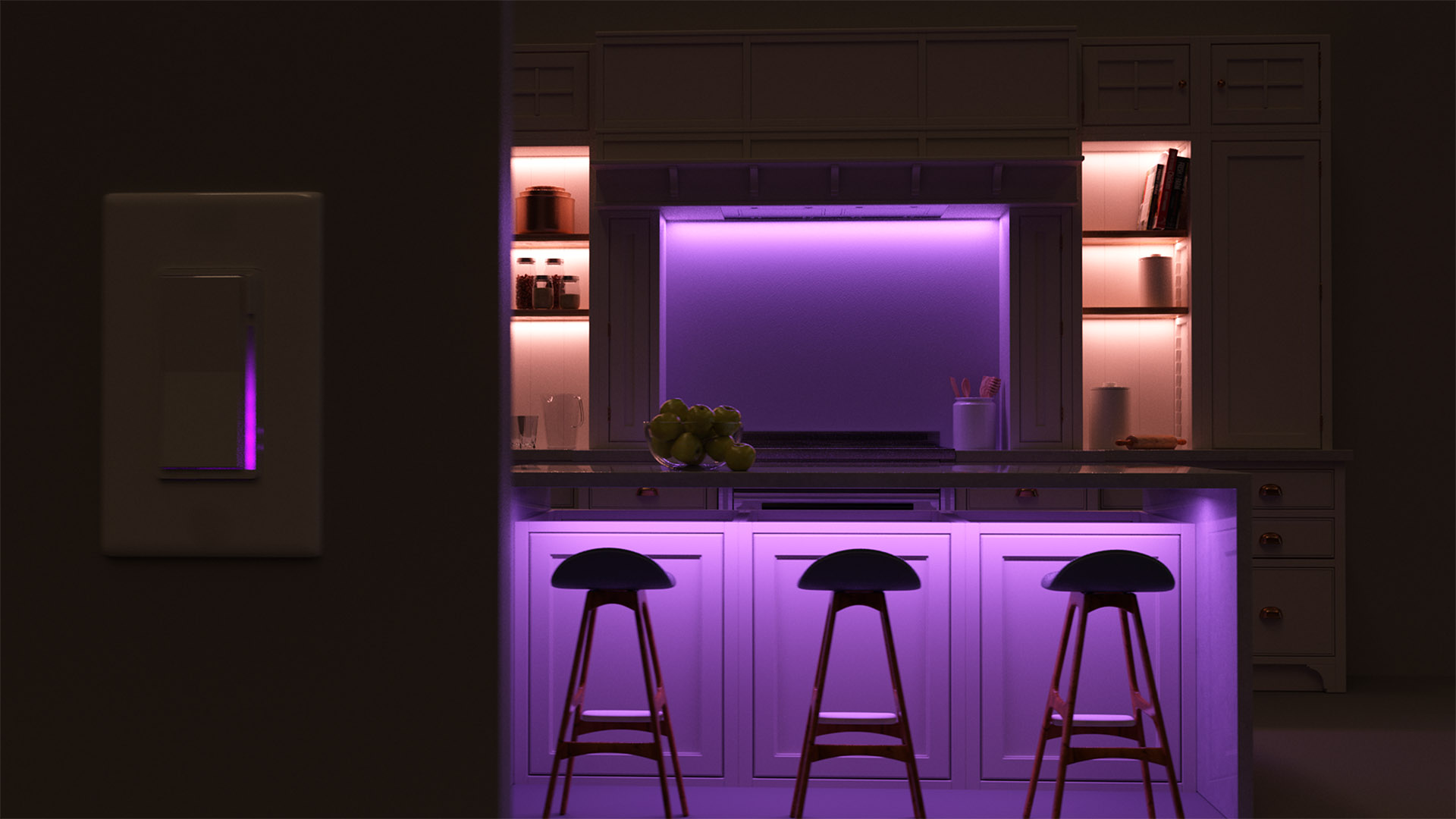
General ceiling lighting can provide a good base, while dedicated lighting above the worktop helps you see clearly while cooking. A color temperature of around 3000–4000K often works well for kitchen lighting. For work surfaces, slightly brighter or more neutral lighting can improve visibility.
Using several light sources also helps prevent shadows on the countertop.
Bedroom
The bedroom should support rest, but you still need practical lighting from time to time. A ceiling light can help when you are getting dressed or tidying the room, while smaller bedside lamps are more comfortable for reading or winding down.
Warm white light around 2700–3000K usually creates a calmer atmosphere.
Bedside lighting does not need to illuminate the entire room. A lower light output is often enough, especially when the lamp is close to you. Dimming can make the same lamp useful for both reading and relaxing.
Bathroom
Bathroom lighting needs to balance visibility, comfort and safety. General ceiling lighting provides an even base, while additional lighting around the mirror helps with tasks such as shaving, skincare or applying makeup.
Neutral white light around 3000–4000K can give a clear view without feeling excessively cold.
Because electricity and water are close together in a bathroom, always pay attention to the appropriate IP rating for lights installed in wet or splash-prone areas.
Home office
Good lighting can make working from home more comfortable, especially when you spend several hours looking at a screen. A desk lamp provides focused task lighting, while general lighting in the room helps reduce the contrast between your screen and the surroundings.
A neutral color temperature around 4000K is often suitable for working and concentration.
Also consider where you position your lights. Try to avoid glare on your screen or a bright lamp shining directly into your eyes.
Combine general, task and ambient lighting
A comfortable lighting plan usually has more than one layer. By combining different types of light, you can make the same room work for several situations.
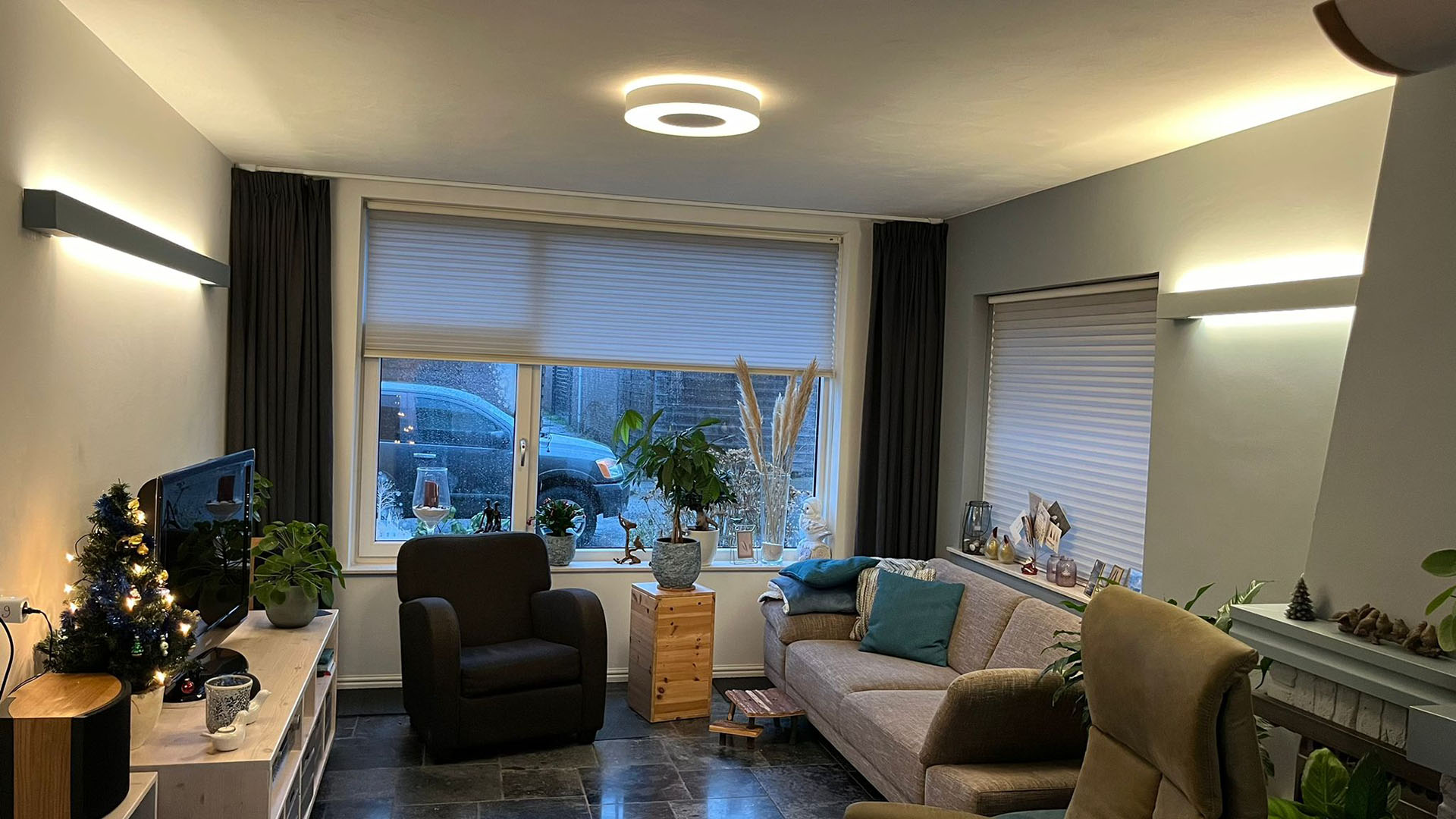
General lighting
General lighting provides basic illumination across the room. This is the light you often switch on when you enter a room and simply need to see where you are going. These are usually main lights like ceiling domes, recessed spotlights or pendant lights.
It does not have to do everything by itself. In many rooms, general lighting works best as the foundation for other types of light.
Task lighting
Task lighting gives you additional light exactly where you need it. This can be anything from a focused desk lamp, reading lamp next to the sofa or an LED strip above the cooking stove.
Because task lighting is more focused, it can help you see clearly without making the entire room unnecessarily bright.
Ambient lighting
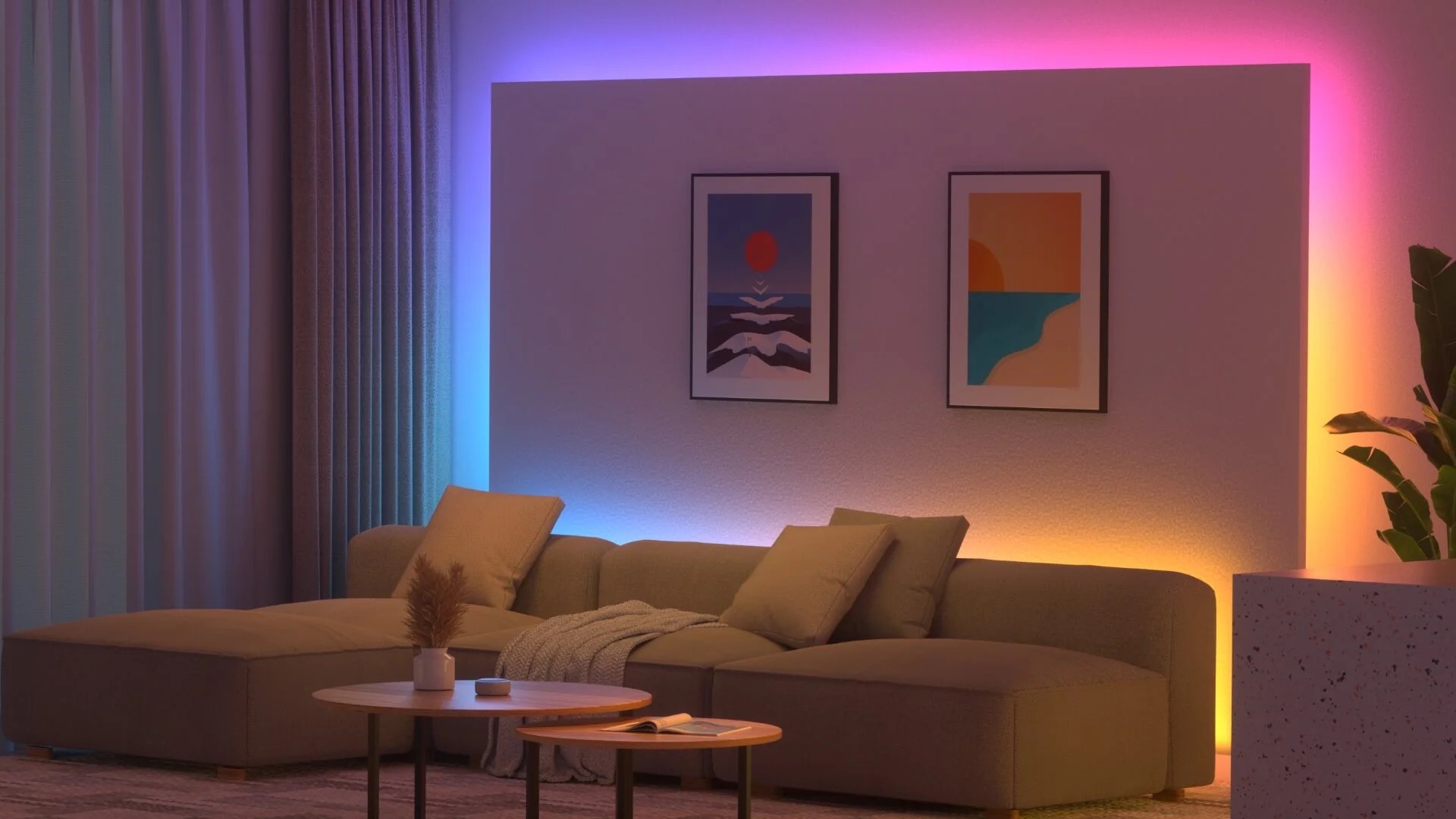
Ambient or mood lighting adds warmth and depth to a room. Table lamps, floor lamps, wall lights and LED strips can all create softer pools of light. They are especially useful in the evening, when you may not need bright general lighting.
Using several smaller sources of light can also make a room feel more balanced than relying on one strong ceiling lamp.
Practical tips for better lighting at home
A few simple choices can make a noticeable difference.
- Use several light sources instead of one very bright lamp. This creates a more even and comfortable atmosphere and gives you more control over how the room feels.
- Combine direct and indirect light. Light that reflects from a wall or ceiling often feels softer than a lamp shining directly into the room.
- Watch out for reflections. Position lights so they do not create distracting glare on televisions, computer monitors or windows.
- Think about flexibility. Dimmable or smart lighting can make one room suitable for several different activities without adding more fixtures.
- Consider safety in wet areas. In bathrooms and outdoor spaces, make sure the fixture has an appropriate IP rating for its location.
Make lighting work around your routine
Smart lighting becomes especially useful when it responds to what is happening in your home. Instead of manually adjusting several lamps every evening, you can create a routine that sets them together. A “Movie night” Flow, for example, could dim the main lights and leave a few warmer lamps on around the room.
In the morning, your lighting could gradually become brighter. When you leave home, lights that are still on can switch off automatically.
With Homey, lighting can also work together with compatible motion sensors, door sensors and other smart devices. That lets you create practical automations based on presence, time or activity. A hallway light could switch on when motion is detected after sunset, for example, and turn off again once the hallway is empty.
Good smart lighting should feel natural. When it works well, you notice the comfort more than the technology behind it.
Smarter lighting starts with the right basics
Choosing good lighting becomes much simpler once you understand three things:
- Lumens tell you how much light a bulb produces.
- Kelvin tells you whether the light feels warm or cool.
- The purpose of the room helps determine how much light you need and where you need it.
Get those basics right, and you can create lighting that feels comfortable, looks good and uses energy efficiently.
From there, smart lighting can make things even easier. Instead of adjusting every light yourself, you can let your home respond to your routines — whether that means brighter light while working, warmer light in the evening or switching everything off when you leave.
Explore how Homey makes smart lighting easier, with your lights and other devices working together in one smart home.


