





Make the Most of Your Solar Panels and Home Battery with Homey
Solar panels have changed how many households think about energy. Suddenly, part of your electricity doesn’t come from a distant power station but from your own roof. Yet in many homes, those panels still feel like a separate system: you see production numbers in an app, but your home doesn’t actually act on them.
When you put Homey at the center of your HEMS, that changes. Solar production becomes a live signal your home can respond to. If you add a home battery into the mix, your house gains both visibility and flexibility in how it uses that sunlight.
How Much Did I Really Use?
Most solar users are familiar with watching daily or monthly production figures. It’s satisfying to see high numbers on sunny days, but those totals don’t tell the full story. The critical question is not just how much you produced, but how much of that production you actually consumed yourself.
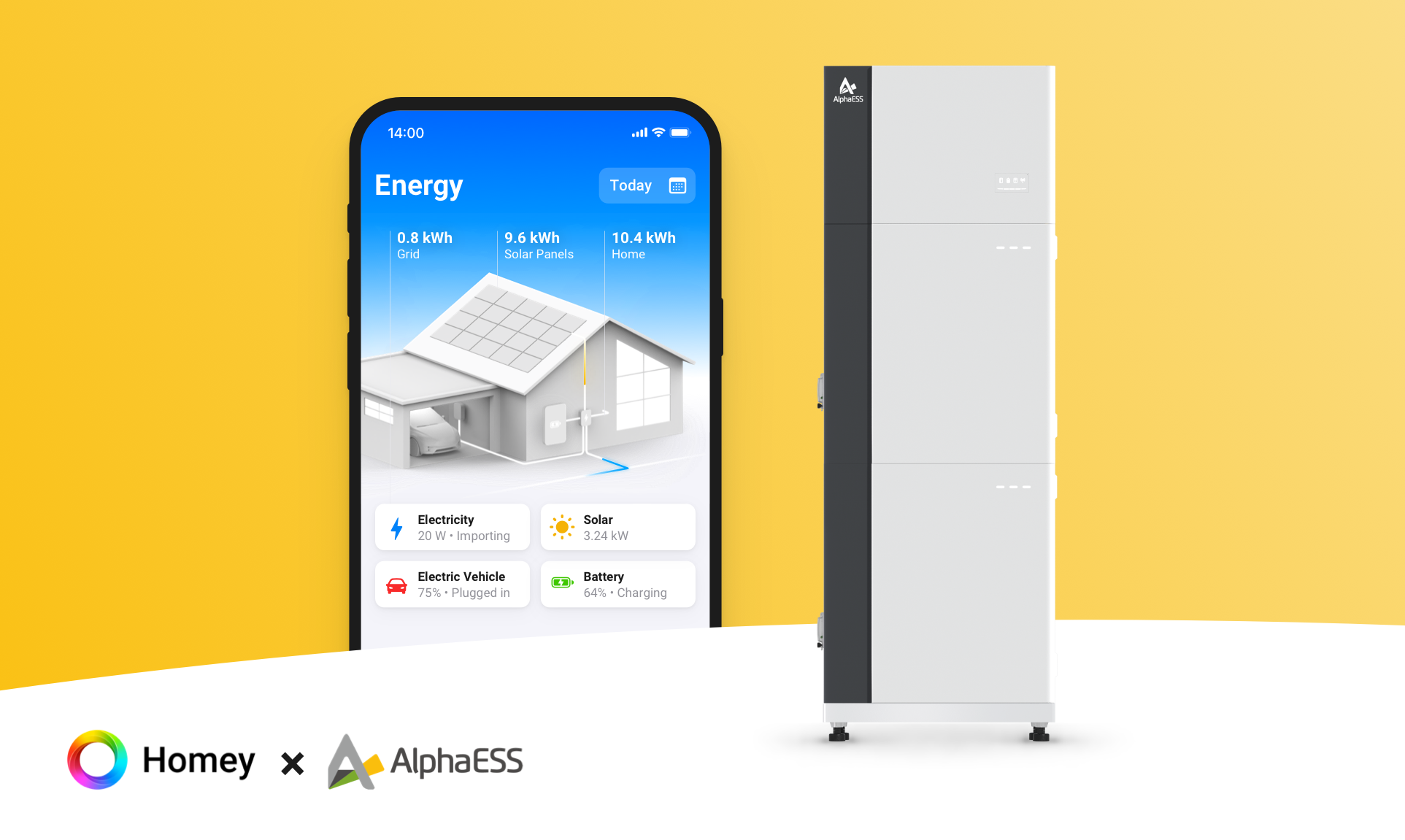
By integrating your inverter with Homey, and ideally combining that with smart meter data via P1, you can move beyond simple production curves. Homey can show how solar output interacts with your household demand. Are you mostly covering your own usage and occasionally exporting a little? Or are you exporting large amounts at midday while importing again in the evening?
The moment you see that interaction clearly, opportunities for improvement become visible. That’s where Homey’s automation Flows step in.
Using Solar Surplus as an Actionable Trigger
Solar panels produce most of their energy in a relatively short window around midday. If the house is quiet then, much of that power simply flows back to the grid. Your HEMS can treat that surplus as a “start signal” for energy-demanding tasks.
With Homey, you can set conditions like: when solar production has exceeded a certain level for a sustained period, and total household consumption is still below production, then it’s a good time to start certain appliances. A washing machine, dryer or dishwasher can become a “solar follower” instead of randomly adding to your evening peaks.
This doesn’t mean your life needs to revolve around the weather. You can still load the dishwasher after dinner, but Homey can delay its start until solar conditions are right the next day—within the boundaries you define. If the weather doesn’t cooperate, the appliance can run at a fallback time regardless.
Home Batteries as Part of the Strategy
A home battery adds a new layer to your HEMS: the ability to store solar energy for later use. When Homey can see the battery’s state of charge and control its charging or discharging behavior (depending on your specific setup), solar management becomes a game of priorities.
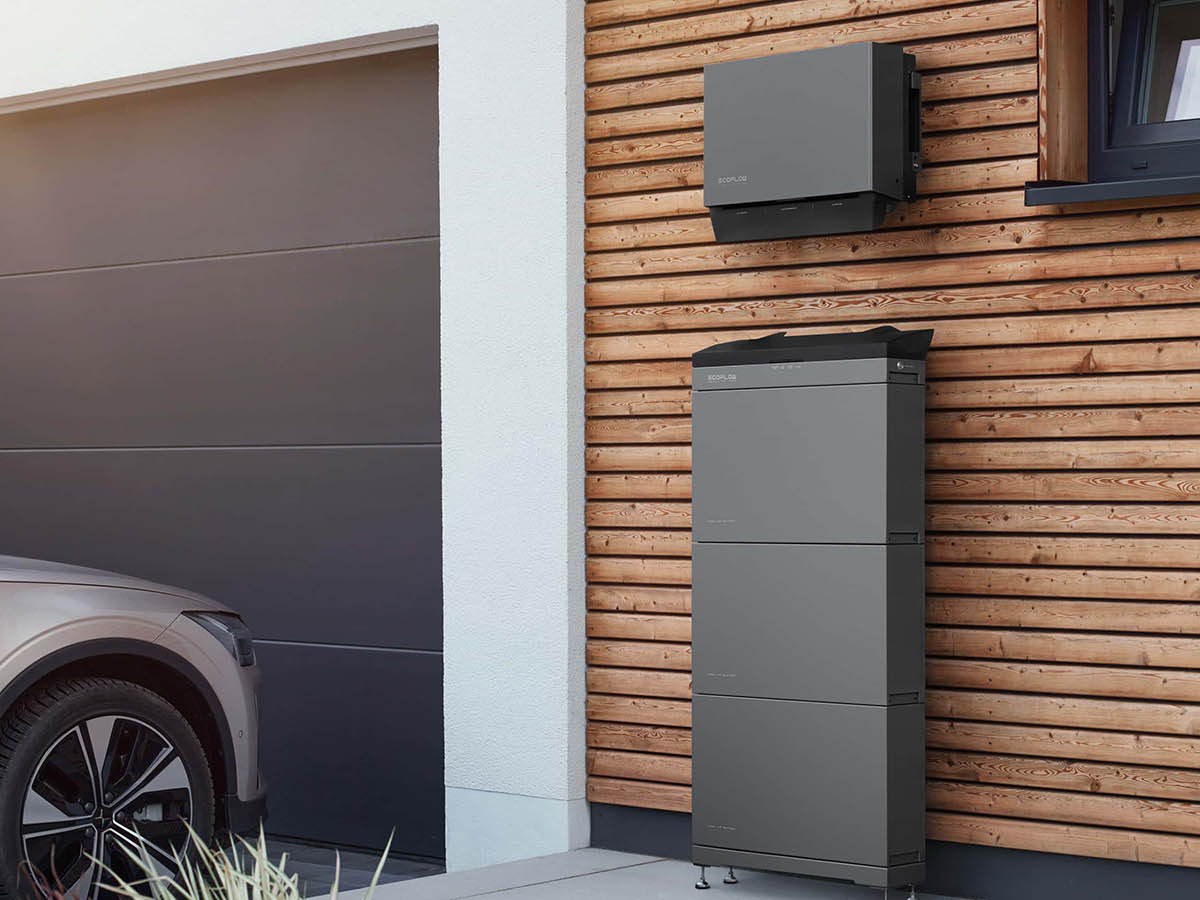
Most households want to ensure the battery is reasonably charged for evening use. Homey can help fill the battery during strong solar periods, then use any remaining surplus for other tasks. You might decide that the battery should reach a certain minimum state before starting flexible loads, or you might give priority to certain appliances when you are at home.
In some configurations, especially with dynamic tariffs, you may even choose to charge the battery from the grid during very cheap hours and discharge during expensive ones. Homey can coordinate that timing in conjunction with your solar production and household demand.
Solar, EVs and Heating: A Powerful Trio
Solar management becomes even more interesting when you add an EV or electric heating into the picture. These are large, flexible loads that can absorb a lot of energy at suboptimal times if left unchecked.
If your EV charger or car is integrated with Homey, you can design charging strategies that prefer solar power when available. For example, the car might charge slowly whenever solar surplus is high, then top up if necessary during cheap grid hours. You no longer have to wonder whether “now” is a good moment to plug in—the system makes that decision for you.
Heating systems, especially those with buffers or high thermal mass, benefit from using renewable solar energy. A well-tuned HEMS can allow your home to warm slightly more during sunny hours and rely less on grid power later. Hot water tanks can be heated with a bias toward solar-rich times, turning them into another form of energy storage.
A Home That Follows The Sun Without You Watching The Sky
The real value of combining solar panels , a home battery and Homey is that your home learns to follow the sun automatically. Instead of watching inverter apps and guessing when to start devices, you decide once how you want your solar power to be used, and Homey translates that into repeatable behavior.
Over time, the effect becomes visible not only in daily graphs but also in your relationship with energy. You start to see your roof, your battery and your devices as parts of one system, and you know that Homey is quietly steering them to make the most of every ray of sunlight.
FAQs
How does Homey utilize excess solar energy?
Homey treats solar surplus as an actionable trigger rather than just data. When solar production exceeds your household consumption, the system detects this surplus and automatically starts energy-intensive appliances like washing machines or dishwashers, preventing that power from being exported to the grid unnecessarily.
What happens if there is no sun on a laundry day?
Your daily routines do not need to rely strictly on the weather. You can configure fallback times within Homey to ensure appliances run regardless of solar conditions. If the sun doesn't appear, the system will still complete the cycle at your designated time so your chores are not delayed.
How does a home battery fit into this strategy?
A home battery increases flexibility by storing solar energy for evening use. Homey manages the battery's priority, ensuring it charges during peak solar hours. In setups with dynamic tariffs, Homey can even coordinate charging from the grid during cheap hours and discharging during expensive ones.
Can this system manage EV charging?
Yes, electric vehicles act as large, flexible loads within a HEMS. Homey can automate your EV charger to prioritize periods of high solar surplus. The system charges the car using free solar power when available and only uses the grid to top up if necessary.
Can Solar Energy Heat My Home?
Yes, heating systems with thermal buffers or high thermal mass are excellent candidates for solar automation. By allowing your home or water tank to heat up slightly more during sunny hours, you effectively store that energy for later use, reducing the need to draw power from the grid when the sun goes down.
Glossary
HEMS
A Home Energy Management System (HEMS) places a central controller, such as Homey, in charge of your energy flows. It unifies your solar inverter, battery, and appliances into a single responsive network that adapts usage based on real-time production and consumption data.
Solar Surplus
Solar surplus occurs when your panels generate more power than your home currently needs, typically around midday. Rather than sending this excess back to the grid, your system identifies this overlap as a prime opportunity to trigger energy-hungry tasks automatically.
Solar Follower
A device or appliance configured to operate primarily when solar production is high. Instead of running on a fixed schedule, a "solar follower" waits for a signal that surplus energy is available, ensuring its consumption curve matches the generation curve of your panels.
Home Battery
A home battery introduces storage capacity to your energy management strategy, capturing solar power for use when the sun goes down. This component allows your system to balance priorities, ensuring you have reserves for the evening while managing overflow for other household needs.
EV Charging
EV charging functions as a large, adjustable load within your smart home ecosystem. Instead of drawing power indiscriminately, the process can be synchronized with solar availability, filling your car's battery with free sunlight and minimizing reliance on the grid.


