







Choosing a Home Battery: Capacity, Efficiency and Lifespan Explained
You watch your feed-in spike on sunny afternoons and think it would be better to store that surplus for the evening. That is exactly what a home battery does. This guide breaks down what battery capacity suits your household and how you assess efficiency. We show you how to choose a home battery that matches your usage. You will learn how to control it smartly with Homey and how to get years of reliable use from every stored kilowatt-hour.
Understanding Home Batteries
A home battery is a stationary battery that temporarily stores electricity. You charge it during the day with your solar panels and use the power in the evening and at night. This reduces what you buy from the grid. Independent sources highlight the benefit of increased self-consumption but also note the reality of purchase costs and environmental impact. Control and sizing must be right for your home to unlock real value.
Research places home batteries in the context of the global energy transition. They help store self-generated power and lower energy costs while reducing peak loads when wisely integrated into the home energy system. Typical residential systems offer between a few and over ten kilowatt-hours of storage.
Choosing Capacity Based on Usage
Capacity determines how much energy you can shift in a day. The smartest approach is to look at your average evening and nighttime demand rather than record-breaking days. You can see exactly what you consume between sunset and bedtime in Homey Energy with the Homey Energy Dongle. This lets you see your base night load and evening peaks. You can estimate how much storage you will fill on sunny days and reliably empty when it matters.
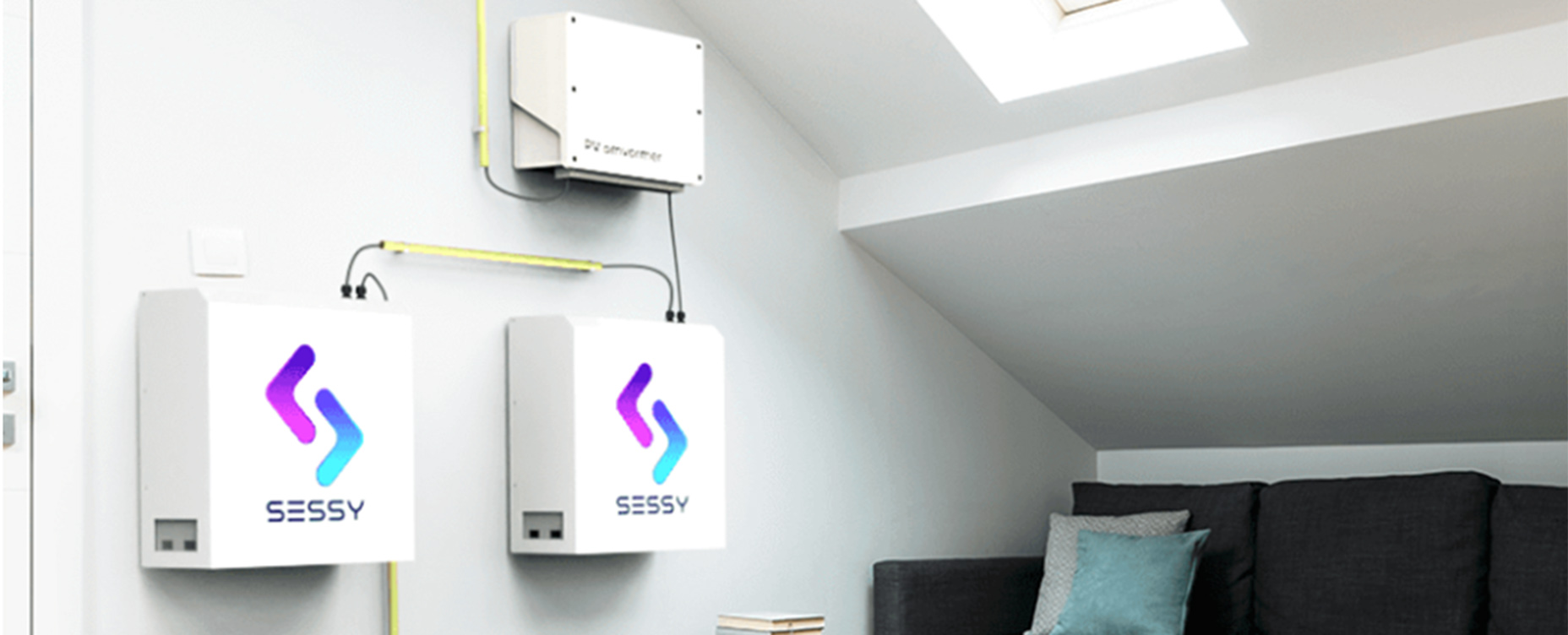
A compact battery can already make a difference if you often have surplus in the afternoon and use 3 to 5 kWh in the evening. A larger capacity may make sense if your evening use is higher or if you drive electric. Residential batteries in practice vary from roughly 3 to 15 kWh so you should choose one you can regularly use rather than just the biggest one available.
A second factor is power regarding how fast the battery can charge and discharge. A higher charge and discharge rate helps for peak shaving since the battery can step in quickly when multiple high-power appliances are running. Check your Homey Insights for the height and duration of those peaks to size your battery power accordingly.
Understanding Efficiency in Practice
No battery is lossless since some energy is lost to heat and internal electronics. The key metric here is round-trip efficiency which is the percentage of energy you get back after putting it in. Recent studies report around 85 to 95 percent for residential lithium-ion systems and independent practical tests confirm this. That means you will use roughly 8.5 to 9.5 kWh if you charge 10 kWh.
You should plan meaningful shifts of hours rather than minutes and avoid constant micro-cycling. This translates to calm logic in Homey. You let the battery charge during solar peaks or low tariffs and only discharge when it really adds value like during the evening peak. This limits losses and keeps your automation understandable.
Extending Lifespan with Cycles and Temperature
Battery lifespan is mostly determined by cycle count and temperature along with depth of discharge. Moderate SoC ranges and partial cycling slow down wear. This is where Homey shines. Set a daily target SoC and define a minimum SoC. Only trigger Homey Flows when charging or discharging is worthwhile. This avoids staying full or empty for too long and limits heat buildup from extreme current loads.
Location matters too since a stable and moderate temperature environment is better than a spot that gets hot in summer or cold in winter. Always have installation done by a certified installer and ensure proper ventilation and maintenance access.
Making Your Battery Pay Off with Homey
A home battery does not work in isolation. The benefits come when storage interacts with other smart components. Homey Pro is the local brain where your flows run quickly and reliably in your home. You link your inverter or energy metering with your home battery. You connect controllable devices via smart plugs along with your smart thermostat and EV charger.
You then define what your home may do in plain language.
- The battery charges when there is solar feed-in or prices drop below your threshold.
- It discharges when evening demand peaks or prices rise.
- The EV waits for sunshine or a cheap window but always meets your minimum morning charge.
- The heat pump boiler buffers warm water during the day so you use less electricity at night.
- Cooking and safety come first for peak shaving while the dishwasher waits.
The result is not that everything runs all the time. It ensures everything runs at the right time.
Boosting Self-Consumption with Solar Panels
Shifting loads to sunny hours increases self-consumption even without a battery. You store the rest with a battery. Independent research confirms that the core idea is to use more yourself and buy less. This is especially true now that net metering and feed-in tariffs are changing. This does not become a daily puzzle with Homey managing the timing but rather a one-time setup you occasionally tweak.
Grabbing Cheap Blocks with Dynamic Pricing
Quarter-hour pricing gets extra interesting if you use a dynamic energy contract. Prices are set per block on the day-ahead market and can even go negative in times of excess sun and wind. You let your battery charge during those cheap moments within your comfort rails and discharge in the evening when energy is worth more. This way you turn price swings into savings without constantly checking graphs.
Choosing the Right Setup Practically
Start by measuring. Plug the Homey Energy Dongle into your P1 port and watch your graph for a week. Look at how much you use after sunset and how high your peaks are. Check what your usual feed-in looks like. Choose a battery size you can regularly fill and empty.
Set three things in Homey.
- A daily target SoC.
- Charging and discharging thresholds.
- Comfort rules including EV minimum SoC and temperature bands.
Connect controllable devices via smart plugs and add simple solar or price triggers. You will see the results in Homey Energy within days. You will see more self-use and lower peaks along with less grid power during expensive hours.
Choosing Wisely and Controlling Smartly
The right home battery is one that fits your rhythm. It is big enough to power your evening hours but not so big it never fills or empties. It charges and discharges fast enough to help with real-world peaks. Its efficiency is good but it is used when it really adds value. Your automation is calm using broad rules and clear priorities. You check in once a season to fine-tune.
A home battery is not just about having storage but about using your own energy at the right time. Choose your capacity based on evening and night use. Watch efficiency without obsessing and protect lifespan with moderate SoC bands. Everything becomes a system with Homey. The Homey Energy Dongle gives you real-time insights while Homey Pro runs your rules locally and fast. Devices from the guide including home batteries and EV chargers do exactly what is needed. That is how you make the most of your energy every day for years to come.
FAQs
How do I determine the right capacity for my home?
The best capacity matches your average evening and night consumption rather than your peak generation. You can measure exactly how much energy you use between sunset and sunrise with the Homey energy dongle. A battery that covers this period maximizes self-consumption without unnecessary cost.
What is the expected lifespan of a home battery?
Most modern lithium-ion batteries are designed to last between 10 and 15 years or a specific number of cycles. You can extend this lifespan by managing the Depth of Discharge and temperature. Homey helps by keeping the State of Charge within a healthy range to avoid extreme wear.
Does a home battery only make sense with solar panels?
No. You can also use a battery to trade energy if you have a dynamic energy contract. You charge the battery when grid prices are low or negative and discharge it when prices are high. This allows you to save money even on days without sunshine.
How does Homey help extend battery life?
Homey prevents unnecessary micro-cycles where the battery charges and discharges constantly for small amounts. You set rules to only discharge when the load exceeds a specific threshold or during expensive hours. This keeps the battery chemistry stable for longer.
What is round-trip efficiency and why does it matter?
Round-trip efficiency is the percentage of electricity you get back from the battery compared to what you put in. A typical rating is between 85 and 95 percent because some energy is lost as heat. You should factor this loss into your calculations to ensure your storage strategy is actually profitable.
Glossary
Round-Trip Efficiency
The percentage of electricity put into a battery that can later be retrieved for use. It accounts for energy lost during the charging and discharging process.
Depth of Discharge (DoD)
A measure of how much energy has been withdrawn from a battery relative to its total capacity. Keeping this moderate can extend battery life.
Kilowatt-hour (kWh)
A unit of energy equivalent to one kilowatt of power expended for one hour. It is the standard unit for measuring battery capacity and home energy usage.
Stationary Battery
An energy storage system designed to be installed in a fixed location such as a home or business rather than being portable like a phone battery.
Cycle Life
The number of complete charge and discharge cycles a battery can support before its capacity degrades below a specific percentage of its original rating.


