





Z-Wave Device Types and Use Cases in Homey
Z-Wave really comes alive when you look at the actual devices you can use every day. Instead of thinking in abstract protocols, it’s easier to think in ceiling lights, radiator valves, contact sensors and roller shutters.
In this article, we’ll walk through the main types of Z-Wave devices available, what they’re good at, and how they typically fit into a Homey-powered home. The goal is not to list every model, but to give you a clear sense of which device type solves which real problem.
Sensors: Motion, Door/Window, Temperature and More
Sensors are the “eyes and ears” of your smart home. Z-Wave sensors are usually compact, battery-powered and designed to last for years.
Motion sensors are ideal for areas where you naturally pass by: hallways, staircases, utility rooms, bathrooms and walk-in closets. A Z-Wave motion sensor in a Homey Flow can turn on soft lights at night, brighter lights during the day or even heat up a room when there’s activity. Because Z-Wave is quick and local, these actions feel natural rather than delayed.
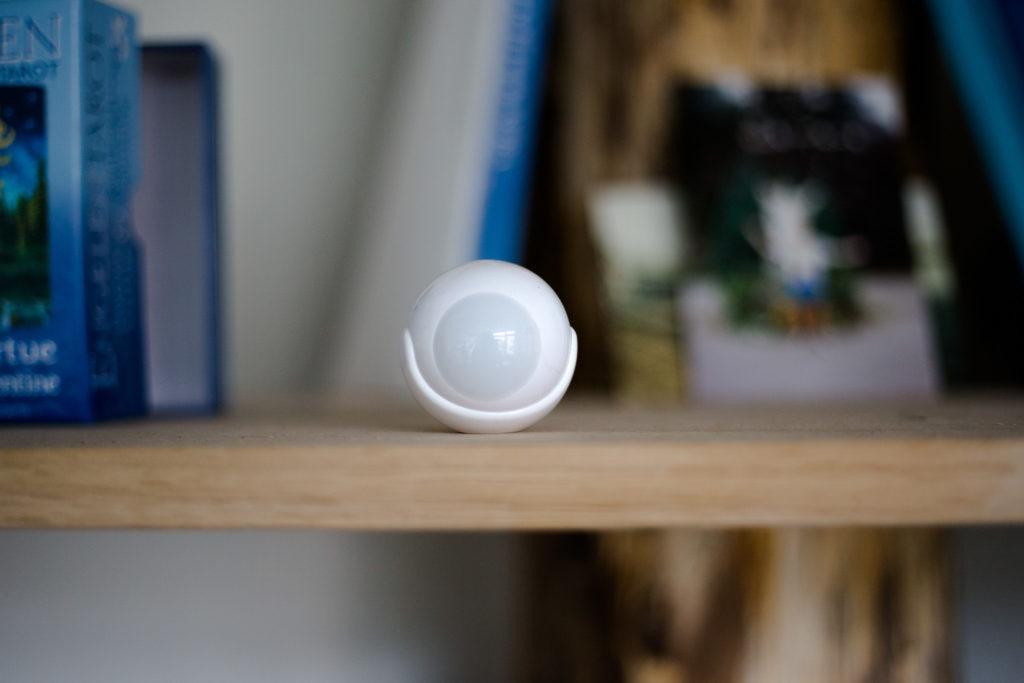
Door and window sensors are perfect for security and comfort at the same time. They can trigger an alarm when a door opens unexpectedly, but they can also pause heating if a window is left open too long. In Homey, one simple Flow can start a timer when a window opens and lower the thermostat or radiator valve if it stays open.
Temperature and humidity sensors give Homey the information it needs to control climate intelligently. With reliable readings from Z-Wave sensors, you can create Advanced Flows that adjust heating per room, run ventilation when humidity spikes and keep bedrooms comfortable at night.
Because Z-Wave sensors use low energy and send only small messages, typical battery life ranges from one to several years, depending on how often they report.
Switches, Plugs and In-Wall Modules
Where sensors observe, switches and plugs act. Z-Wave gives you several options to control power, all of which integrate neatly with Homey.
Smart plugs are the easiest way to add intelligence to an existing appliance. Plug them into the wall, connect a lamp, fan or humidifier, and you immediately get on/off control, scheduling and, on many models, energy metering. They also act as repeaters in your Z-Wave mesh, strengthening the network.
In-wall switches and dimmers offer a more invisible solution. They sit behind your existing wall switch and turn a regular circuit into a smart one. This is ideal when you want the convenience of smart lighting or controlled circuits without changing the visible hardware on your wall. In Homey, you still see them as devices with on/off and dim capabilities, just like a smart bulb.
Relay modules can control things like pumps, towel radiators or other switched loads. Combined with sensors in Flows, they allow precise control based on time, temperature or presence, instead of relying on manual switches alone.
Dimmers, Roller Shutters and Blinds
Lighting and blinds are where a smart home quickly feels “grown up”. Z-Wave is well-suited here because of its reliable control and good range.
Dimmers let you go beyond simply turning a circuit on or off. In Homey, you can set different dim levels depending on time of day, presence or mode. For example, 20% in the late evening, 70% while cooking, and 5% at night for safe navigation.
Roller shutter and blind motors with Z-Wave control allow precise positioning. Instead of only “up” and “down”, you can set blinds to 40% in the morning for privacy, then fully open when the sun is on the other side of the house. With Homey, it’s easy to link this to sunrise, weather or room temperature.
Thermostats, Radiator Valves and Energy Metering
Z-Wave really shines in climate and energy control, where reliability and battery life matter over many seasons.
Wall thermostats and room controllers provide a central point in each room to set temperature targets. Z-Wave thermostats report current temperature and receive setpoints from Homey, which can coordinate heating across multiple rooms.
Smart radiator valves are very popular in Z-Wave form. They sit on each radiator and allow zone-based heating without changing the entire boiler system. Homey can adjust each room’s setpoint based on schedules, presence or even whether a window is open.
Energy metering plugs and modules give visibility into consumption. With these, Homey can see how much power an appliance or circuit uses, and you can build automations that turn things off when they’re idle or when usage exceeds a certain threshold.
Smart Locks, Sirens and Safety Devices
Security and safety benefit from Z-Wave’s focus on reliability and encryption.
Smart locks with Z-Wave support secure inclusion and encrypted communication. In combination with Homey, they can be part of routines like “Goodnight”, where doors are checked and locked automatically. Access events can be logged, and notifications can be sent when specific PIN codes are used.
Sirens provide an audible alarm when a Flow detects something unusual, such as motion during absence or a door opening when it shouldn’t. Because the alarm command runs locally via Z-Wave, it doesn’t depend on the cloud to sound.
Smoke & CO and water leak detectors are available as Z-Wave devices too. They can trigger sirens, lights and notifications, making them more visible and actionable than stand-alone models.
Conclusion: Build Your Home by Use Case, Not Just by Device
Looking at the variety of Z-Wave devices, a pattern emerges. You don’t really buy “Z-Wave”; you buy tools for specific jobs: keeping hallways lit safely, controlling heating per room, securing doors, or managing energy use.
Homey brings these device types together into Flows and Advanced Flows that express what you actually want: “If everyone is away, turn everything off”, “If there’s motion at the front door after midnight, turn on the porch light and send a notification”, and so on.
FAQ
Do I need every type of Z-Wave device to start?
No. Start with one or two use cases, like hallway lighting or heating control, and add more device types as your needs grow.
Are Z-Wave motion sensors better than Wi-Fi ones?
For pure motion sensing, Z-Wave sensors are often more energy-efficient and integrate better into low-latency automations with Homey.
Can I keep my existing wall switches with Z-Wave?
Yes. In-wall modules let you keep the look of your switches while adding smart control behind them.
Do smart plugs always measure energy?
Not always; some only switch power. If you want consumption data in Homey, choose a plug that explicitly supports energy metering.
Are Z-Wave radiator valves noisy?
Most modern valves move slowly and quietly, though you may hear a short adjustment. For most people this is unobtrusive in daily use.
Can a Z-Wave smart lock still be opened with a key?
Yes, almost all smart locks still support physical keys as a fallback, alongside electronic control.
Do Z-Wave sensors work outdoors?
Some are designed for outdoor use and weatherproofed accordingly. Always check the product’s IP rating and temperature range.
Is there a benefit to using Z-Wave for safety devices?
Yes. The combination of reliable communication and strong security makes Z-Wave well suited for smoke, CO and leak sensors tied into broader Homey Flows.
Can I mix Z-Wave lighting with Zigbee lighting?
You can. With Homey, both appear as devices in the same app, so you can control them together even if the underlying technology differs.
How many Z-Wave devices can Homey handle?
Homey Pro can handle a substantial Z-Wave network for typical homes. In practice, installation quality and placement matter more than hitting the absolute limit.
Glossary
Motion Sensor
A motion sensor detects movement in a room or area and sends a signal when activity is spotted. Z-Wave motion sensors are battery-powered and can trigger lighting, security or heating Flows in Homey. Their low-energy design helps them last one to several years on a battery.
Door/Window Contact
A contact sensor consists of two parts that detect whether a door or window is open or closed. In a Z-Wave network, they can be used for security, heating control and everyday automations. Because they send small, infrequent updates, their batteries can last a very long time.
Smart Plug
A smart plug sits between a wall socket and a device, allowing remote on/off control and sometimes energy metering. Z-Wave plugs also act as repeaters, strengthening the mesh. With Homey, they are a simple way to automate existing lamps and appliances.
In-Wall Module
An in-wall module is a small device installed behind a traditional wall switch. It turns a regular circuit into a smart one while keeping the visible switch. Z-Wave modules can control on/off, dimming and sometimes measure power, all accessible via Homey.
Roller Shutter Controller
This is a Z-Wave module designed to control blinds, shutters or awnings. It can move them up, down or to a specific position. Homey can link these controllers to time, sunlight or temperature so your home adapts throughout the day.
Smart Thermostat
A smart thermostat measures room temperature and controls heating setpoints. In Z-Wave form, it communicates with Homey, which can coordinate multiple thermostats and valves. This allows zone-based heating and more efficient schedules.
Radiator Valve (TRV)
A thermostatic radiator valve replaces a manual valve on a radiator. With Z-Wave, it can receive temperature targets and report status to Homey. This lets you fine-tune temperatures in each room instead of heating the whole house evenly.
Energy Metering Plug/Module
These devices measure how much electricity a connected appliance or circuit uses. Z-Wave energy meters send consumption data to Homey, where you can analyse usage and create automations based on power draw. They are key tools for understanding and reducing energy use.
Smart Lock
A smart lock allows doors to be locked and unlocked electronically, in addition to using a key. Z-Wave smart locks use secure communication and can be integrated into Homey Flows, such as locking doors automatically at night or when everyone leaves.
Siren
A siren is a device that emits a loud sound when triggered, usually for security or safety alerts. Z-Wave sirens can be activated by Flows in Homey, giving an immediate audible response to events like intrusion, smoke detection or water leaks.


