



Save Energy Smartly with Automation in Homey
Making Devices, Lighting and Heating Work Together in Homey
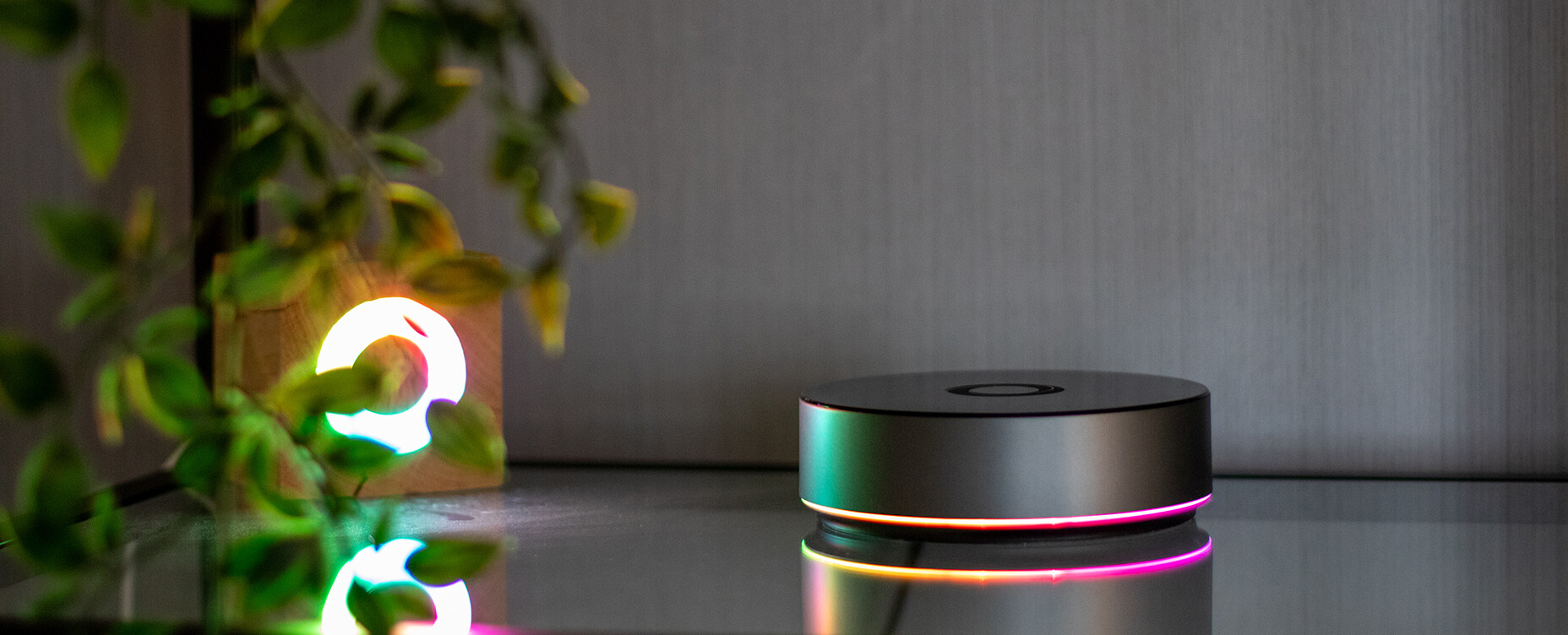
The difference between good intentions and structural energy savings does not lie in more manual actions. It lies in a capable Home Energy Management System that quietly works for you. With Homey, you can turn your devices into a team. Your Homey Pro directs while the Homey Energy Dongle gives you live insights and your connected devices do exactly what you want — automatically.
You might have already done a few things to save energy. For instance, you wash clothes at low temperatures and switch off lights when you leave the house. You probably try not to set the heating higher than needed. Yet, it still sometimes feels like mopping with the tap open. As soon as things get busy at home you forget to switch something off or the laundry starts running at an inconvenient moment.
In this guide you will discover how to use saving energy with smart plugs, lighting, smart thermostats and automation Flows to bring your household energy use down for good. We explain it in plain language and show you how to put it into practice with Homey.
Why Automation Pays Off Now
Energy efficiency is often called "the first fuel" for good reason. It provides the fastest and cheapest savings while lowering your utility bill. Digitalization and smart control are an explicit part of this strategy. You use energy when it makes sense and avoid waste without losing comfort.
Global energy policies are moving that way too. Many countries now focus on achieving annual end-use savings where households play a role through more efficient appliances and better behavior. This means you do not have to wait for major house renovations to see results. Automating the devices you already have with a central smart home hub like Homey delivers immediate and noticeable gains.
Gaining Insight with the P1 Port
The smart meter in your meter cupboard usually has a P1 port that outputs real-time data. With the Homey Energy Dongle, you can integrate that data directly into Homey. This allows you to see live energy consumption and power feed-in. You can also monitor your water and gas usage if your meter supports it.
In Homey, you notice these insights immediately. You can see your baseload, which includes everything that is on 24/7 and recognize peaks when the washing machine runs or the oven is on. You also spot standby consumption you did not see before. Your home starts to join in and you use that insight as a trigger in energy-saving Homey Flows.
For instance, you can set a rule where the washing machine smart plug switches on if feed-in exceeds 1,200 W. Or, you can send yourself a notification if night-time usage exceeds 200 W. With Homey and the Homey Energy Dongle you link measurement to action and real savings.
Cutting Standby Power with Smart Plugs
Standby consumption is the power devices draw even when you are not actively using them. This includes media boxes, game consoles, chargers or anything with a wall power supply. These draws accumulate even though they seem insignificant.
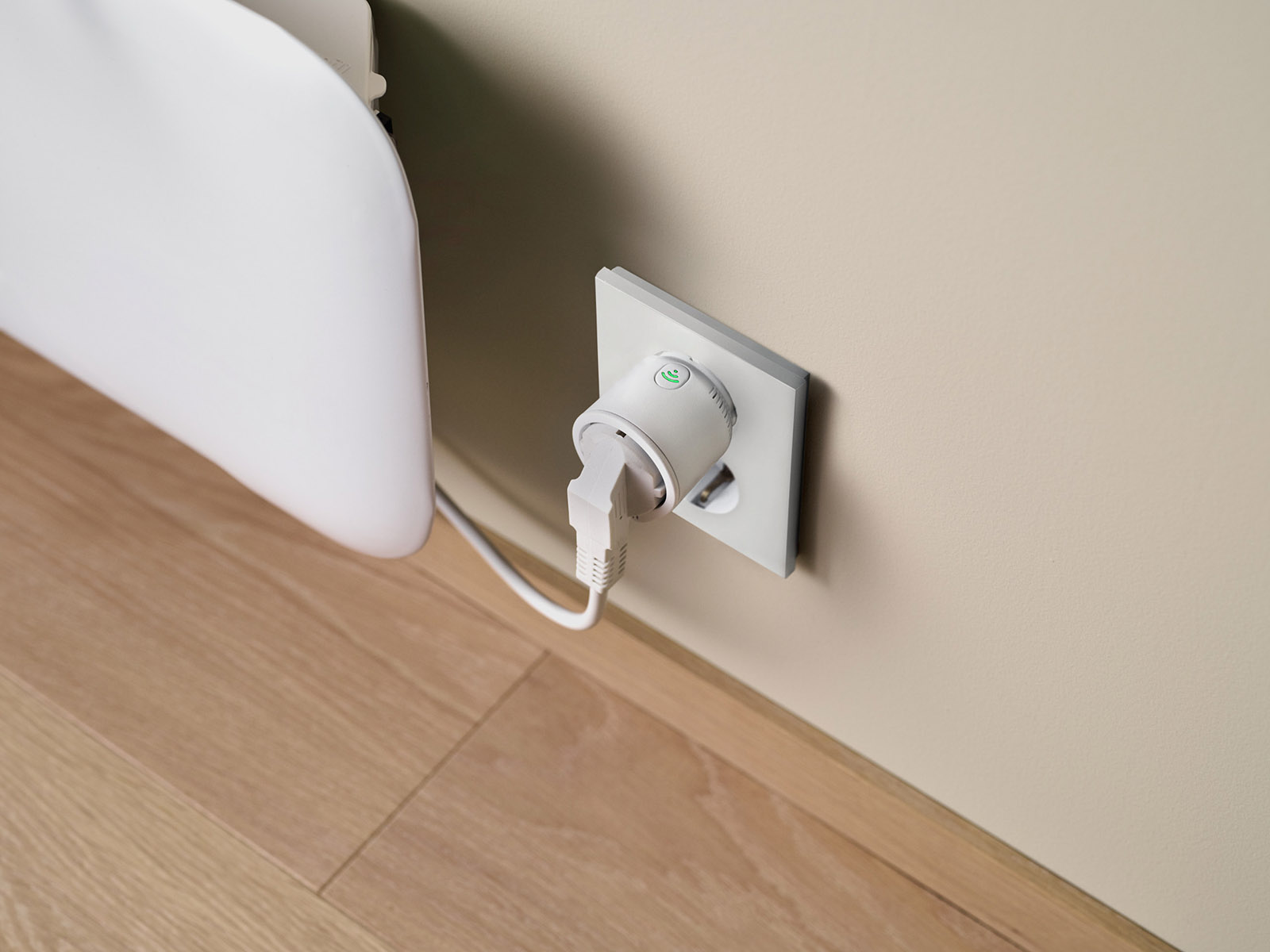
You can save energy smartly with automation by switching devices off or removing them from the mains if you are not using them for a while. With a simple smart plug, you can automate the entire process. You can switch entire zones off in one go or cut power at night and during work hours.
The nice part is that you do not have to remember this every day. You create an automation once that fits your life rhythm. You can switch off the entertainment zone and home-office zone when everyone leaves the house while keeping the modem and router on. At the same time, the P1 energy meter data in Homey shows you what it saves. That way you turn a vague tip about standby power into a concrete and lasting energy-saving routine.
Increasing Comfort and Saving kWh with Smart Lighting
Lighting is no longer the biggest cost item for many households, but there is still money to be saved. LED is the default now and offers lower annual costs for an average household than before. Switching to smart lighting is more comfortable and energy-efficient if you still have halogens or old lamps.
The setup for saving energy with lighting in your smart home hub is simple. You group lights per zone such as the living room or hall. You then let motion or presence sensors determine when they are used. The result is not a harsh policy where lights are always off. It ensures lighting is only on where and when it is actually needed. You can combine this with scenes for movie nights or work modes.
Controlling Heating Smartly for Big Impact
Heating is usually the largest energy use in the home, which is exactly why smart control pays off. With Homey you make heating predictable and efficient with a smart thermostat and zones.
Studies show that simple set-point adjustments and smarter behavior directly reduce heating energy consumption and cooling energy consumption. Energy research indicates significant savings can be achieved from using smart thermostats. That range is wide which is precisely why you tie it into your daily routines. Your thermostat becomes smart in your daily life rather than just on paper.
You translate that into Homey Flows that feel logical.
- The heating lowers earlier when everyone is away.
- It pre-heats gently on colder days if you are coming home anyway.
- It reacts to open-window sensors.
- It aligns itself with sunny or cheaper hours if you have solar panels.
At the same time, you keep comfort as a hard boundary in Homey. This includes minimum temperatures per zone and exceptions for early mornings or home office days. You can also add a vacation mode that automatically switches everything back to normal when you return.
Scheduling Washing and Drying for Automation
Big consumers like the washing machine and dryer use a lot of power in a short time period. They are ideal to shift towards sunny or cheap hours because they are schedulable. You can also shift them to moments when you have little other usage.
Many households use a realistic pattern where they wash during the day when the sun is shining or in the afternoon after the day peak. With Homey, you can start your appliance automatically when it suits you if you connect it through a simple smart plug. At the same time, Homey makes sure appliances do not all start at once to avoid unnecessary peak load. You get a notification when the tumble dryer is done. It sounds small but it is exactly what makes it easy to stick to your saving routines.
Charging EVs without Surprises
Home charging is often the cheapest option if you drive electric and are smart with timing. If left unchecked, EV charging can and will increase your energy bill significantly.
With Homey you give your EV charger simple rules.
- Charge during a solar surplus only.
- Charge at night within a cheap price window.
- Always ensure a minimum state of charge before departure.
- Pause charging when other large consumers are running.
With a few simple flows, you shift a lot of consumption to favorable moments without ever ending up with an empty battery. You can also do load balancing if you combine this with P1 energy measurements. If total load is high, charging current is temporarily reduced or paused. That is handy in older houses or if your main connection has limited capacity. You can see exactly what is happening in Homey Energy.
Building a Savings Ecosystem
The strength of Homey lies in building one coherent, smart and energy-saving ecosystem:
- A motion sensor in the hall only keeps the lights on briefly.
- The thermostat knows this is a transit zone and does not need heating.
- The smart plug for the media cabinet switches off as soon as everyone leaves.
- The EV charge point waits until the dishwasher is finished.
These are not isolated tricks. They form one living rhythm in which energy automatically gets used more intelligently. The nice part is that you do not have to do everything at once.
- Start with insight via the Homey energy dongle.
- Add a few switchable consumers.
- Create three simple automations that cover most of your routine.
- Check in Homey Energy after a week what it delivers and tweak step by step.
With Homey, your smart home grows along with you without you getting lost in settings.
Making Smart Purchase Decisions
When you buy new appliances, pay attention to energy consumption per cycle and its energy label. The label for dryers and washing machines shows how many kWh a specific program uses. This makes it easier to calculate payback over the lifetime of the appliance.
You get the best of both worlds when you combine efficient hardware with smart control. You get an appliance that uses little energy and only runs when you want or need it to.
The rule for lighting is simple since switching to LED is the standard now. Product rules for light sources have already cut household costs significantly. You add presence based control on top when you link your lamps to Homey. This saves even more without sacrificing ambience.
Setting Ambitious but Realistic Goals
Figures regarding percentage savings depend heavily on your home and appliances. However the direction is clear.
- Insight demonstrably leads to savings.
- Cutting standby usage pays off.
- LED structurally lowers costs.
- Smart thermostats often make a noticeable difference especially with zones and routines.
That is exactly why automating a sustainable home is so powerful. It turns good behavior into the default even when you are not thinking about it.
The P1 link in Homey plus device measurement via smart plugs is all you need if you want to monitor what your measures actually do. You can see:
- Your baseload drop as you cut standby.
- Peaks shifting when you use timers.
- Seasonal patterns in heating.
That makes saving both transparent and motivating.
Setting Comfort as a Hard Boundary
You will only maintain real savings if your home stays pleasant to live in. You therefore define comfort rails in Homey.
- Minimum temperatures per zone.
- A time window by which the wash should be finished.
- A battery level your car always reaches.
- Exceptions for guests or holidays.
Your Homey Flows respect those boundaries. A small set-point tweaks and smarter scheduling deliver a lot without hurting comfort. This is exactly the sweet spot where Homey shines.
A Day in a Self-Saving Home
You start the morning in a house that is already awake. Heating was lower overnight and has just ramped up to comfort levels before you woke up. The hall light comes on briefly as you walk through while only the fridge is running in the kitchen. Homey cuts power to the entertainment zone via smart plugs as soon as everyone leaves the house.
Around midday, Homey notifies you that your solar panels are producing a surplus. At the same time, the washing machine starts automatically while the dishwasher waits and follows later to spread peak power. The EV charger waits until evening unless feed-in exceeds your pre-set threshold.
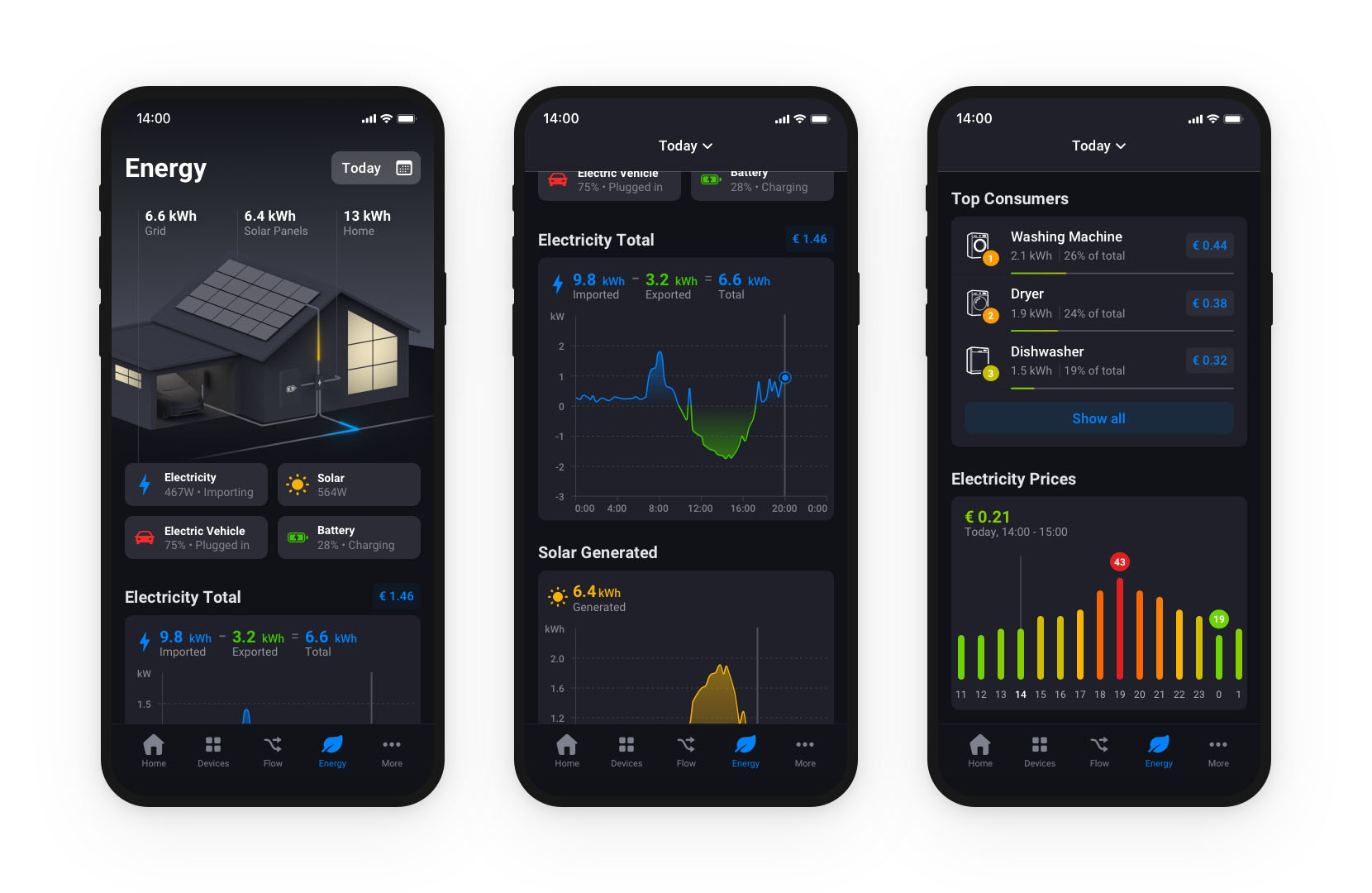
The house stays efficient without feeling strict in the evening when everyone is home. The living room holds its temperature while bedrooms gently drift down. Lights dim or turn off when nobody is nearby. Homey Energy shows that your baseload is lower than a month ago when you go to bed. This is not because you are trying harder every day but because your smart home now does it for you.
FAQs
Is a smart thermostat always worthwhile?
Savings depend on your home and heating system. Research shows a wide range of potential savings for smart control. It helps in all cases if you use zones and optimising energy use strategies. Homey ties this into your daily routines so the thermostat really works for your life.
How much attention do I still need to give it myself?
It takes a bit of time to set things up but it mostly runs in the background after that. You check in Homey Energy from time to time whether your thresholds still match your rhythm or the season. That fits with the general picture that insight leads to structural savings.
Which devices should I tackle first?
Start with items that are often on for many hours such as the media cabinet or home office corner. Replace lamps with LED and connect them. Address big consumers you can schedule like washing machines. Finish with smart heating and EV charging if you have it. That way you get quick results without starting out too complex.
How much can I save with smart plugs?
Saving energy with smart plugs mainly targets standby consumption from media boxes and adapters. Your baseload drops noticeably by switching zones off automatically when nobody is home. Homey measures the effect directly via the P1 port.
Do smart lights really save much energy?
Yes especially if you are still replacing halogens or old LEDs. Homey only switches lights on when needed using motion detection and time windows. It feels like more comfort but prevents unnecessary burning hours every day.
How does automation help me save structurally?
You are no longer dependent on manual behavior. Homey links insight to action. An appliance starts when feed-in rises. A zone switches off when everyone is out. Standby consumption is cut when night falls. Your home starts thinking along with you.
Can Home Automations really lower my energy use?
Yes. You use saving energy with Flows to shift schedulable appliances to favorable hours and limit peaks. You automatically switch off standby devices and subtly pre-heat on sun or low prices. Small automations add up to structural gains.
Which smart energy tips work fastest in a smart home?
Start with insight via the P1 meter. Switch off standby zones with smart plugs and automate lighting per room. Set an away mode Flow to lower heating and schedule washing for cheap moments. You will often see results within a week regarding smart home energy-saving tips.
How much difference does a smart thermostat really make?
The range is wide depending on home and behavior but smart control with zones almost always pays off. Homey provides calm and efficient heating without losing comfort.
What does Homey mean by smart heating?
This refers to heating that reacts to your rhythm. It includes comfort bands per zone and open-window detection. It considers presence and sunny hours. Your heat pump or boiler then runs more steadily and efficiently.
Where can I see my actual energy use for heating and cooling?
You see live power usage via the Homey energy dongle. Add temperature and humidity sensors in key zones and you immediately see the relationship between consumption and comfort.
How does Homey optimize my energy usage throughout the day?
Homey uses Flows to stagger large consumers.
- It staggers large consumers.
- It pauses EV charging at peaks.
- It starts wash cycles during surplus or low prices.
- It keeps zones within a calm comfort band.
As a result, your consumption shifts towards times that are more favorable.
How do I automate a more sustainable home without buying everything at once?
Start with insight from the P1 link and add smart plugs. Automate lighting and configure two or three basic Flows. Later expand with a smart thermostat or solar trigger. Homey grows at your pace.
Glossary
Home Energy Management System (HEMS)
A centralized system that connects various smart devices (like plugs, thermostats, and chargers) to monitor and control a home's energy usage. It orchestrates these devices to work together for greater efficiency, cost savings, and comfort, rather than operating in isolation.
Standby Consumption
The electricity used by appliances and electronics when they are plugged in but not actively performing their primary function. Often referred to as "vampire power," this includes devices in sleep mode, power adapters, and displays, contributing significantly to a home's base load.
P1 Port
A standard connection port found on many modern smart meters. When connected to a compatible dongle, it provides real-time data on electricity (and sometimes gas) consumption and feed-in, allowing a HEMS to visualize usage patterns and automate responses.
Base Load
The minimum level of electricity demand in a home over a given period, typically visible at night when most active appliances are off. It represents the constant power draw from always-on devices like fridges, routers, and standby electronics.
Load Balancing
The process of distributing available electrical capacity among active devices to prevent overloading the main connection. For example, a HEMS might temporarily reduce power to an EV charger if the oven and washing machine are running simultaneously.


