







Smart Plug-In Batteries
Discover the Best Plug-In Batteries for Your Smart Home.
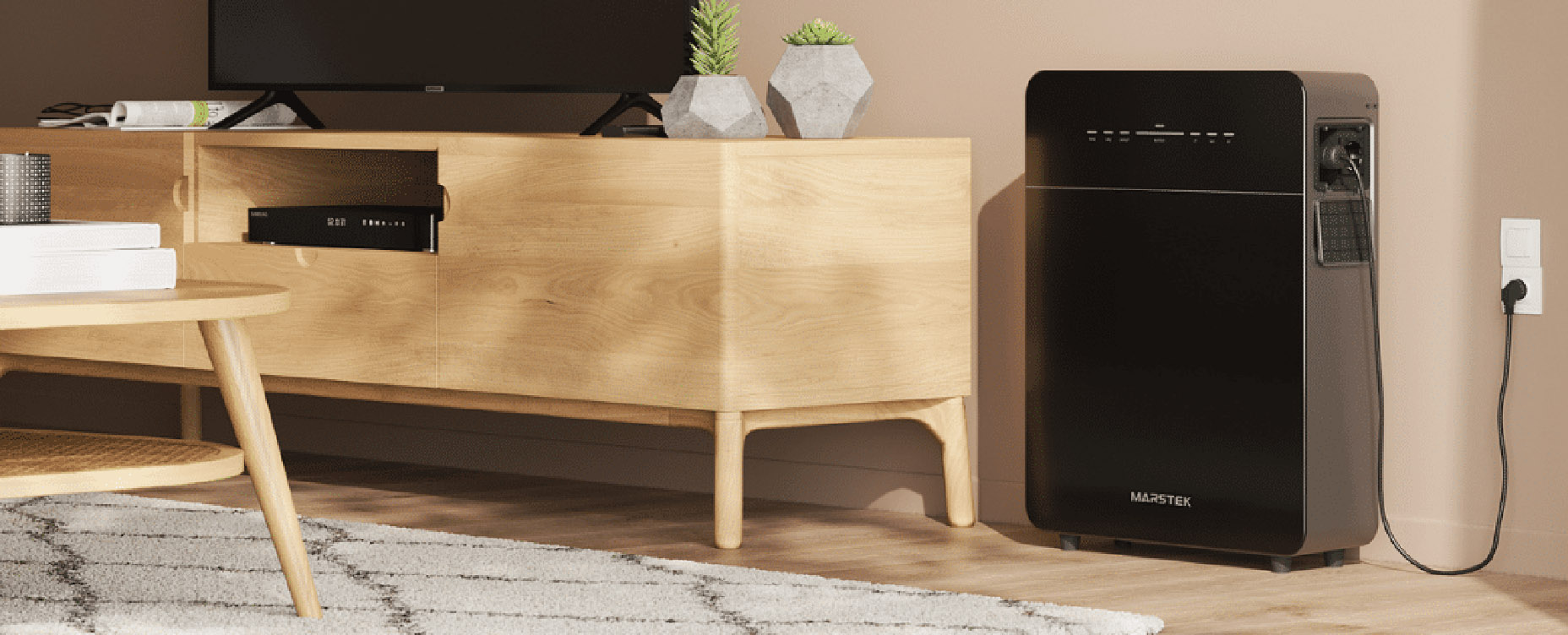
A plug-in battery is a home battery that works with a regular wall socket. You place it in your home, plug it in, and it starts storing and releasing electricity on demand. No electrician or installation work is needed to get started.
If you have solar panels, the battery stores the power they produce during the day, so you can use it in the evening instead of sending it back to the grid. If you have dynamic energy prices that change by the hour, it can charge when electricity is cheap and power your home when it is expensive.
In this Best Buy Guide, we compare the best plug-in batteries compatible with Homey. For each battery, we explain what you can monitor and control in Homey, including whether Homey can set the target power in watts or works through operating modes and limits.
Choosing a Plug-In Battery
Most plug-in batteries look alike, but they differ in ways that matter once you start using them. Below are the six most important things to check before you buy.
Capacity and Scalability
Capacity is the amount of energy a battery can store, measured in kilowatt-hours (kWh). A higher number means the battery can power your home for longer. Many models let you add extra battery modules later, so consider the maximum expanded capacity for each model.
Power Output
Power output is how much electricity the battery can deliver at once, measured in watts (W). On a regular wall socket, plug-in batteries are usually limited to 800 W. Most batteries can deliver more, but only when an electrician connects them to their own circuit in your home.
Smart Meter Compatibility
To know when to charge and when to release power, the battery needs to see how much electricity your home uses. It gets this information from your smart meter, usually through a small P1 or HAN reader that plugs into the meter. Some batteries include this reader, while others require you to buy one separately or only work with the brand’s own version.
Placement and IP Rating
The IP rating shows how well a battery is protected against dust and water. A rating of IP65 or higher means you can place it in a garage or shed, or outdoors. Batteries with a lower rating must stay inside your home. For outdoor use, also check the operating temperature range. Consider the weight of the unit as well, since some units weigh over 70 kg.
Lifespan and Value
A battery’s lifespan is measured in charge cycles. One cycle is one full charge and discharge. Most plug-in batteries are rated for 6,000 to 10,000 cycles, which equals many years of daily use. To compare value, look at the price per kWh rather than the total price.
Control in Homey
Not every battery gives Homey the same level of control. With some batteries, Homey can set the target power in watts, so your Flows decide exactly how fast the battery charges or discharges. With others, Homey works through operating modes and charge limits. Also check which Homey models are supported, since not every battery works with Homey Cloud.
| Brand | Model | Capacity1 | Output2 | Lifespan3 | IP Rating | Price per kWh4 |
|---|---|---|---|---|---|---|
 AlphaESS AlphaESS | VitaPower 3600 AC | 4.0 – 16.0 kWh | 800 – 3,680 W | 10,000 | IP65 | €250 |
 Anker SOLIX Anker SOLIX | Solarbank Max AC | 7.0 – 42.0 kWh | 800 – 3,500 W | 10,000 | IP66 | €286 |
 EcoFlow EcoFlow | STREAM AC 5000 | 5.0 – 15.0 kWh | 800 – 3,000 W | 10,000 | IP65 | €310 |
 HomeWizard HomeWizard | Plug-In Battery | 2.7 – 10.8 kWh | 800 – 3,200 W | 6,000 | IP20 | €443 |
 Indevolt Indevolt | SolidFlex 3000 AC | 1.8 – 19.7 kWh | 800 – 3,000 W | 10,000 | IP65 | €472 |
 Jackery Jackery | SolarVault 3 Pro Max AC | 2.5 – 15.1 kWh | 800 – 2,500 W | 6,000 | IP65 | €313 |
 Marstek Marstek | Venus E 3.0 | 5.1 – 15.4 kWh | 800 – 2,500 W | 6,000 | IP65 | €229 |
 ZinVolt ZinVolt | Base | 4.0 – 8.0 kWh | 800 – 2,000 W | 6,000 | IP65 | €475 |
2 Minimum and maximum output, from a standard socket to the largest supported setup
3 Number of battery charge cycles according to the manufacturer
4 Price per kWh is approximate and may vary by market
AlphaESS VitaPower 3600 AC
- Up to 3,680 W
- 10 ms backup switchover
- Target power control in Homey
- Higher output requires activation
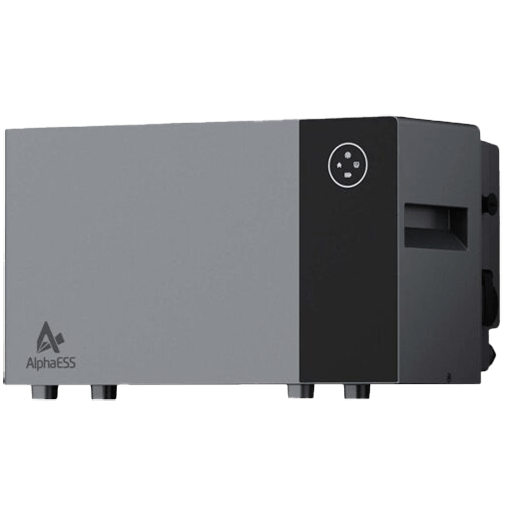
The AlphaESS VitaPower 3600 AC is the first plug-in battery from AlphaESS, a brand well known for its professional home batteries. This unit combines an inverter, a 4 kWh LiFePO₄ battery, a backup outlet, and a P1 energy dongle, so the battery can follow your home’s usage from day one.
The VitaPower has an output of 800 W on a regular wall outlet. What sets it apart is a maximum output of 3,680 W, the highest in this guide. To unlock it, an electrician needs to connect the battery to its own circuit group in your fuse box and have AlphaESS activate the higher output with an authorization code.
To reach full power, the system needs at least 8 kWh of battery storage. You can expand the VitaPower 3600 AC with 4 kWh VitaMate 4000 modules, up to 16 kWh in total. During a power outage, the built-in backup outlet takes over within 10 ms and keeps the devices connected to it running. The IP65 housing also allows placement in garages, sheds, or outside.
In Homey, the VitaPower shows its battery level, power, and solar production, along with whether it is charging, discharging, or sending power to the grid. Homey can set the target power in watts, giving you full control over how fast the battery charges or discharges. Flows can also charge the battery to a chosen level, pause it, or follow a daily schedule.
Anker SOLIX Solarbank Max AC
- Local control
- Large base capacity
- Target power control in Homey
- Heavy at 73 kg
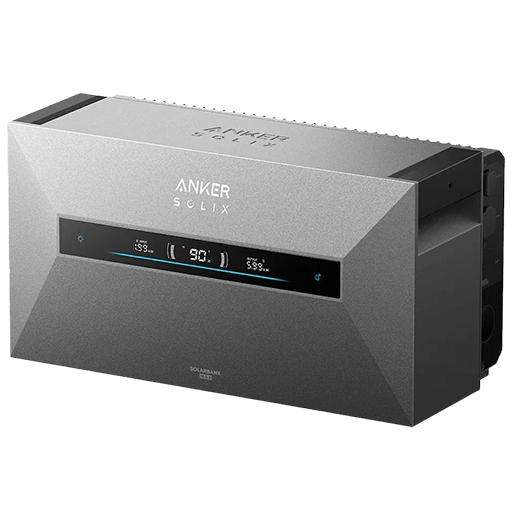
The Anker SOLIX Solarbank Max AC is the largest plug-in battery in this guide, with 7 kWh of storage in the base unit. It is designed for homes that already have solar panels and want to store more of their own power. Because the battery connects on the AC side, it works with your existing solar inverter without changes. You can add up to five BP7000 expansion batteries of 7 kWh each, for a total capacity of 42 kWh.
The system uses LiFePO₄ cells rated for 10,000 charge cycles. With an IP66 rating and C5-M corrosion resistance, it suits both indoor and outdoor installations. A dedicated backup output powers essential loads during grid outages.
The Solarbank Max AC can plug into a standard wall outlet, but its output is capped at 800 W in this mode. Unlocking the full 3,500 W requires professional installation on a dedicated circuit. The main unit also weighs 73 kg, so choose the final spot carefully before installation.
Homey connects to the Anker SOLIX Solarbank Max AC over your local network via Modbus TCP, with no Anker cloud account required. You can monitor battery level, solar production, grid power, and home consumption in real time. Homey can also set the target power and switch operating modes, which lets you charge the battery from the grid when electricity prices drop.
EcoFlow STREAM AC 5000
- Compact footprint
- 5 kWh fully usable
- Built-in DC leakage protection
- No target power control in Homey
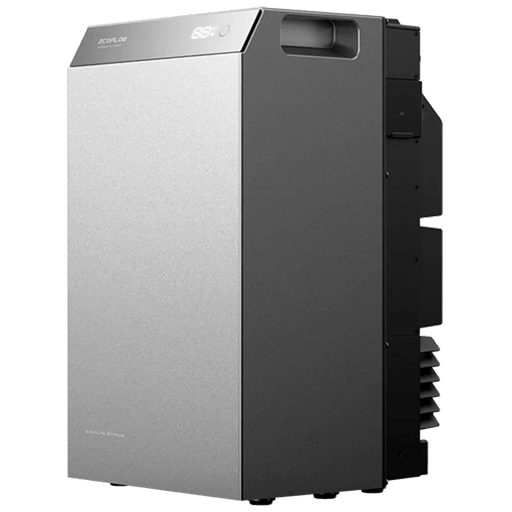
The EcoFlow STREAM AC 5000 is a plug-in battery best suited for homes that already have solar panels. It stores 5 kWh in a compact metal housing and takes up to 40% less floor space than comparable home batteries. The full capacity is usable, so the battery has no hidden reserve that you pay for but cannot use.
On a regular wall outlet, the STREAM AC 5000 delivers up to 800 W. On a dedicated circuit, the base unit reaches 2,500 W, and adding an expansion battery raises this to 3,000 W. You can connect up to two expansion batteries for a total of 15 kWh. The battery also has built-in DC leakage protection, which means you do not need a separate type B residual current device in your fuse box.
The STREAM AC 5000 includes a backup outlet that keeps connected devices running during a power outage. Thanks to its IP65 rating and an operating range of −20 °C to 55 °C, you can place it indoors, in a garage, or outdoors. It weighs 44.6 kg, and the built-in handles make it possible for one person to move it into place.
In Homey, you can see the STREAM AC 5000’s battery level, power, solar power, and grid import and export, along with faults and alarms. Your Flows can also check the electricity price and the solar forecast for today and tomorrow. Homey cannot set the target power in watts. Instead, you control the battery through operating modes, backup reserve, charge and discharge limits, and grid feed-in. For example, a Flow can prepare the battery for cheap grid power or hold a reserve for an evening price peak.
HomeWizard Plug-In Battery
- Fall and heat sensors
- Units work as one group
- Battery Policy Manager
- Indoor use only (IP20)
- No backup outlet
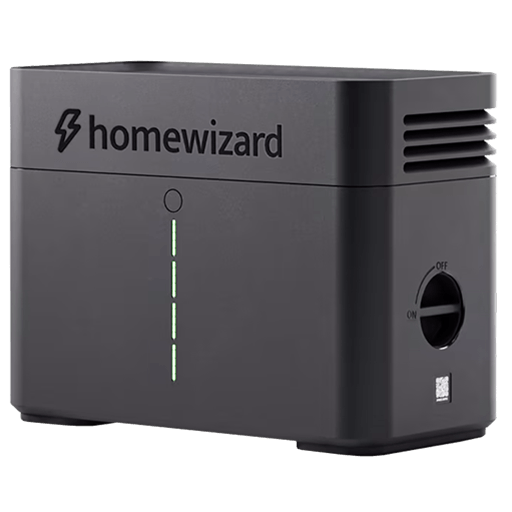
The HomeWizard Plug-In Battery is made by the same company behind the popular HomeWizard P1 Meter. The Plug-In Battery stores 2.7 kWh and works together with this meter, which reads your energy usage in real time and tells the battery when to charge and discharge.
The battery weighs just 24 kg, which makes it among the lightest in this guide. One person can easily carry it and set it up. Built-in lift, fall, and heat sensors detect misuse and switch off components to prevent damage. Its output is fixed at 800 W, so it works on any regular wall outlet without complex wiring. You can combine up to four batteries for a total of 10.8 kWh and 3,200 W output. In that setup, the P1 Meter manages all batteries as one group and divides the work between them.
The battery also works in homes with a three-phase connection. Smart charging with dynamic energy prices is included, and you can use it without a subscription. The battery has an IP20 rating, so it must stay indoors. It also has no backup outlet, so it cannot power your devices during an outage.
In Homey, you can see the battery level, power, voltage, and charging state. Homey can also show how many minutes the battery has left before it is empty. Flows can also warn you when the battery stops responding or when the grid frequency goes out of range.
A special Battery Policy Manager in the app adds an even smarter layer on top. It uses weather forecasts and solar production to recommend the best battery mode, and it applies that mode for you through Homey. It can also tell you when it is a good time to run appliances, so a Flow can start your dishwasher or washing machine at the right moment.
Indevolt SolidFlex 3000 AC
- Target power control in Homey
- Expands to 19.7 kWh
- Semi-solid battery cells
- Small base capacity
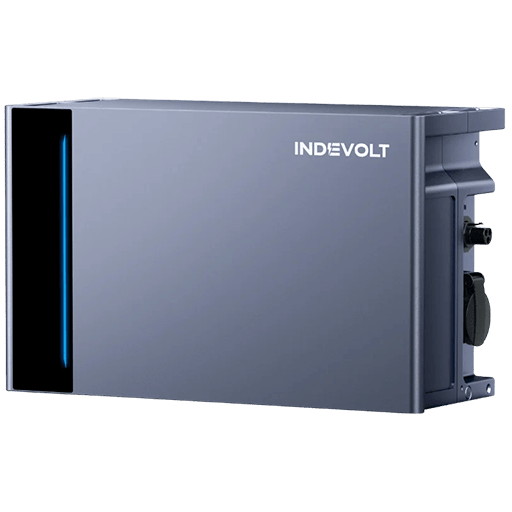
The Indevolt SolidFlex 3000 AC is the only battery in this guide with semi-solid LiFePO₄ cells. In these cells, most of the liquid inside is replaced by a gel-like material. This material makes them less sensitive to overheating and helps them last longer. Indevolt rates the battery for 10,000 charge cycles.
The base unit stores 1.8 kWh of energy and weighs just 21.5 kg, which makes it the lightest plug-in battery in this guide. The SolidFlex 3000 AC delivers up to 800 W on a single wall outlet. With an electrician and its own circuit group, the output rises to 3,000 W, but only after you add expansion batteries. The base unit alone reaches 1,000 W on dedicated wiring.
You can expand the battery with up to five extra modules, for a total of 19.7 kWh. The battery also has a backup outlet that keeps connected devices running during a power outage. Its IP65 housing and operating range of −20 °C to 55 °C let you place it wherever you want. It connects to your home network over dual-band Wi-Fi or a wired LAN cable.
Once the battery is connected to Homey, you can monitor the battery level, charging state, and battery temperature. Homey can set the target power in watts, so you control exactly how fast the battery charges or discharges. You can also switch the working mode and set limits for the maximum input and output power. For example, a Flow can charge the battery at full power when energy prices are low.
Jackery SolarVault 3 Pro Max AC
- Passive cooling
- Built-in fire suppression
- P1 meter included
- No target power control in Homey
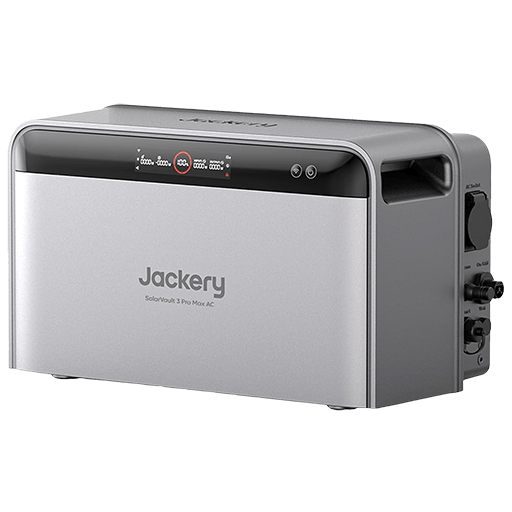
The Jackery SolarVault 3 Pro Max AC is a plug-in battery for homes with solar panels and an existing inverter. The 2.52 kWh base unit has handles on both sides and weighs about 25.5 kg. Jackery includes a P1 meter in the box, so the battery can read your smart meter right away. A color display on the unit shows the battery status at a glance.
Through a standard socket, the battery feeds up to 800 W into your home. On its own circuit group, installed by an electrician, it reaches 2,500 W. Full power requires at least one BP2500 expansion battery, since the base unit alone delivers 1,600 W. You can stack up to five expansion batteries for a total of 15.12 kWh. They click together without tools or loose cables.
Safety is a clear focus for Jackery. The battery has a built-in aerosol fire suppression system, and the IP65 housing allows placement indoors, in a garage, or outdoors. Passive aluminum cooling fins keep it silent without active fans. During a power outage, the backup outlet takes over within 20 ms and keeps connected devices running.
In Homey, you can track the battery level, temperature, and charge and discharge power. Flows can also react when grid input or grid output rises above or drops below a set value. You control the battery by setting charge and discharge limits, switching standby mode on or off, or turning the backup outlet on or off. For example, a Flow can put the battery in standby when energy prices are low, saving its stored energy for more expensive hours.
Marstek Venus E 3.0
- Low price per kWh
- Target power control in Homey
- Full power without expansion modules
- Heavy at about 60 kg
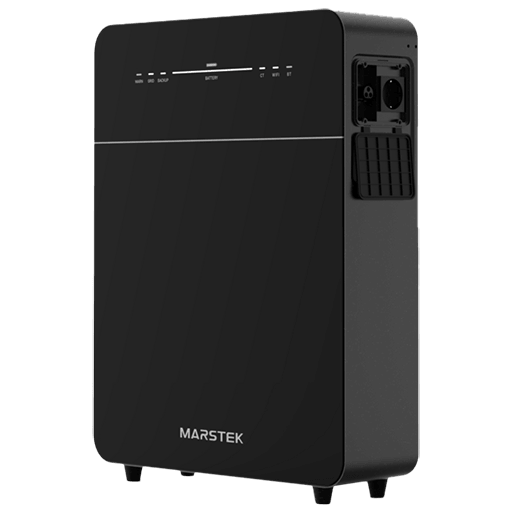
The Marstek Venus E 3.0 is one of the most popular plug-in batteries in the European market. It stores 5.12 kWh in a single unit and generally offers the lowest price per kWh. The battery works with Marstek’s own CT003 meter, and also with a Shelly Pro 3EM or a Homey P1 Dongle.
The Venus E has a base output of 800 W. With an electrician and its own circuit group, it delivers up to 2,500 W. Unlike several other batteries in this guide, the Venus E reaches full power with the base unit alone. To add storage, you simply connect a complete second or third unit, for up to 15.36 kWh on one phase.
During a power outage, the backup outlet takes over within 15 ms and supplies up to 2,500 W to connected devices. The battery has no fan, so it stays completely silent even under load. It has an IP65 rating, which allows you to install it in a garage, shed, or hallway. At about 60 kg, it is one of the heaviest batteries in this guide, so plan the spot before delivery, as it can be difficult to move.
Once the battery is connected to Homey, you can track the battery level, power, voltage, temperature, and charging state. Homey can set the target power in watts, so you control exactly what the battery delivers. You can also set the backup mode, a target battery level, and the upper and lower charge limits. Homey can alert you to battery, grid, and hardware faults.
ZinVolt Base
- Backup outlet
- Light two-part build
- Wired Modbus TCP option
- Capped at 8 kWh per system
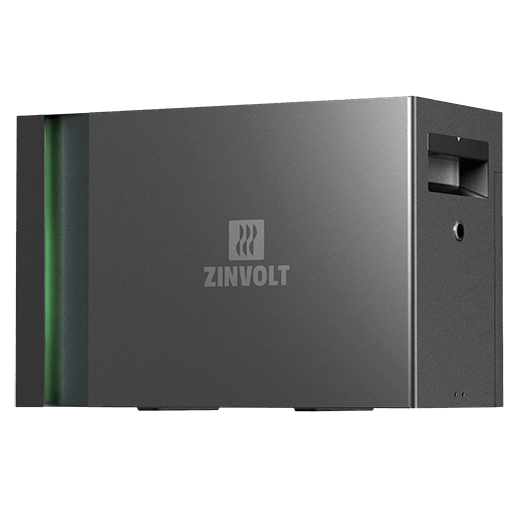
The ZinVolt Base is a plug-in battery system that splits its weight over two separate parts: a compact 2,000 W inverter that weighs 14.5 kg and a 4 kWh battery module of 28.5 kg that sits beneath it. Splitting the weight this way makes a move up the stairs to an attic far more manageable. One extra 4 kWh ZinVolt Stack clicks onto the system, doubling the capacity to 8 kWh.
In the box, you’ll also find a P1 dongle for your smart meter. On an ordinary socket, the ZinVolt Base is capped at 800 W. Wiring it to a separate fuse group raises that to 2,000 W, which the battery reaches gradually, adjusting its power by up to 200 W per second. ZinVolt expects the battery to last around 15 years.
For backup, a Schuko outlet sits on the battery itself. When the grid drops out, it takes over within 10 ms and supplies up to 2,000 W to whatever is plugged in. The Base also stands out for its connectivity. In addition to Wi-Fi and Bluetooth, it offers a LAN port, Modbus TCP, and an open API for users who want full local control.
The ZinVolt Base works with Homey. You can see the battery level, power, and whether the battery is charging or discharging. With a Flow, you can set the target power in watts or change the target power mode. This lets you charge or discharge the battery based on energy prices, solar production, or the time of day.


