




Running Thread Alongside Zigbee, Z-Wave, KNX and 433 MHz in Homey
Smart Homes Aren’t Monogamous
Smart homes aren’t monogamous. They’re mosaics. Most smart homes didn’t start with a master plan. They grow over time, with a Zigbee bulb added here, a Z-Wave switch installed there, maybe a few legacy 433 MHz plugs or a Wi-Fi camera thrown in. If you're lucky, there’s a KNX backbone built into the walls. The result is an accidental but effective hybrid of different protocols, each doing its part.
Adding Thread into the mix doesn’t break that balance. Instead, it becomes just another layer that Homey unifies. It is one more protocol that speaks its own language but becomes fluent in the Homey system.
Thread operates differently by managing its own network routes directly between devices. It does not rely on the central hub to constantly direct traffic or fix broken connections like older protocols often do. This self-healing capability means the Thread mesh maintains its own stability. Homey acts as the border router to bridge the connection, but it is free to focus on processing your automations rather than micromanaging the wireless signal.
Thread, Zigbee and Wi-Fi: Managing the 2.4GHz Band
Wi-Fi, Thread and Zigbee all operate within the busy 2.4 GHz frequency band. Thread and Zigbee share the low power 802.15.4 radio standard while Wi-Fi uses higher power for data throughput. They function as three separate networks that do not speak to each other directly. Each maintains its own security, routing, and traffic management to ensure data gets where it needs to go.
Homey manages the Zigbee mesh via its internal radio and orchestrates the Thread mesh through its Thread stack and border router functionality. Wi-Fi handles the heavy lifting for cameras and cloud connectivity, while Homey acts as the central translator for all three. A Wi-Fi camera detecting motion can trigger a Zigbee light or a Thread lock without any delay visible to the user.
Thread stability relies on smart channel planning to avoid interference. Wi-Fi signals are strong and can drown out quieter smart home protocols. Therefore, it is smart to set your Wi-Fi router to channel 1 or 6. This leaves the upper range of the spectrum clear for Zigbee and Thread to operate on less busy channels. This physical separation prevents packet loss and keeps all your devices responsive.
Thread and Z-Wave: Different Frequencies, Same Goal
Unlike Zigbee, Z-Wave operates in the sub-GHz frequency range. This means it never competes for airspace with Thread or Wi-Fi. The physical separation of frequencies allows both networks to perform at maximum efficiency without causing signal degradation to one another.
Z-Wave remains a strong choice for fixed installations like in-wall switches and dimmers. Thread enters as a fast and battery-efficient layer for modern Matter accessories. They cover different needs while providing total home coverage.
The range characteristics also differ in a beneficial way. Z-Wave penetrates thick concrete walls and floors better due to its lower frequency. Thread offers higher bandwidth for devices in open spaces. Using both allows you to conquer difficult floor plans that a single protocol might struggle to cover completely.
With Homey as an orchestrator, a Z-Wave door sensor can trigger a Thread wall plug. Or, a Thread-based button can dim your Z-Wave lights. Homey makes sure they work in harmony, not in isolation.
Thread Alongside KNX: Wired Meets Wireless
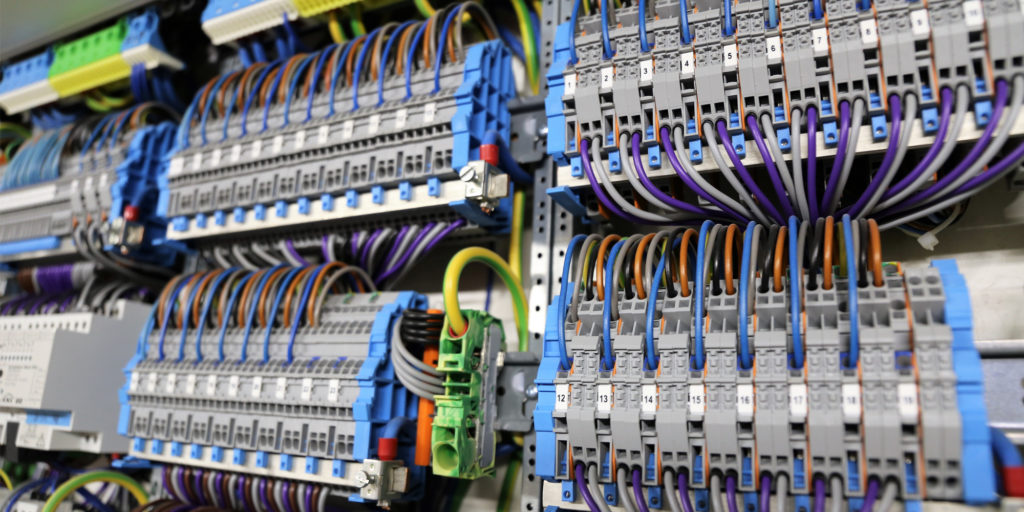
KNX operates on a completely different model. It is built for wired infrastructure and uses a fieldbus system that has been reliable for decades. Thread does not attempt to replace that stability. It exists to fill the wireless gaps where wires cannot go.
Thread brings flexibility to homes where KNX handles the heavy lifting like lighting, blinds, and HVAC. It adds a layer for battery powered sensors and wireless switches. Homey integrates both to manage your smart home as a single unit.
Imagine a Thread contact sensor on a window influencing KNX heating logic. Or a KNX motion sensor triggering a Thread plug via Homey. The two don’t clash — they complement each other.
Thread and 433 MHz: Bridging the Past and Future
433 MHz systems are wonderfully simple. They are ideal for basic remotes and switches because they offer long range at a minimal cost. However, they generally lack security features and do not provide status feedback to the controller.
Thread does not push these devices out. It simply gives you more options. A 433 MHz button can trigger a Thread lighting scene. Homey bridges both worlds effortlessly so you can keep legacy devices where they still work well while gradually upgrading to a modern network.
The main distinction lies in reliability. 433 MHz usually sends a signal blindly and hopes it arrives. Thread communicates in two directions and confirms that the message was received. You should reserve Thread for critical devices like locks or heaters and leave the simpler tasks to your existing 433 MHz sensors.
Conclusion: Protocols Do Not Compete, They Collaborate
Your smart home does not need to pick a side. It likely already speaks many languages including Zigbee, Z-Wave, KNX, Wi-Fi and 433 MHz. Thread is simply the newest addition to this ecosystem. With Homey acting as the central controller, this hybrid nature becomes a strength rather than a liability. Thread fits in naturally to provide a modern IP mesh for low power devices without requiring you to replace your existing hardware.
In this environment, Thread serves as another tool in your palette rather than a replacement for what you already own. It runs alongside your current setup and benefits from the ability Homey has to treat every device as part of one single logical system. You can keep what works while adding the latest technology where it makes sense. Your job becomes designing smart scenarios while Homey takes care of the digital wiring underneath.
Smart home technologies and platforms supported by Homey
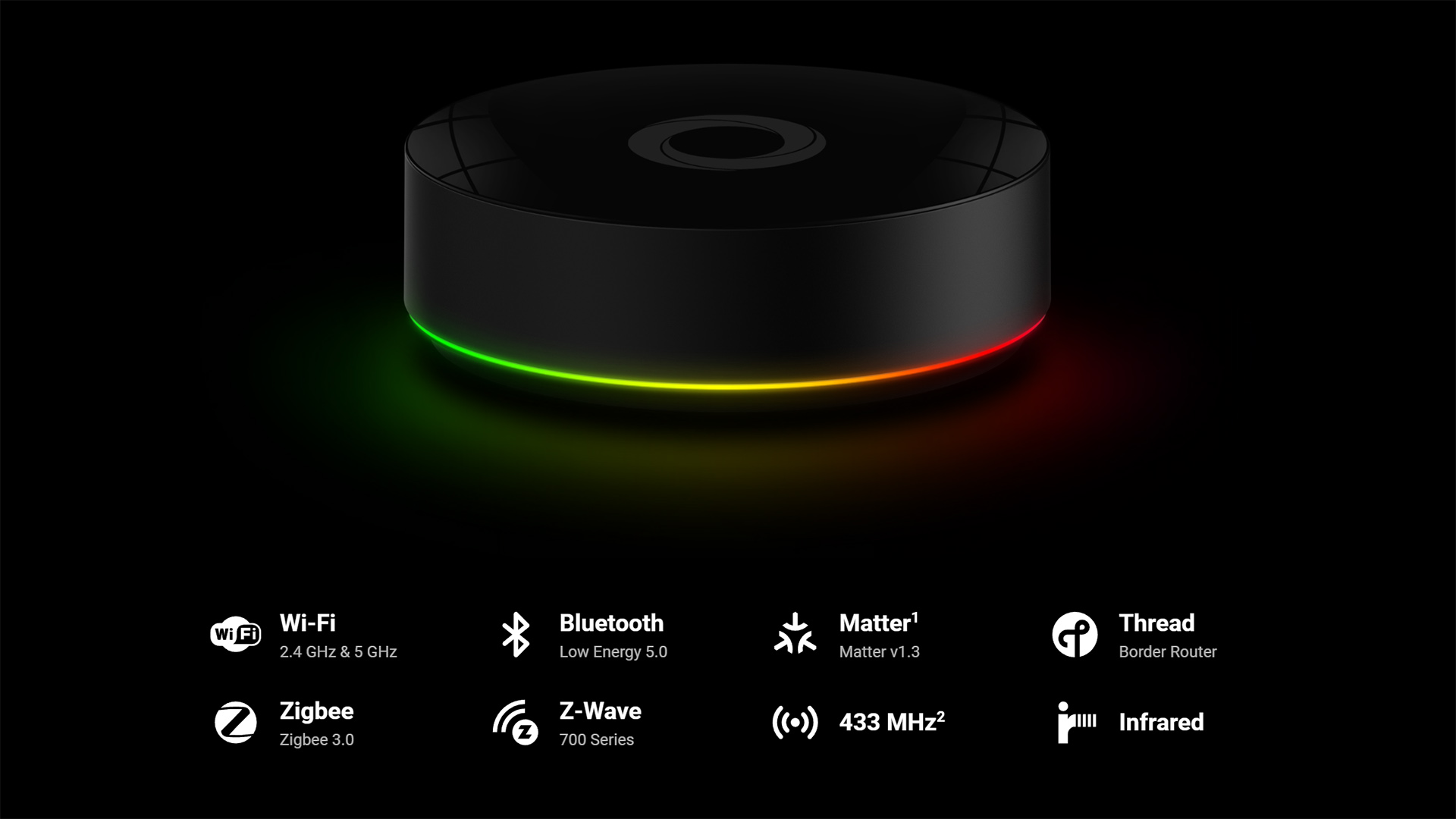
Smart homes often use multiple wireless technologies and platforms. As a powerful smart home hub, Homey supports a wide range of communication standards, including Zigbee, Z-Wave, Matter, Thread, KNX, 433 MHz, Wi-Fi, Bluetooth and Infrared.
Homey also integrates with popular smart home platforms such as Amazon Alexa, Google Home and Apple Home. By combining multiple technologies and platforms in one system, Homey allows devices from different ecosystems to work together in one flexible smart home setup.
FAQ – Thread in Mixed Homes
Do I need to disable Zigbee when I start using Thread?
No. They’re independent stacks. You can run both on Homey without conflict in normal conditions.
Can a KNX light be controlled by a Thread sensor?
Yes. Homey listens to the Thread sensor and sends commands to KNX actuators via the KNX bridge.
Will Thread and Zigbee interfere on 2.4 GHz?
They can if things are extremely dense, but normal homes are fine. Proper placement and channel selection mitigate issues.
Does Thread make Z-Wave obsolete?
No. Z-Wave will remain relevant for existing installs and certain device categories for a long time.
Can 433 MHz remotes control Thread devices?
Indirectly, yes. Homey receives the 433 MHz signal and can trigger Flows that act on Thread devices.
Is there a risk of “too many protocols” making things unstable?
If Homey is the central brain and each protocol is used sensibly, stability comes more from device and radio quality than from the number of protocols.
Can Thread replace KNX eventually?
They solve different layers. Thread is a wireless IP network; KNX is a wired fieldbus. They’re likely to coexist, not replace each other.
Does Homey treat Thread devices differently in Flows?
No. Once added, Thread/Matter devices behave like any other device with capabilities.
Glossary – Mixed Home Terms
Hybrid Smart System
A smart home combining multiple protocols and technologies, unified by a central controller like Homey.
Protocol Coexistence
The ability of multiple wireless systems to operate in the same space without unacceptable interference.
Spectrum
The range of radio frequencies available. Different protocols occupy different parts of the spectrum.
Trigger
An event that starts an automation, regardless of which protocol the originating device uses.
Actuator
A device that performs an action (turning on a light, moving a blind), again independent of protocol.
Orchestration Layer
The system that coordinates behavior across devices – in this case, Homey and its Flow engine.
Legacy Devices
Older devices using protocols like 433 MHz that are still useful but may lack modern security or features.


