




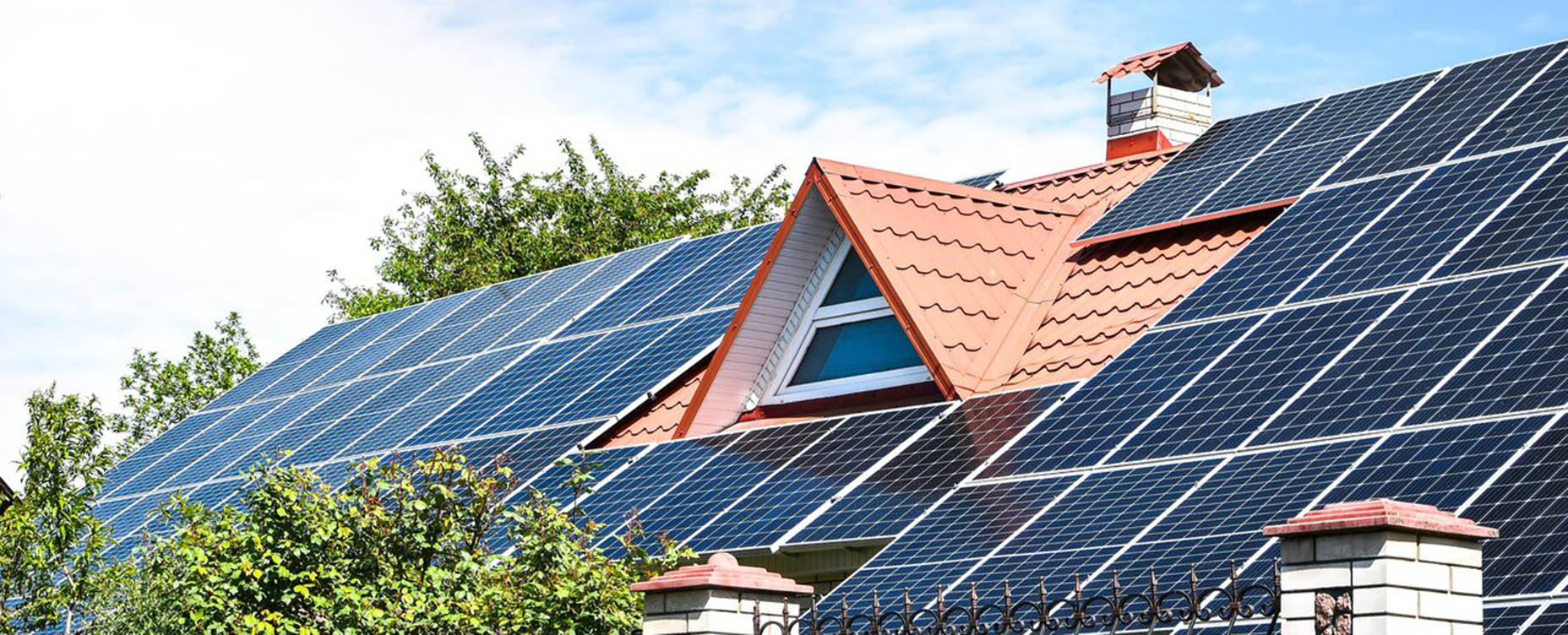
Solar Panels as a Smart Energy System in Homey
Solar panels are shifting from simple hardware into active parts of a smart home. They no longer just feed electricity into the grid. A modern setup measures energy flows and reacts automatically to help you use your own power.
Homey connects all these pieces of the puzzle on one canvas. It combines solar panels production with household consumption and smart automation. This guide explains how solar panels fit into a modern energy setup and how Homey adds value to the energy you generate. By centralizing your data you can see exactly how much money you save in real time.
From Passive Solar Panels to Smart Systems
For years homeowners installed solar panels and simply ignored them. Net metering meant the timing of energy use did not matter. Excess energy went to the grid and came back later at no extra cost. This passive approach is outdated because utility companies now offer less credit for exported power. You must now treat your roof as a private power plant that requires active management.
This is changing as net metering programs phase out and energy prices fluctuate throughout the day. Using energy at the right time is now essential for saving money. A home energy management system like Homey connects solar production with large appliances and pricing signals. Homey acts as the central brain where these all signals meet. It ensures your home draws from the sun first and the grid only when necessary.
The Importance of Self Consumption
Electricity you export to the grid is often worth less than the power you buy. This makes self-consumption a priority. You gain the most value by using your solar power directly as it is generated. High self consumption rates directly shorten the payback period of your solar panels hardware. Every kilowatt hour you use at home is a kilowatt hour you do not have to buy at retail prices.
Self consumption does not require you to change your daily habits manually. Instead you let your home respond to solar availability automatically. Homey treats solar production as a trigger for your smart devices. You do not need to monitor graphs because the system reacts for you. This automation ensures your home stays efficient even when you are away at work.
Measuring Solar Production and Usage
A smart system requires accurate data. You need to know how much power your panels produce and how much your home consumes. This data reveals several key insights. Detailed monitoring helps you identify ghost loads or devices that stay on unnecessarily. Understanding these patterns is the first step toward a truly net zero home.
- Solar Peaks show exactly when you have the most free energy.
- Export Data identifies how much power you are wasting on the grid.
- Device Tracking pinpoints which appliances drain the most electricity.
Homey pulls data from your inverter and your smart meter into one view. For example if your solar panels produce 5 kilowatts and your home uses 2 kilowatts Homey sees the 3 kilowatt surplus. This measurement layer is the foundation for smart automation. Accurate logs also help you decide if adding a battery would be a profitable move later on.
Automating Solar Energy
Automation makes solar power practical. Homey allows devices to respond to production levels without human input. You can set rules called Flows to manage your appliances. These flows prevent multiple heavy appliances from starting at the same time and overloading your system. This balanced approach keeps your energy draw within the limits of your solar panels output.
Example Scenarios
- Washing Machines start automatically when solar production exceeds 2 kilowatts.
- Electric Vehicles adjust their charging speed based on available sun.
- Dishwashers delay their cycle if clouds block the panels.
These Flows combine solar data with variables like time or weather. This ensures your heavy appliances run when the sun is brightest. Automation turns a technical challenge into a background process that just works.
Solar Storage and Home Batteries
Home Batteries increase self consumption by saving excess solar energy for the evening. This is useful for homes with high nighttime energy needs. However, batteries are expensive and not always the first step. You should only invest in a battery once you have optimized your daytime energy usage through automation. A smaller battery can often do the job of a larger one if your home is already smart.
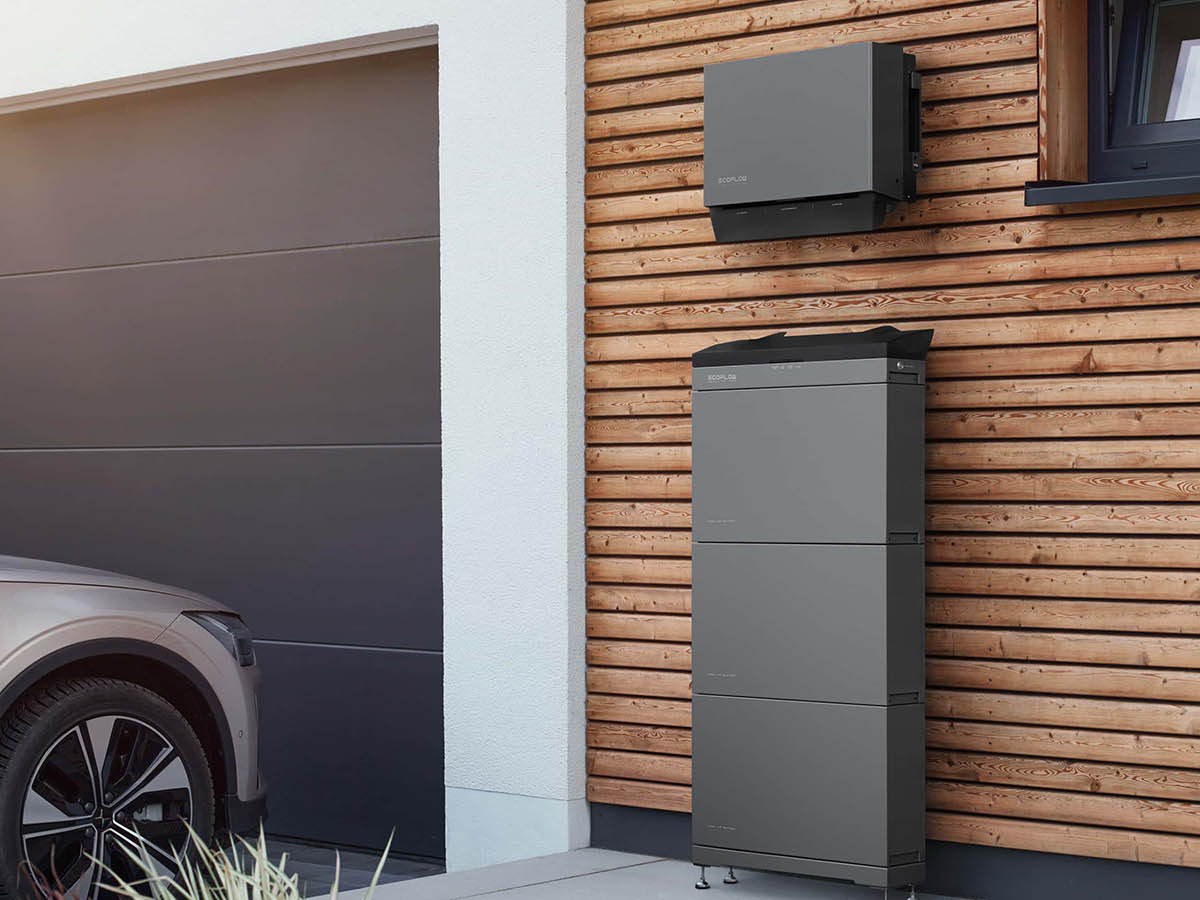
Smartly controlling your existing devices often provides a better return on investment. You can use your water heater or EV as a thermal or chemical battery. Homey supports both physical batteries and smart device control. You can start with automation and add a battery later if your data shows it is necessary. This flexibility prevents you from overspending on storage capacity you might not need.
Integration with Heating Systems
Heating and hot water use the most energy in a typical home. Heat pumps and hybrid systems are flexible. They do not always need to run at a specific second. Modulating your thermostat by just one or two degrees during solar peaks can store massive amounts of energy. This strategy effectively uses your home structure as a giant thermal battery.
You can use Homey to signal your heat pump to increase the temperature when solar output is high. This turns your floor or water tank into a heat battery. You store energy as warmth instead of electricity. This reduces your reliance on the grid during cold evenings. Integrating climate control is often the most impactful way to lower your winter energy bills.
Managing Dynamic Tariffs
Dynamic tariffs mean electricity prices change every hour. Sometimes it is best to use solar power immediately. Other times it is better to sell it or wait for lower prices. Smart systems can even charge your home battery from the grid when prices are extremely low. This ensures you always have the cheapest possible power source available.
Homey balances three factors simultaneously.
- Current solar production
- Total household demand
- Live market energy prices
If prices are negative you might even get paid to use energy from the grid. Homey manages these complex decisions so you do not have to check energy apps constantly. This triple balance creates the highest possible financial efficiency for your home.
Centralized Energy Monitoring
Most solar brands provide their own apps. These apps show production but they cannot control your toaster or your car charger. This creates fragmented data. Relying on five different apps makes it impossible to see the big picture of your energy health. Centralization allows you to compare different brands and devices on a level playing field.
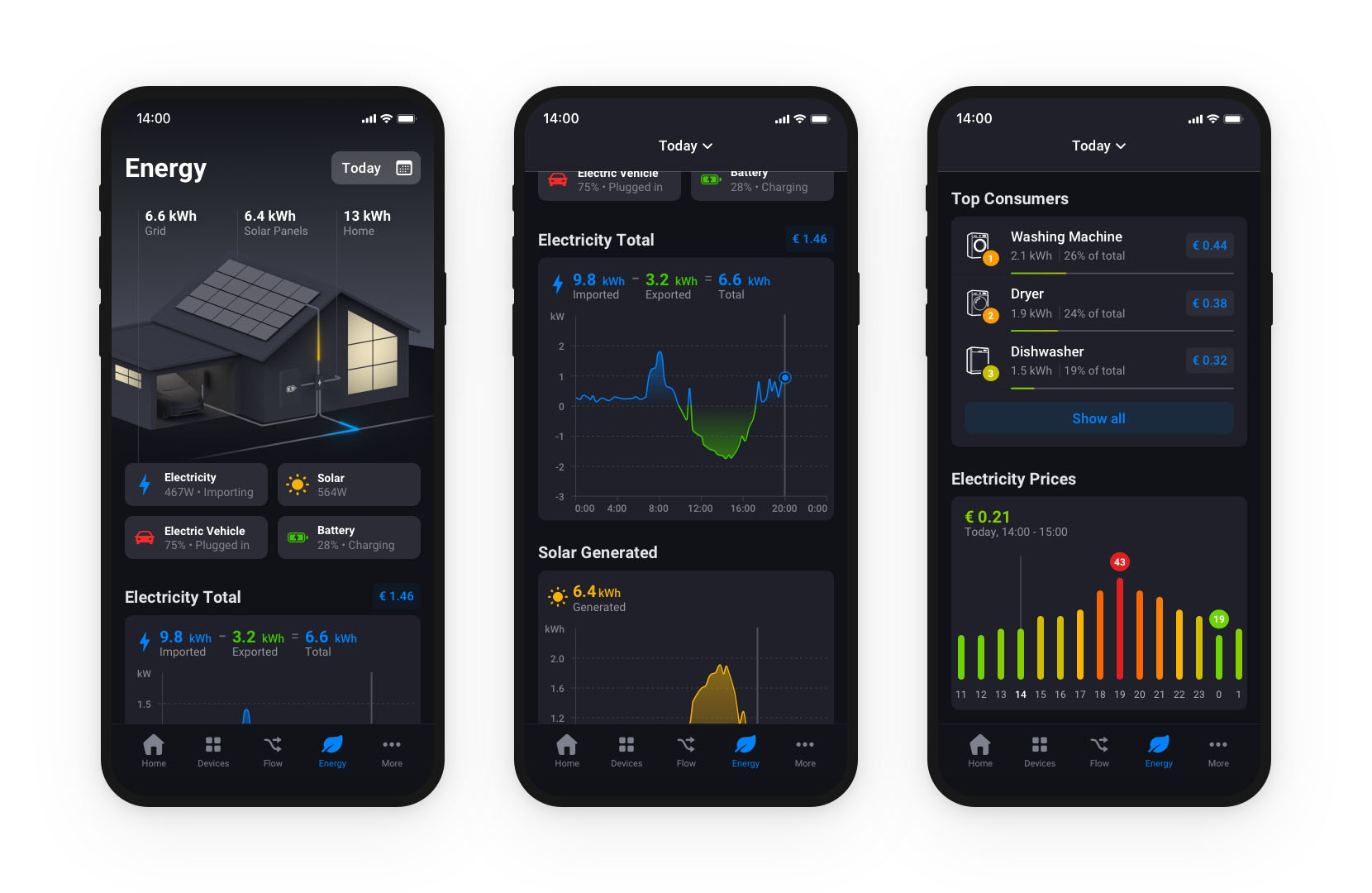
Homey Energy brings everything into one place. It shows production and consumption side by side. Because the monitoring and the control exist in the same system an insight can become an action instantly. This makes your entire energy setup easier to manage. You get a single source of truth for all your energy questions.
Building Your Homey Energy System Step by Step
You do not need to build a perfect system on day one. Most users start by connecting their solar inverter and smart meter to Homey for basic monitoring. This initial step allows you to see your real time energy data directly in the Homey app. You can then identify which appliances consume the most power before investing in more hardware.
As you become familiar with your data you can add Homey compatible smart plugs and heavy appliance controllers. These devices allow Homey to turn off non-essential electronics when solar production drops. This modular approach ensures you only automate what actually saves you money. You can prioritize the specific upgrades that offer the fastest return on investment based on your actual household habits.
The goal is not 100 percent optimization but rather using more of your own energy with less effort. Homey grows alongside your home as you add new panels or electric vehicle chargers. It ensures every new device speaks the same energy language as your existing setup. Each small addition through the Homey ecosystem brings you closer to a fully autonomous and sustainable household.
FAQ
Are solar panels still worth it without net metering?
Yes. They remain valuable, especially when you increase self-consumption and use smart automation.
Do I need a home battery to benefit from solar energy?
No. Many homes benefit more from smartly controlling existing devices first.
Can Homey work with my existing solar panels and inverter?
In many cases, yes. Homey can combine data from different sources into one system.
How does Homey help increase self-consumption?
By automatically controlling devices based on solar production and consumption.
Is automation complicated to set up?
Homey Flows are designed to be understandable and adjustable over time.
Can Homey work with dynamic energy tariffs?
Yes. Homey can include pricing signals in automation decisions.
Do I need Homey Pro to automate solar energy?
Advanced local automation and integrations typically require Homey Pro.
Can Homey control heat pumps or hybrid systems?
Homey can coordinate heating systems where integrations are available.
Will Homey replace my solar monitoring app?
Homey complements it by connecting monitoring with automation.
Can I expand my system later?
Yes. Homey is designed to grow with your energy setup.
Glossary
Self-consumption
Using solar energy directly in your home instead of exporting it to the grid.
Net metering
A scheme where exported energy is offset against imported energy.
Smart energy system
A setup that combines measurement, automation, and control of energy flows.
Solar inverter
The device that converts solar power into usable electricity.
Home battery
A battery that stores excess solar energy for later use.
Dynamic tariff
An energy contract with prices that change throughout the day.
Heat pump
A heating system that uses electricity to move heat efficiently.
Automation
Rules that let devices react automatically to conditions.
P1 port
The data port on a smart meter used for real-time energy readings.
Homey Energy
Homey’s energy overview that combines insight and automation.


