





Saving Energy With Solar Power and Dynamic Tariffs
Solar power and dynamic energy contracts are redefining home energy management. Instead of just watching the sun, homeowners now track hourly price fluctuations to avoid expensive peaks and capitalize on negative rates. Automating these shifts with a smart hub like Homey turns complex energy tracking into a seamless background task that slashes your electricity bill.
Solar Power and Hourly Prices: A New Reality
If you have solar panels, you usually look at the sun first and only then at the energy price. With a dynamic energy contract, that slowly flips. The price of electricity changes every hour, depending on demand, supply, wind and sun at that moment. Sometimes electricity is extremely cheap, even negative, and at other times it is very expensive. Combine that with your own solar panels and an interesting playing field appears: you want to use as much of your own solar power as possible, and you want to buy when the price is low and “sell” when it is relatively high.
In practice, as a consumer you don’t want to be checking graphs every hour and starting devices manually. Optimizing energy consumption via dynamic energy prices requires automation. That is exactly where Homey comes in. Homey pulls the current hourly prices in through an energy app, links them to your solar panels and makes it possible to automatically run loads in the most favorable hours. That way, saving energy with solar power and dynamic tariffs becomes a calm background task instead of a full-time job.
Homey as the Hub Between Sun, Price and Consumption
Once your solar panels are connected to Homey Energy and you have a P1 connection for your smart meter, you get a complete picture of your home’s energy system. You see how your solar panels are performing at any moment, what your house is consuming and how much you are feeding back to the grid. If you then add dynamic prices, you gain an extra layer: you don’t just see how much you use, but also what it costs or earns at that moment.
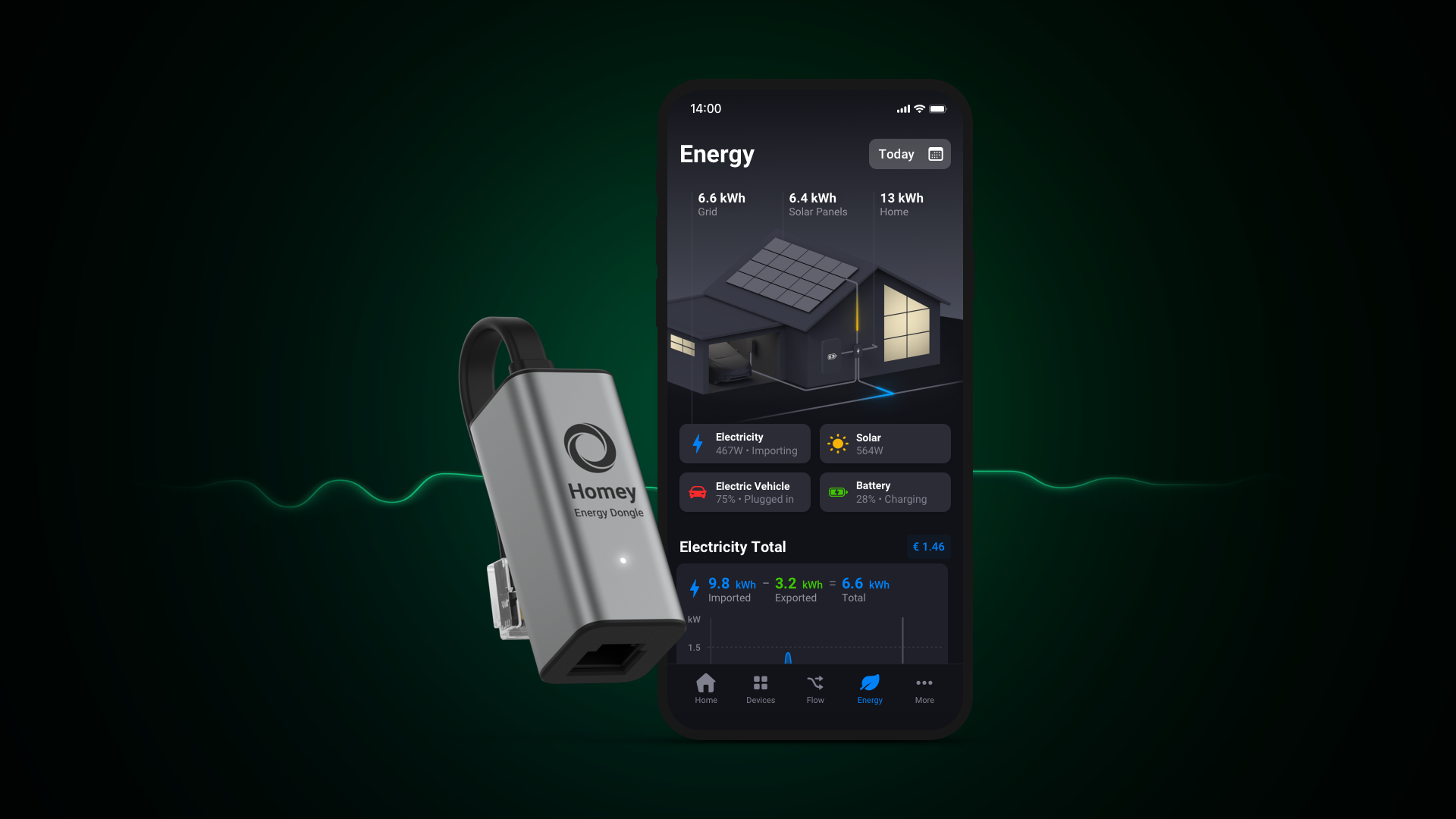
Homey lets you connect those three factors: solar production, price and consumption. You can, for example, set that your boiler is only allowed to heat extra if the price drops below a certain level, or if your solar panels produce above a certain threshold. You can have your washing machine start at the moment you have both cheap electricity and enough self-generation. Little by little, your consumption automatically shifts towards the hours in which electricity is most favorable.
By combining aligning energy consumption with solar production and playing with hourly prices, very concrete benefits arise. You no longer have to think manually whether it is “smart” to switch on the dryer. Homey already knows, because it knows your solar panels, prices and devices. You see the effect in Homey Energy and eventually on your energy bill.
Your Own Solar Power as the Base, Dynamic Tariffs as a Bonus
For many people, a dynamic contract feels a bit daunting at first. The idea that your price is not fixed, but can change every hour, raises questions. With your own solar panels you fortunately already have a natural buffer. On sunny days, you cover a large part of your consumption with your own generation. Some of the price fluctuations hit you less hard then, simply because you draw less from the grid.
Homey can make even better use of that buffer. If there is plenty of sun and the price is low, Homey can ensure your devices work harder then. A heat pump boiler can heat extra tap water, washing machines and dishwashers can be scheduled, and a home battery can be charged. If the price is higher later in the day and the sun is gone, you need less grid power. Saving energy by using your own solar power is then boosted by playing smartly with dynamic tariffs.
Even when the price becomes negative — a situation that is occurring more often with lots of wind and sun — Homey can help. Instead of wondering what to do, you can deliberately run loads extra. You use the combination of cheap grid power and your own solar power to preheat your home a bit more, fill your battery or charge your EV a bit further.
FAQ
Is a dynamic energy contract only interesting if I have solar panels?
Without solar panels you can still benefit from low hourly prices, but with panels the effect is bigger. You then combine cheap purchasing moments with times when you generate yourself. Homey can use both sources smartly, making you less dependent on expensive hours and reducing “unnecessary” feed-in.
How does Homey know what the energy prices are?
Homey uses apps from energy suppliers or third parties that provide hourly prices. This information is updated automatically, so your Flows always work with the current price. You don’t have to enter prices yourself; you only choose the thresholds above or below which you want to take action.
Can Homey make sure I never consume in expensive hours?
In practice, that’s not realistic, because some devices simply have to run when you need them. However, Homey can shift a large part of your flexible consumption — such as boilers, washing machines, dryers and sometimes EV chargers — to cheaper hours. That already makes a big difference, without sacrificing comfort.
How do I combine dynamic tariffs with a home battery?
With a battery you can store cheap or self-generated power and use it later. Homey can charge the battery when the price is low or when you have a lot of solar power, and discharge to your home when the price is high. This way you make optimal use of both your panels and the tariff profile.
What if the sun doesn’t shine — do I still benefit from dynamic tariffs?
Yes, even without sun you can benefit from cheap night hours or moments with lots of wind. Think of scheduling laundry, dishes and EV charging in those hours. Solar power amplifies the effect but is not an absolute requirement. Homey remains a useful tool even then.
Isn’t a dynamic contract mainly risky because of peak prices?
Peak prices can indeed be high, but smart control can do a lot. By shifting part of your consumption away from those busy hours to cheaper moments, you reduce the risk. Homey helps you with that automatically, so you don’t have to plan every hour yourself.
Does Homey work if my supplier doesn’t have an official app?
For many major providers there are solutions, sometimes via a generic energy app that pulls tariffs from the market. In some cases you can also work with webhooks or API connections. The exact options depend on your supplier, but the principle stays the same: Homey can work with price data as soon as it comes in.
Can I set a maximum price in Homey above which certain devices never run?
Yes, you can. You can build a Flow that, for example, says a boiler or dishwasher may only start if the hourly price is below a certain threshold. If the price rises above that, Homey postpones to a more favorable hour, as long as it fits within your time window.
Is it complicated to build such Flows myself?
The basics are manageable. You often simply choose: “If price is lower than X and there is enough solar power, then do Y.” In Advanced Flows you can combine multiple conditions, but that is mainly a matter of dragging blocks on the canvas. Homey is deliberately designed for home users, not just for tech experts.
Can I see somewhere how much I save thanks to Homey and dynamic tariffs?
You mainly see it in your consumption profile and ultimately on your supplier’s invoices. In Homey Energy you see how your consumption develops throughout the day. If you notice peaks shifting to hours with lower prices and more sun, you know you’re on the right track.
Glossary
Dynamic energy contract
A contract in which the electricity price changes every hour based on market prices, instead of a fixed or average variable tariff.
Hourly price
The price per kWh in a specific hour of the day, as used in dynamic contracts.
Negative electricity price
A situation where the hourly price drops below zero because there is more generation than demand and suppliers effectively pay you to take energy.
Flexible consumption
Electricity use that does not have to occur at an exact moment, such as washing machines, dryers and boilers, and can therefore be shifted in time.
Boiler control
Automatically controlling an electric boiler based on, for example, solar production or low hourly prices to generate hot water at smart times.
Tariff threshold
A price level you choose yourself, above or below which Homey is allowed to perform certain actions.
Spot market
The wholesale market where energy is traded per hour and to which dynamic tariffs are directly linked.
Price profile
The pattern of high and low electricity prices over a day or period, which determines when consumption is favorable or unfavorable.
Flexibility
The degree to which your consumption can move in time with prices and generation, without limiting your comfort too much.
Optimization
The process of using insight and automation to make your energy consumption and costs as favourable as possible, given your situation and preferences.


