







Combining Solar Panels With a Heat Pump and Hybrid Inverter
The Logical Triangle: Panels, Pump and Inverter
A heat pump and solar panels are often mentioned in the same breath — and for good reason. The heat pump shifts your energy use from gas to electricity, while the solar panels ensure that part of that extra electricity comes from your own generation. If you add a hybrid inverter and smart control with Homey, your home turns into a small energy ecosystem that gets to know itself better over time.
With a traditional boiler setup, your heating depends largely on gas. Your electricity bill is relatively straightforward: lighting, appliances and maybe a boiler. With a heat pump, electricity use rises but gas consumption falls. Your energy bill becomes more sensitive to electricity prices and to how much you generate yourself. Combining solar panels with a heat pump is therefore a way to reduce that dependency.
A hybrid inverter adds something on top. Instead of separate systems for solar panels and a home battery, a single device controls both. That makes it easier to decide at system level what happens with your solar power: does it go to the heat pump, to the house, to the battery or to the grid?
With Homey as the director you can make those decisions dynamic, based on time, temperature, price and comfort.
Heating to the Rhythm of the Sun
One of the most powerful combinations is aligning your heat pump with the production of your solar panels. Instead of running your heat pump all day at a constant output, you can let it do more when there is plenty of solar power available, using Homey. Your heating system then becomes a sort of thermal buffer that moves along with the sun.
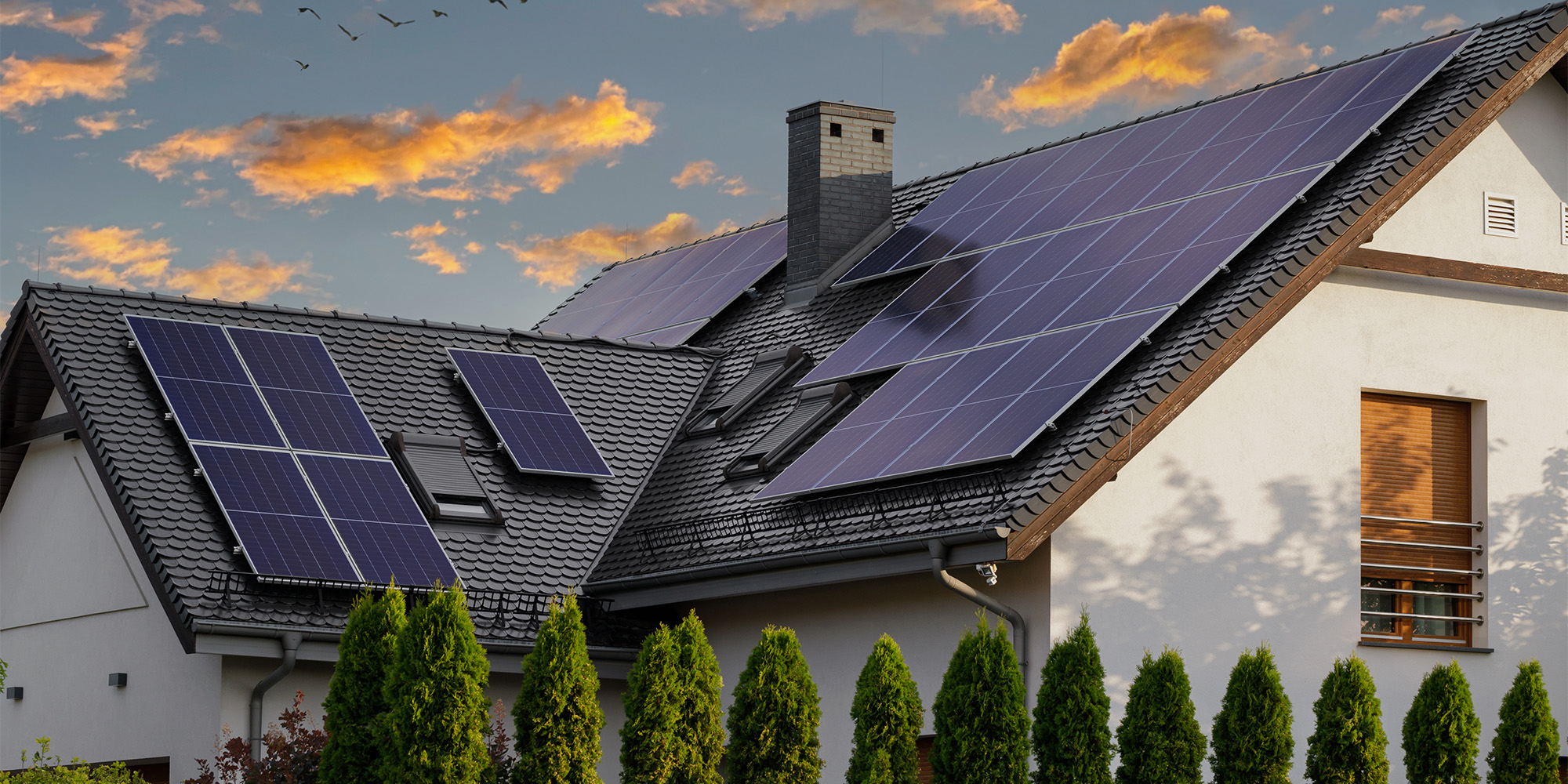
Imagine your underfloor heating or your buffer tank for hot tap water has some flexibility: it can be a few degrees warmer than strictly necessary, as long as it stays within your comfort range. At times when your solar panels are producing a lot, Homey can ask the heat pump to work a bit harder. The extra energy doesn’t disappear to the grid but is stored as energy in your home. Later, when the sun is gone, the pump doesn’t have to work as hard. Now, your house is still warm and you have energy stored as hot water or in your home battery.
This is aligning energy use with solar production in its most concrete form. Instead of thinking “the heating switches on when it’s cold”, you start thinking “the heating works with the sun”. With dynamic tariffs you can add another layer of optimization: if electricity is very cheap at night, you can let the heat pump do a bit more then as well, while during the day you mainly run on real self-generated solar power.
The Role of the Hybrid Inverter in a Smart System
A hybrid inverter connects the worlds of solar generation and storage. If, in addition to your heat pump and solar panels, you also have a home battery, the architecture becomes even more interesting. The inverter knows what the panels are doing, what the battery state is and how much power is available. Homey adds what your home wants and what the prices are.
When the sun is shining, the system can decide, for example, that the house and the heat pump are supplied first, then the battery is charged, and only once both are more or less satisfied, power is fed back to the grid. On colder but sunny days you can deliberately give priority to the heat pump: better a few extra degrees of warmth on your own solar power than kWh fed back for a lower compensation.
By building Flows in Homey that take the hybrid inverter into account, you can create very precise scenarios. For instance, “if the panels produce more than 2,500 watts and the home is below the desired temperature, let the heat pump run at a higher setting.” Or: “if the home is at temperature and the battery is below 60 percent, give priority to battery charging.” In this way, a hierarchy emerges in your energy use, tailored to your preferences.
FAQ
Should I install solar panels first or a heat pump first?
There is no strictly correct order, but it helps to know you want both. Many people start with solar panels because they are relatively simple and deliver immediate returns. If you know a heat pump will follow later, you can take that into account when choosing panels and an inverter, for example by installing a bit more capacity from the start.
Can a heat pump run purely on my solar panels?
In summer, that is often possible to a large extent, especially for hot water production. During winter, there is less sun while the heat pump needs more electricity. In many cases you remain partly dependent on the grid, but of course every kWh you generate yourself still helps.
What is the advantage of a hybrid inverter in this combination?
A hybrid inverter makes it easier to operate solar panels and battery as one system. Combined with a heat pump and Homey, you can then decide much more precisely where your solar power goes. You don’t have to work with separate blocks; the inverter acts as a central point for generation and storage.
Does it make sense to add a home battery to a heat pump system?
It certainly can, especially to flatten peaks in consumption at expensive times. With a battery you can use cheap or self-generated electricity at moments when the heat pump needs more power. The real added value depends on your usage profile, the size of your system and the tariff structure of your energy contract.
Can Homey Pro control my heat pump directly?
That depends on the make and type of heat pump. Some brands offer a direct integration with Homey, others can be controlled via a thermostat or an intermediate solution. In many cases you can influence on/off behaviour, modes or temperature settings via Homey, whether directly or indirectly.
Isn’t it risky for comfort if the heat pump responds to the sun?
Comfort always comes first. With Homey you can set clear boundaries: for example a minimum and maximum room temperature. Within those limits, the heat pump can vary smartly based on sun and price. In practice you hardly notice the control, except that your home uses energy more efficiently.
What happens on dark winter days without sun?
Then your heat pump mainly runs on grid power. With a dynamic contract you can still make smart use of cheap night-time hours. If you have a battery, it can help smooth peaks, but fully running on storage is usually not feasible. Solar energy and a heat pump are a strong combination, but not a complete replacement for the grid in winter.
Does it matter whether I have underfloor heating or radiators?
Yes, underfloor heating usually works with lower water temperatures, which is more efficient for heat pumps. That makes underfloor heating more suitable for buffering heat at sunny moments. With radiators the margin is smaller, but even there you can often still gain something with smart control.
Can I keep my existing inverter if I want a hybrid one?
Sometimes it’s possible to add a hybrid inverter alongside the existing one, but often it’s simpler to switch to a new inverter during a major upgrade or expansion. This is custom work where an installer can advise you properly. Homey can remain the central brain in both scenarios.
Does Homey also help me monitor the entire system?
Yes, with Homey Energy you see the production from your panels, the consumption of your heat pump and any battery in a single overview. Over time you can see whether your automations do what you intended and make adjustments where needed.
Glossary
Heat pump
An electrically driven system that extracts heat from outdoor air, ground or exhaust air and uses it to heat your home or tap water.
Buffer tank
An insulated tank in which heat is stored, for example for underfloor heating or hot tap water, so that the heat pump doesn’t have to switch on and off constantly.
Hybrid inverter
An inverter that can control both solar panels and a home battery and converts DC from both into AC for your home and the grid.
COP (Coefficient of Performance)
A measure of heat pump efficiency; it indicates how much heat you get from one unit of electricity.
Charging priority
The order in which solar power is used, for example first for the heat pump, then for the home and finally for the battery.
Comfort band
The temperature range in which you feel comfortable; within this band, control based on sun and price is allowed to fluctuate.
Electric auxiliary heating
An additional electric element that can temporarily help out if the heat pump cannot reach the desired temperature, but is often less efficient.
Heating curve
The relationship between outdoor temperature and the water temperature of your heating system; it aligns heat pump behavior with the weather.
Seasonal performance
The average efficiency of a heat pump over an entire heating season, including both cold and mild days.
Modulating capacity
The ability of a heat pump to run not only fully on or off, but also at intermediate power levels; this makes it easier to control based on solar production.


