





Missing glucose alerts at night is dangerous. Phones are often on silent, alarms go unheard, and critical warnings don’t always reach people when they matter most.
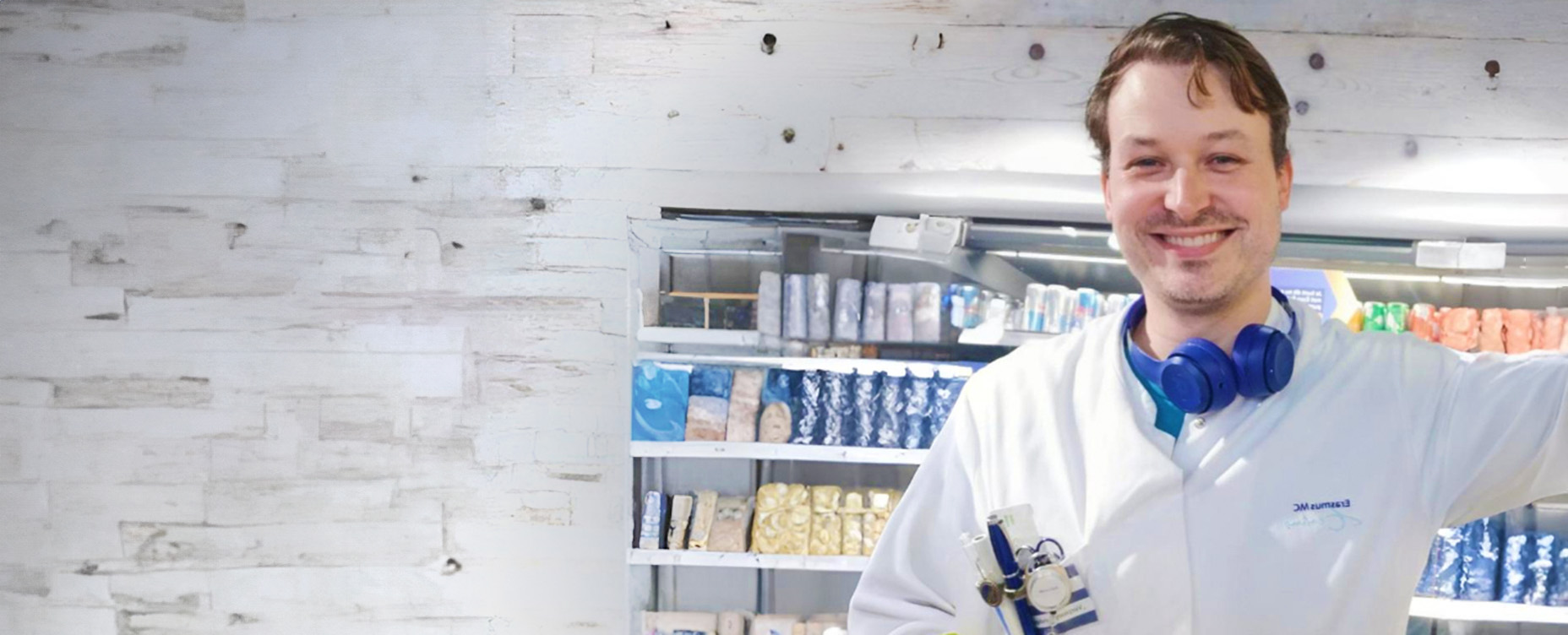
Dominic Neeleman, a nurse at Erasmus Medical Center in the Netherlands, sees this risk up close. In his work, he encounters situations where delayed or missed alerts can quickly turn into medical emergencies, especially for people living with diabetes.
Nighttime is often the most vulnerable moment. Deep sleep, hearing aids taken out, or phones charging in another room make it easier for alerts to go unnoticed. Dominic began wondering whether technology could help close that gap.
Homey as a foundation
Dominic had been using Homey Pro at home for years before exploring medical integrations. His setup already handled much of his daily routine through automation, making Homey a natural place to experiment with more critical use cases.
While browsing the Homey App Store, Dominic discovered a community-developed app called CGM Reader, which connects Dexcom Continuous Glucose Monitors (CGMs) to Homey.
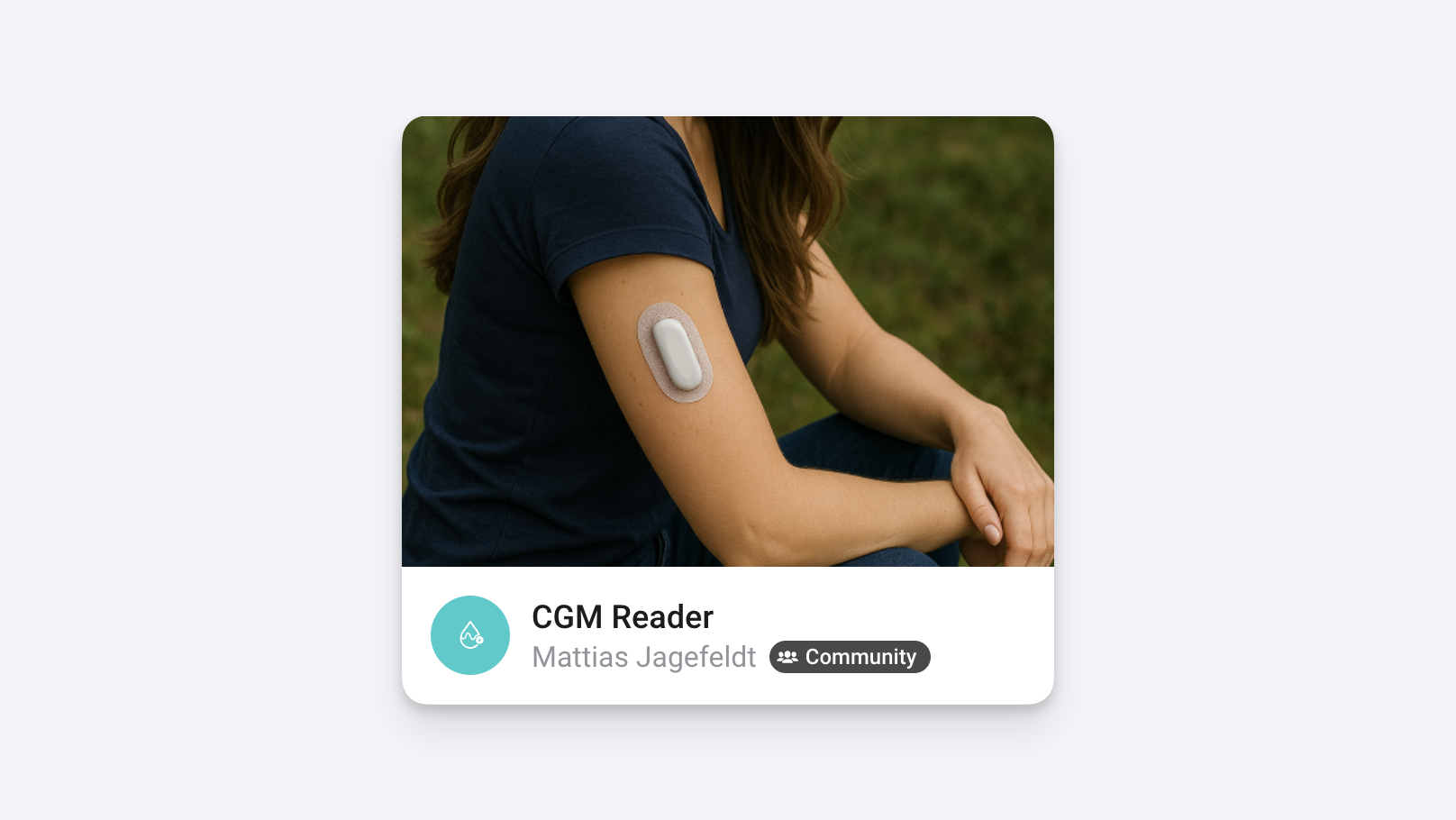
CGMs are small wearable sensors, usually placed on the arm or abdomen, that continuously measure glucose levels. They send this data to a smartphone, helping people with diabetes monitor their condition and adjust insulin intake or diet throughout the day.
Dominic knew from experience that even with smartphone alerts, warnings were still easy to miss. Instead of relying on one device, he saw an opportunity to let the entire home respond when something went wrong.
Turning glucose data into action with Flows
Using the CGM Reader app, Dominic linked a Dexcom G7 sensor to Homey and created Flows that respond to glucose level changes. Although Dominic doesn’t have diabetes, he tested his automations extensively using his own glucose readings to fine-tune thresholds and alerts.
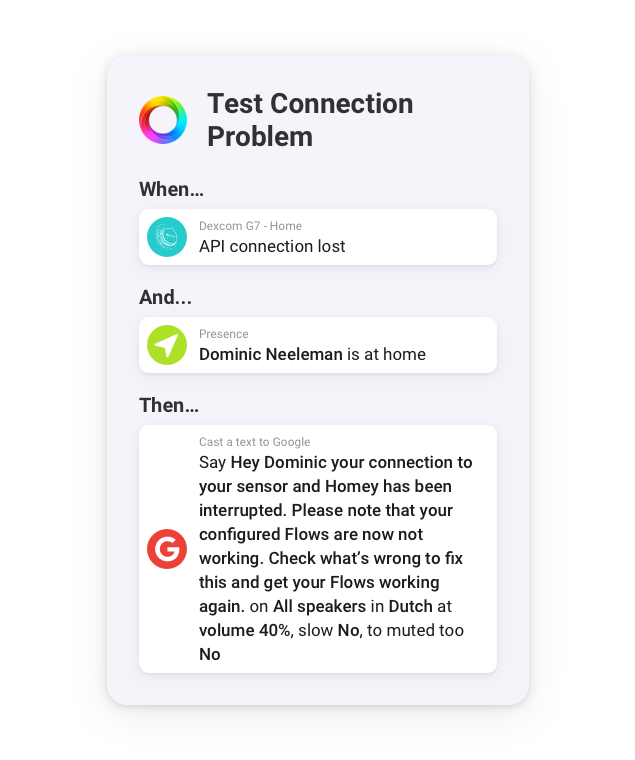
Different glucose levels, different responses
A key part of the setup is that not every situation needs the same reaction. Low and high glucose levels pose different risks, so Homey responds accordingly.
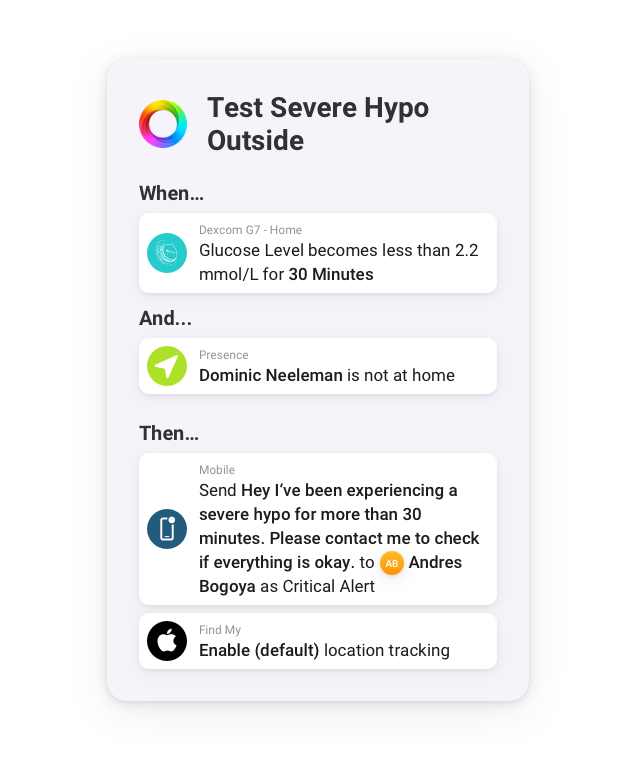
When glucose drops below a safe limit, Homey triggers clear visual and audible warnings. Lights turn on, notifications are sent, and alarms are activated. If the person isn’t home, Homey can even share their location with a family member or caregiver so they can respond quickly.
High glucose levels require a different approach. While usually less immediately dangerous, they still need attention. In these cases, Homey avoids loud alarms and instead sends a gentle reminder to check insulin levels or watch for symptoms such as nausea, thirst, or fatigue.
Lights, sounds, and sleep safety
Because nighttime poses the highest risk, Dominic designed his setup to behave differently depending on whether someone is asleep or awake. Homey doesn’t just look at glucose values; it also considers context to decide how strongly it should respond.
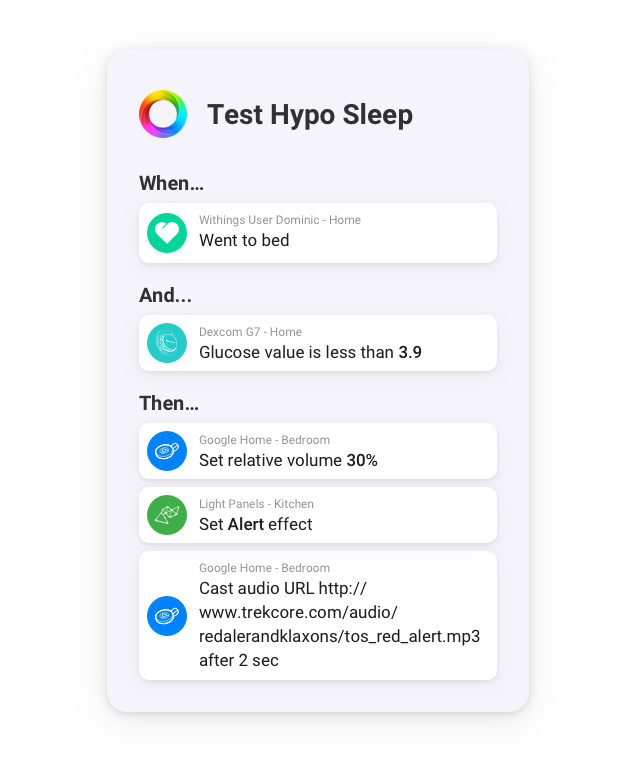
To make this work at night, he connected his glucose readings to a Withings sleep sensor, his bedroom lights, and a Google Home speaker. When Homey detects that he’s sleeping and glucose levels drop below a safe threshold, the response is immediate and impossible to ignore. The bedroom lights turn bright red, and a loud alarm starts playing: the instantly recognizable red alert sound from Star Trek. The combination of intense light and sound cuts through even deep sleep.
During the day, the system takes a calmer approach. A single smart bulb displays glucose levels in real time: green when levels are normal, orange or yellow when they’re high, and red when they’re low. This visual cue provides constant awareness without becoming intrusive, and it’s visible not just to the person wearing the sensor, but also to anyone nearby.
Homey’s flexibility enables this context-aware behavior. Brightness, volume, and device settings change automatically based on the time of day and location. A speaker may only activate in the bedroom at night, while shared spaces rely on lights during the day. The result is a system that stays alert when it matters most, and quietly informative when it doesn’t.
Smarter healthcare at home
Dominic’s project started as a personal experiment but quickly showed what’s possible when smart home technology meets healthcare. It shows that Homey goes beyond comfort and convenience by playing a meaningful role in health, awareness, and everyday well-being.
His system isn’t intended for hospitals or medical certification. It’s designed for everyday life at home. Dominic also set clear boundaries on what should and shouldn’t be automated. Devices like insulin pumps, for example, remain strictly manual due to safety and security risks. His focus stays on awareness and prevention, helping people stay informed and respond quickly while keeping all medical decisions in their own hands.
What began as a simple idea shows that a smart home can do more than follow commands. It can care, respond, and help keep people safe. By connecting glucose sensors to Homey, Dominic turned his smart home into something more: a place where health comes first.
If you’re curious how Homey could fit into your own home, explore what Homey can do and start building a better smart home at your own pace.


