






Get More From Your Solar with a Home Battery and Homey
Storing your own solar energy is the most logical way to navigate a changing energy landscape. As traditional grid incentives shift, the electricity you feed back often becomes less valuable than the power you consume yourself. Learn how to get the most out of your solar energy and home battery with Homey.
Why Storage Suddenly Becomes So Interesting
Net metering makes the electricity grid feel like a free battery. You feed power in during the summer and take it back in the winter without much thought. When this system changes or shifts, the electricity you feed back becomes less valuable than the electricity you use yourself. This change makes generating and storing your own solar energy a logical next step.
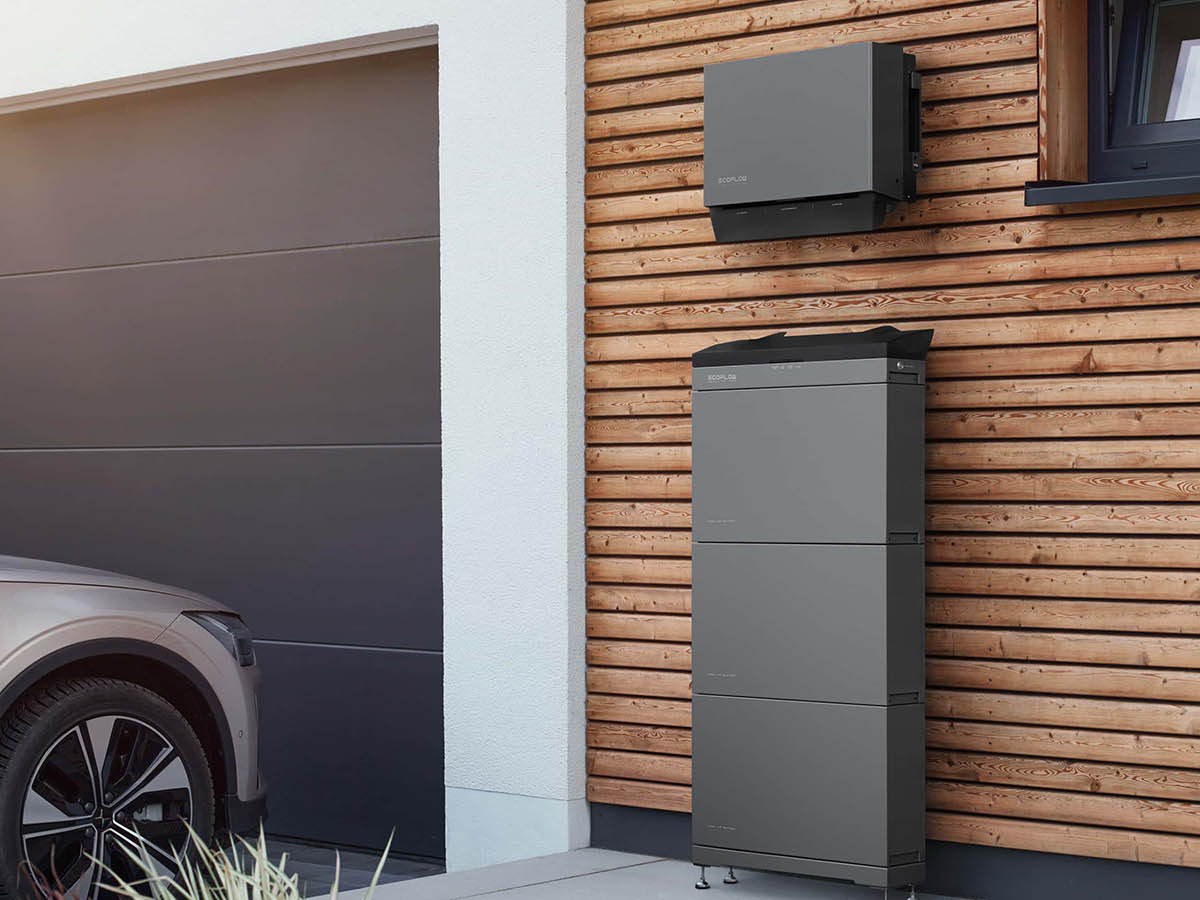
Using a home battery bridges that gap. When your solar panels produce more than your home needs, the surplus doesn’t go straight to the grid. Instead, your battery gets charged to be used on-demand. Later, when the sun is gone or prices are higher, you use that stored energy to power your home. The better you align this process with your consumption and prices, the more interesting it becomes financially and sustainably.
Homey adds a sophisticated layer of intelligence to your setup. It goes beyond simple on-off scheduling by recognizing patterns and consolidating multiple energy data sources.
For instance, you can store power during overproduction and use dynamic tariffs based on sunshine and your personal comfort. Managing your battery and solar panels stops being a daily puzzle. Instead, it becomes a set of rules running quietly in the background.
Hybrid Inverter or Standalone Battery: Homey’s Role
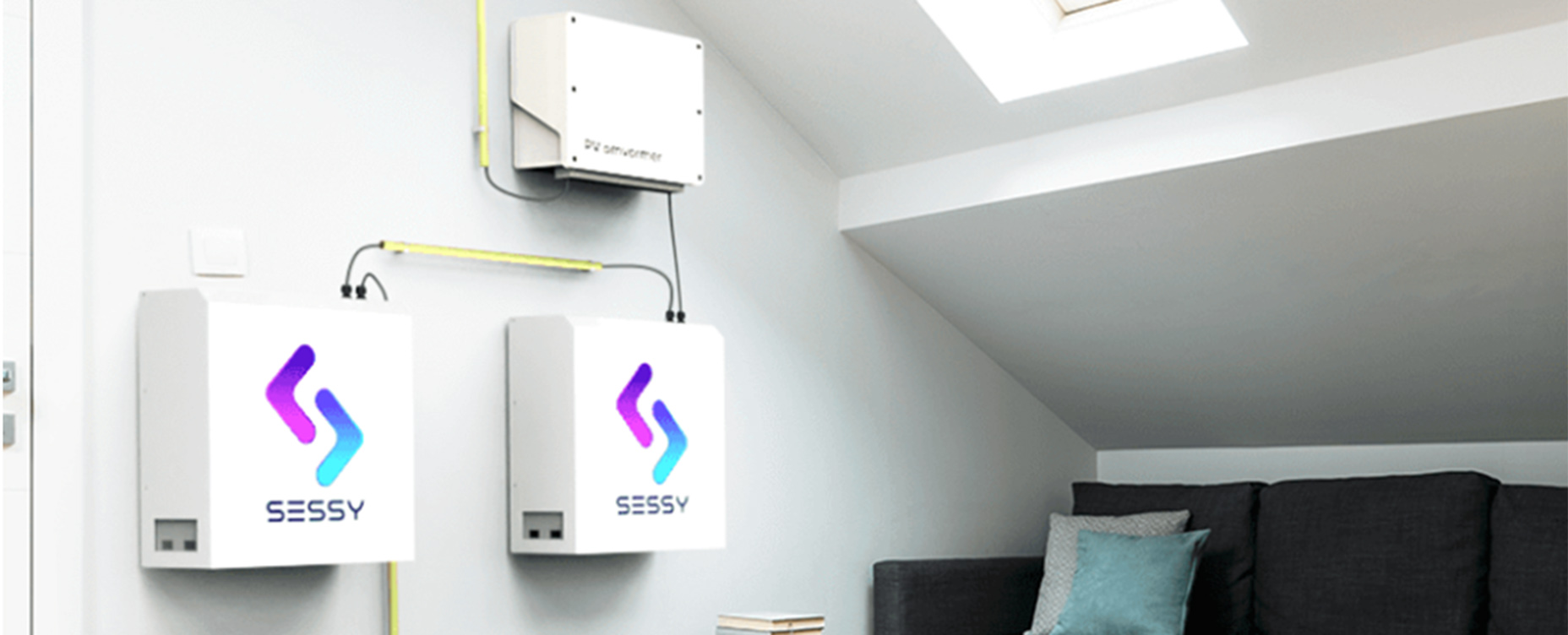
When you start combining solar panels and a home battery, you quickly run into the question: do I choose a hybrid inverter or a separate AC battery? A hybrid inverter controls both your panels and your battery and converts the DC from both into AC. An AC-coupled battery is a separate unit next to your existing inverter and connects into your home’s AC network.
For Homey, it doesn’t fundamentally matter which system you choose, as long as there’s a way to exchange data. Many battery and inverter brands now offer their own Homey apps. That allows you not only to see the current state of charge and power, but also to create Flows that charge or discharge the battery based on certain conditions.
With a hybrid inverter, the relationship between your panels and battery is more direct. Both are connected to the same "brain." Optimizing energy storage then mainly comes down to setting priorities. You decide if the house or the battery comes first. With Homey, you can make those priorities dynamic based on the current tariff or the amount of sun you expect.
Smart Scenarios With Homey
In practice, you are juggling three elements: your solar panels, your home’s consumption and your battery. Homey adds a fourth and fifth: price and time. This lets you build scenarios where your battery only charges on solar power when the price is reasonable, but is also allowed to charge from the grid when prices are extremely low or even negative. Conversely, you can configure that discharging to the home becomes attractive when the price is high.
Think of an automation Flow where you say: if solar production exceeds 2,000 watts and the battery is not yet at 80 percent, it’s allowed to charge. Once the battery rises above 80 percent and there is still plenty of sun, you give priority to the heat pump, boiler or EV charger. That way you prevent the battery from sitting at 100% all day while you are still feeding a lot back to the grid. Managing feed-in smartly with Homey Pro means consciously choosing when it’s still acceptable to feed in and when you would rather store first.
You can also use the battery level as a safety net. Say you like to fill the battery during the day, but don’t want it to drop below a certain level in the evening. This way you always have backup capacity for outages and night-time usage, while extending the battery's life. With Homey you build that threshold once, and it automatically respects that lower limit.
FAQ
From what point is a home battery valuable alongside solar panels?
A home battery becomes especially interesting if you regularly generate more than you consume directly and the feed-in compensation is low. If you have a dynamic energy contract, a battery can also offer benefits by playing smartly with hourly prices.
How large should my home battery be for my solar panels?
A commonly used rule of thumb is that the battery should be able to cover a few hours of your average consumption. In practice, you look at your daily profile: how much surplus do you have on a sunny day, and how much night consumption would you like to cover with that? With Homey data you can analyse that profile very precisely and choose a suitable capacity based on it.
Is a hybrid inverter always better than a separate AC battery?
Not necessarily. A hybrid inverter can be more efficient and is convenient if your system still needs to be installed or renewed. An AC battery is a good solution if you already have a working solar system and don’t want to completely rebuild it. Homey can work well with both variants, as long as there is a suitable integration.
Can I go completely off-grid with a home battery?
For most European, households that’s not realistic. In winter there simply isn’t enough sun, and batteries large enough for that are usually very expensive. A home battery is mainly a way to interact with the grid more intelligently, not to replace it entirely. Homey helps you do that smartly.
How does a home battery help avoid a feed-in penalty?
With some suppliers, high feed-in volumes can lead to extra costs or lower compensation. By sending surpluses into the battery first, you reduce the peaks that hit the grid. With Homey you can control this very precisely, for example by letting the battery charge more as soon as feed-in approaches a certain limit.
Can I use a home battery without a dynamic contract?
Yes, you can. Even with a fixed or variable contract, a battery helps you use more of your own solar power and be less dependent on the grid. Dynamic tariffs offer extra optimisation options, but are not a requirement. Homey can automate either way based on sun and consumption.
What happens when the battery is full and the sun is still shining?
If the battery is fully charged, any additional power still goes to the grid or to other loads in the home. With Homey you can ensure that at such moments, for example, boilers, heat pumps or EV chargers are allowed to use extra power. This reduces the chance you’re feeding back “for nothing”.
Can Homey take battery lifespan into account?
You can incorporate the number of cycles and the desired charge/discharge window into your Flows and settings. For example, by avoiding daily charging to 100 percent, or not discharging to 0 percent. The combination of factory settings and smart rules in Homey helps keep the battery healthy.
Is connecting a home battery to Homey complicated?
Not at all. More and more battery manufacturers offer direct integration with Homey. Sometimes this goes via the cloud, sometimes via a local API. Once connected, you immediately see the battery level in Homey Energy and can build Flows that use that information.
Can I benefit from automation even with a small battery?
Yes, even a relatively small battery can help shave the worst peaks of your feed-in and cover part of your evening consumption. Especially in combination with smart control of loads via Homey, you’ll quickly get more out of your own solar power than without a battery.
Glossary
Home battery
A large battery system in or near the home used to temporarily store surplus solar power so it can be used later in the house.
Hybrid inverter
An inverter that can process DC from both solar panels and a battery and convert it to AC for your home.
AC-coupled battery
A battery that is connected to the home’s AC network via its own inverter, separate from the solar inverter.
Battery Cycles
The number of full charge and discharge cycles a battery goes through; this is an important indicator of battery lifespan.
Charging strategy
The way you configure when and how fast a battery is charged, for example based on solar yield, price or time.
Discharging strategy
The rules that determine when the battery supplies power to the home, for example during expensive hours or when there is no sun.
Feed-in penalty
An extra cost or unfavourable tariff structure some suppliers apply when large volumes of electricity are fed back to the grid.
Self-consumption percentage
The ratio between the power you generate and use yourself (directly or via the battery) and your total generated energy.
Peak shaving
Reducing peaks in consumption or feed-in by temporarily storing energy or switching on additional loads.
Backup capacity
A portion of the battery’s capacity reserved as a buffer, for example for outages or unexpectedly high consumption.


